World without rules: Why 2026 Munich Security Conference is a turning point for Ukraine and Europe


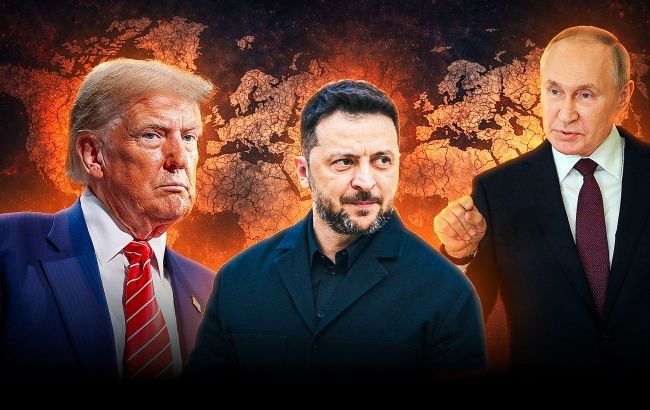 Donald Trump, Volodymyr Zelenskyy, and Vladimir Putin (collage: RBC-Ukraine)
The most influential leaders in Munich will spend three days discussing a world in which every country is now on its own. While Trump wants to subjugate the entire Western Hemisphere, Ukraine is forced to play ahead of the game so as not to fall victim to a new geopolitical deal.
RBC-Ukraine examines how the great powers are once again dividing up the world and whether there is still a chance for stability in 2026.
Read also Zelenskyy, Rubio and Ukraine's new role: What to know about Munich Security Conference 2026
Key takeaways
- Munich Security Conference: Over 50 world leaders will discuss a world "under destruction".
- The Donroe Doctrine: Washington declared the Western Hemisphere a zone of exclusive US influence after a special operation in Venezuela on January 5, 2026.
- Chinese expansion: Instead of tanks, Beijing is using the Belt and Road Initiative to capture ports and microelectronics markets.
- Ukraine's position: President Zelenskyy will call on the EU in Munich to take more active measures, as the US is conducting direct negotiations with Russia.
- Regional players: Türkiye, Saudi Arabia, and India are actively expanding their influence by copying the methods of superpowers.
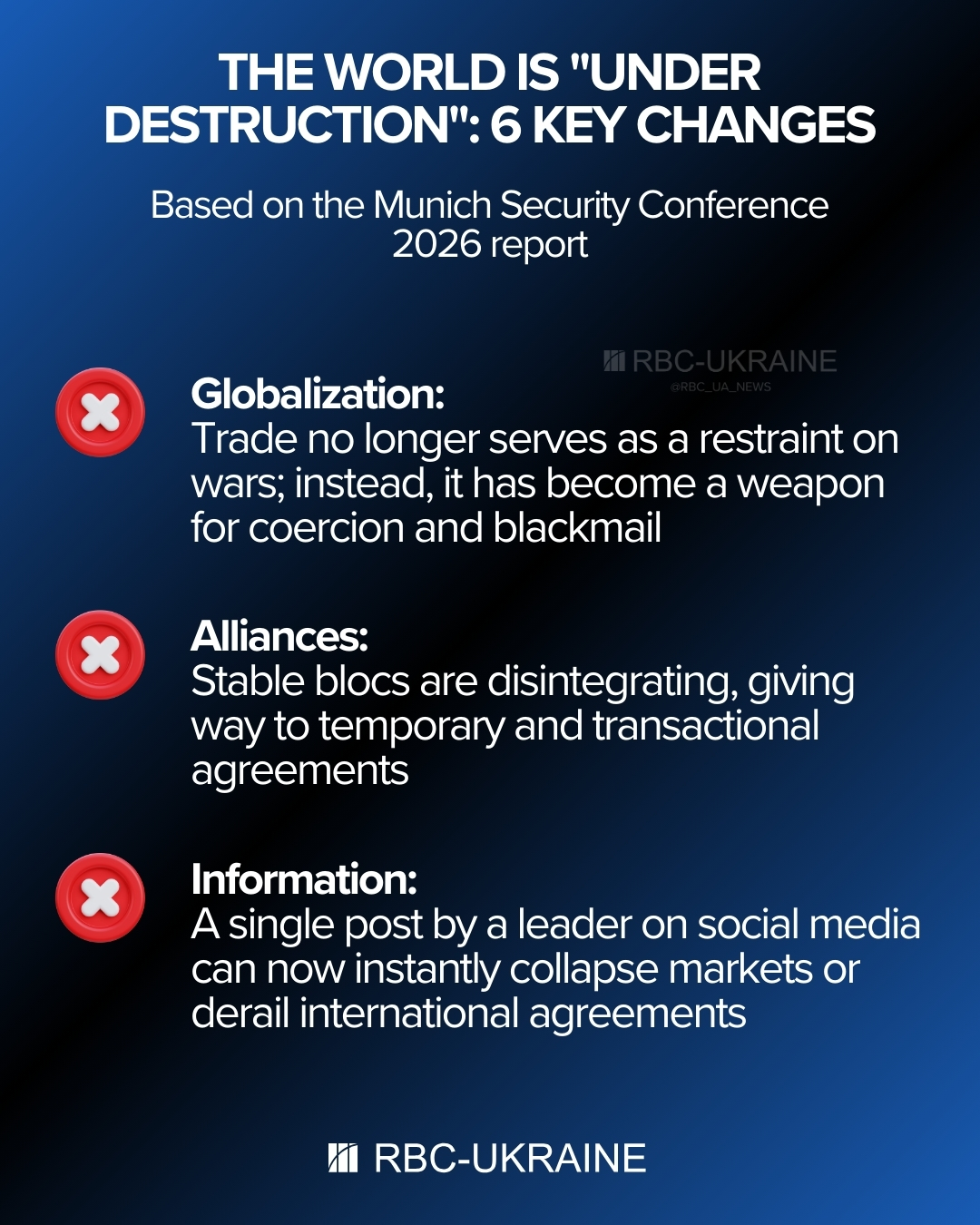 The old world order is rapidly disintegrating, according to the organizers of the Munich Conference (source: RBC-Ukraine)
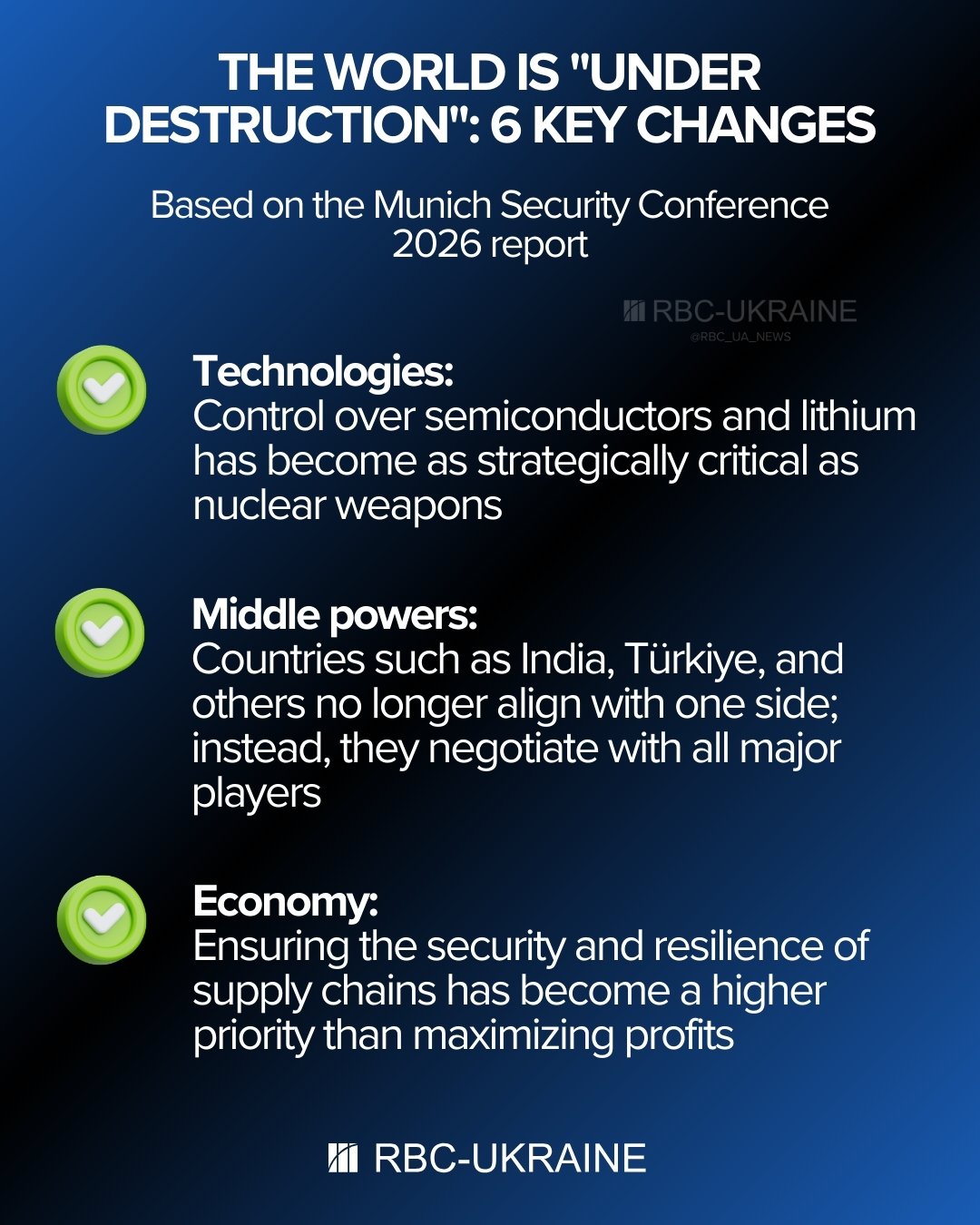
The old world order is rapidly disintegrating, according to the organizers of the Munich Conference (source: RBC-Ukraine)
Munich has repeatedly been a turning point in world politics. It was here in 1938 that Europe surrendered Czechoslovakia to Hitler, in 2007 that Putin proclaimed a course towards the de facto restoration of the Russian Empire, and in 2022 that the West discussed how to stop Russia's invasion of Ukraine. This year, Munich may once again become a landmark.
Over 50 world leaders, including Ukrainian President Volodymyr Zelenskyy, and hundreds of lesser-known politicians plan to discuss international issues, many of which.
This year's annual conference report is titled Under Destruction. It bluntly states that the world now has no rules everyone must follow.
In this world, there are no predictable alliances, and every move made by leaders can become a historic turning point. One tweet can cause stock markets to crash, relations between countries to deteriorate, and old alliances to become meaningless.
War, sanctions, economic maneuvers, technological competition—everything is intertwined in a complex game where even the big players do not always control the consequences.
It is this uncertainty that makes Munich 2026 a critical point: here, it may be decided who will be able to impose their own version of the rules in a world where they are being written on the fly.
From Monroe to Donroe
On January 5, 2026, the US State Department declared: "This is our hemisphere." The announcement came after a special operation that resulted in Venezuelan leader Nicolás Maduro being taken to the US.
This move demonstrated a new logic: Washington is no longer limited to diplomacy or sanctions, but acts directly.
Donald Trump dubbed his policy the Donroe Doctrine — a wordplay based on his name and that of James Monroe. It is an updated version of the old Monroe Doctrine of 1823. At that time, the US declared that the entire American continent was closed to European colonizers.
Read also Greenland standoff: How Trump uses tariffs to pressure Europe and why Ukraine matters
Now Washington is once again claiming exclusive rights to the entire Western Hemisphere. First and foremost, this refers to the independent states of Latin America, but not only. Trump has also renewed interest in Greenland, a strategic island that geographically belongs to North America but is controlled by Denmark.
This is not just rhetoric. As Geoff Ramsey, an expert at the Atlantic Council think tank, notes, the US is demonstrating its readiness to take tough action against non-systemic regimes and external competitors, primarily China, in its backyard.
Game of great powers
What the US is doing quickly and demonstratively, Russia has been trying to achieve for several years – through a full-scale war against Ukraine and systematic pressure on Europe.
The Kremlin openly promotes power revisionism: redrawing borders, nuclear blackmail, and imposing so-called limited sovereignty on its neighbors. This is not just about territory, but about dismantling the very security architecture that has developed since 1991.
China is acting differently. Beijing is not changing borders with tanks, but is actively rewriting the rules of access to markets, technologies, and logistics. The Belt and Road Initiative has become a tool for building infrastructure and financial dependence in Asia, Africa, and Latin America.
Read also World without limits: How Trump and Putin open nuclear arsenals of US and Russia
At the same time, China is promoting its own technological standards, investing in ports and critical infrastructure, and strengthening its position in the field of microelectronics and artificial intelligence. This is a different type of revisionism—not military, but economic and infrastructural.
_1_1.jpg) US President Donald Trump and Chinese leader Xi Jinping (photo: Getty Images)
US President Donald Trump and Chinese leader Xi Jinping (photo: Getty Images)
It is precisely China's penetration into the Western Hemisphere that has become one of the key irritants for Washington. The US is increasingly actively pursuing a policy of restricting China's access to advanced technologies, encouraging the transfer of production back home or to partner countries, and responding more harshly to Beijing's attempts to gain a foothold in strategic hubs.
The world increasingly resembles not a system of rigid blocs, but a network of flexible coalitions. States maneuver between centers of power, maximizing their own benefits and minimizing risks. It is this multi-vector approach that makes the new geopolitics less predictable.
History repeats itself in a new way
While promoting American interests with tough methods, Trump never tires of talking about good intentions. This is reminiscent of Orwell's formula that war is peace.
However, the parallels are not limited to literature. The current state of affairs is a mix of imperial logic from the past, said Dmytro Sherenhovskyi, political scientist, international relations expert, and vice rector of the Ukrainian Catholic University, to RBC-Ukraine.
"This is essentially the logic of the 19th century colonial era, when there were ideas of great powers that possessed greater power – military, economic, cultural – and negotiated their interests at the expense of smaller ones," he says.
At the same time, there are significant differences compared to the Cold War era, the last round of the struggle for world domination to date.
"During the Cold War, there was a stable division into two blocs, which was very ideological. There were clearly defined red lines, there were clear instruments of arms control, and this largely limited their capabilities," Sherenhovskyi notes.
Today, according to him, there are no clear blocs or unity within the democratic community, but there is still a high degree of interdependence between competitors and rivals.
"Therefore, it is very difficult to build this watershed between the camps, as was the case during the Cold War, solely on an economic-ideological model," the expert emphasizes.
In practice, this means that long-term alliances are extremely difficult to build. At any moment, Trump — or any other world leader — can strike yesterday's friends with tariffs, sanctions, or other means.
All methods in action
Donald Trump's actions have shifted the world toward permissiveness. So all possible methods are already being used. Russia's direct armed aggression or the kidnapping of another country's President by the Americans are only the most primitive of them.
The modern struggle for influence is not limited to forceful actions. It is being waged on several fronts at once — and often without a declaration of war.
Russia is betting on brute force and intimidation. The war against Ukraine, nuclear rhetoric, sabotage, and cyberattacks are attempts to force its neighbors to recognize its right to its own sphere of influence. The Kremlin is demonstrating that if rules get in the way, they can simply be broken.
The US acts differently. In addition to military instruments, Washington actively uses the economy. Sanctions, tariffs, restrictions on access to technology, control over financial flows – all this has become part of their great game. Interdependence, which until recently was considered a guarantee of peace, is turning into a lever of pressure.
Read also Trump's simple solutions fail? Fears rise of new Middle East war
China mostly avoids direct conflicts, but systematically expands its influence through infrastructure, trade, and technology. Ports, railways, communication networks, and control over supply chains for critical materials are tools for long-term influence. Beijing does not often resort to harsh methods, but it persistently builds dependencies.
At the same time, all major players work not only with states as such, but primarily with the ruling elites. Some do so through security guarantees, some through investments and loans, and some through political support or pressure. The formats are different, but the logic is the same: to consolidate influence through those who make decisions.
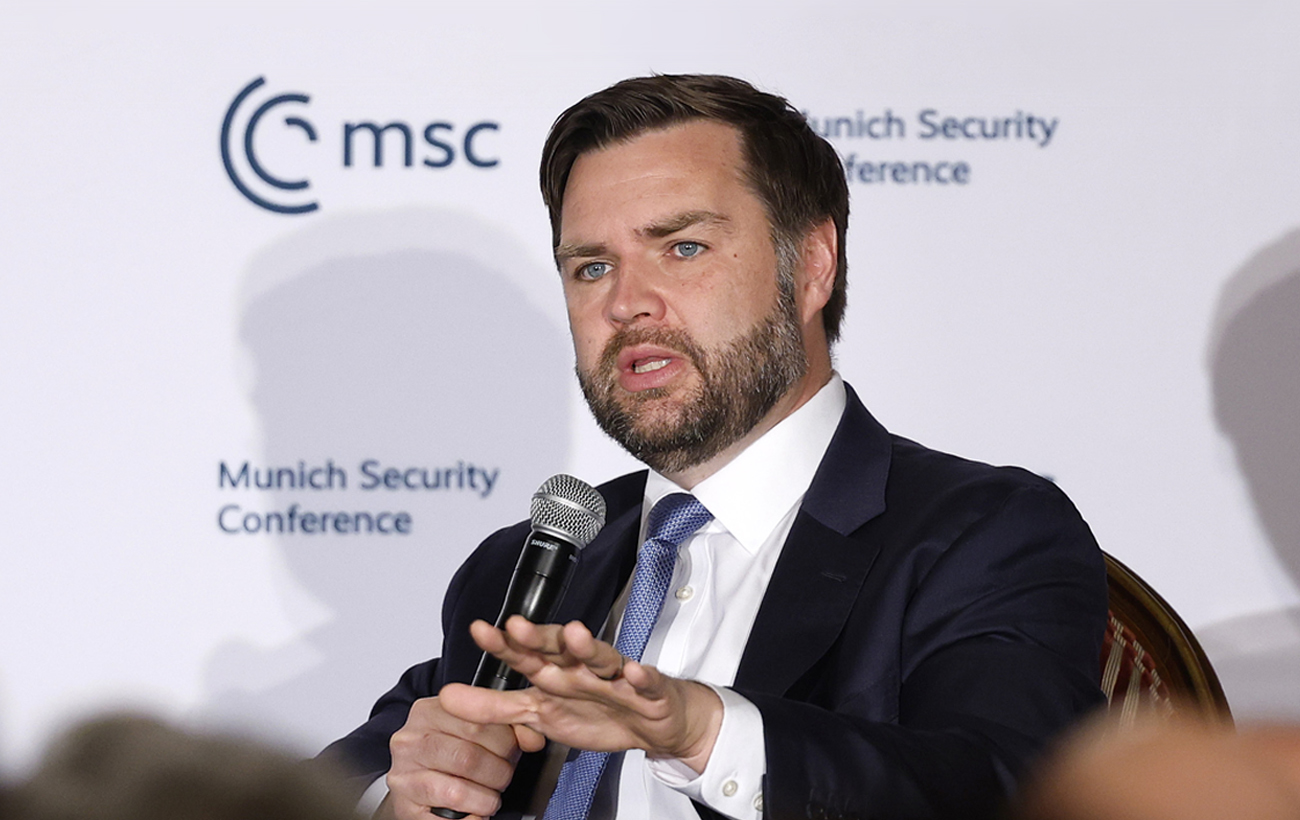 US Vice President JD Vance criticized the European Union at the 2025 Munich Conference, calling internal threats in Europe greater than external ones. (photo: Getty Images)
In a broader sense, it is not about creating new centers of power from scratch, but about redistributing existing resources, markets, and spheres of influence. This explains the fierce competition we are seeing today.
"These countries adhere to different models, but even given the airy nature of the modern economy (the significant role of assets that exist only in virtual space, ed.), no one has yet been able to refute the basic economic principles. And the main struggle has long been in the phase of redistribution, not the creation of wealth," Yurii Vdovenko, an expert at the Ukrainian Prism Foreign Policy Council, told RBC-Ukraine.
This logic is not only being adopted by superpowers. Each region has its own so-called smaller-scale predators — countries that take advantage of the fragmentation of order by copying the tools of the big players. They do not claim global leadership, but are actively expanding their influence in their own areas — through force, money, or diplomacy.
Türkiye, Saudi Arabia, and India are just the most prominent examples. When the big powers compete with each other, the medium-sized players gain room for maneuver and actively expand their influence.
War, economy, technology
The current confrontation is not limited to military or economic demonstrations of power. Technology and energy are becoming much more important, transforming into strategic instruments of influence.
The struggle for microchips, artificial intelligence, satellite systems, and cyberspace is becoming no less important than control over territories. If land was the key resource in the 20th century, in the 21st century, it is data, computing power, and information control.
Read also AI wars: How US and China compete for tech dominance, and where Ukraine fits in
Energy has not lost its significance as an instrument of influence. Gas and oil, electricity, or liquefied natural gas exports – all these become levers of pressure, maneuvering between centers of power and factors of long-term competition.
At the same time, the struggle to interpret one's own actions continues. Each major player presents its offensive as defending stability and its pressure on others as restoring justice.
Europe and Ukraine between predators
As for Ukraine, this lack of order is one of the worst options, according to Dmytro Sherenhovskyi.
"For us, this means that we will constantly be forced to look for situational partners. And that our diplomacy will then become very difficult. This means that we have to work simultaneously with both governments and opposition forces," explains Dmytro Sherenhovskyi.
It is also worth adding separate tracks with various interest groups, companies, or legislators. But while large countries have the resources for this, Ukraine may not have enough.
"Then our internal unity begins to play a role: how consolidated we are with various analytical centers, journalists, universities, and businesses, and how long and complex this task is," Sherehovskyi concludes.
For now, however, contacts at the highest level remain the most effective for Ukraine. This is precisely what President Zelenskyy and the entire Ukrainian delegation will be doing in Munich.
 14 лютого 2025 року president_1.jpg) Volodymyr Zelenskyy with European leaders Ursula von der Leyen and António Costa at a conference in 2025 (photo: Getty Images)
Volodymyr Zelenskyy with European leaders Ursula von der Leyen and António Costa at a conference in 2025 (photo: Getty Images)
However, the position of Ukraine's European partners is of greatest concern. Although the leading capitals understand the threats at the rhetorical level, in practice, they are not doing much. And without active action, Europe may simply fall prey to the current international predators.
"Europe will have to see whether it is capable of becoming a union of different countries and look for other opportunities. It is expected that this discussion will take on an almost decisive character in Munich," said Yevhen Mahda, director of the Institute of World Policy and candidate of political sciences, in a comment to RBC-Ukraine.
Read also Europe ramps up arsenal with Ukraine helping drive effort for potential Russia war
The problem is complicated by the fact that the US is actively negotiating with Russia, jeopardizing the interests of Ukraine and Europe. Therefore, Kyiv must continue to set an example and encourage its European partners to take more active measures.
All the more so because there are sufficient grounds for this. A few days before Russia's full-scale invasion of Ukraine, the atmosphere at Munich 2022 was no less tense than it is today. And then, few doubted that Ukraine would withstand the Russian blow. Four years later, Kyiv still retains its subjectivity and is effectively Europe's eastern shield.
"We have a moral right to appeal to our partners. But if we always do so in a harsh tone, it will be difficult for them to understand. As they say, it is easy to endure a toothache when it is not your teeth that hurt. We have to show them that if our teeth hurt today, tomorrow their heads will fall off," Yevhen Mahda sums up.
As in 1938 and 2007, Munich 2026 may again become a moment of truth. The only difference is that now the price of failure is much higher — and there is almost no time left for illusions.
Quick Q&A
— Why is the Munich Conference 2026 important for Ukraine?
— Munich is a historic turning point. This year, they are discussing how to act in a world without rules (Under Destruction), and for Ukraine, this is a critical moment in terms of finding support in a situation where old alliances are becoming unstable.
— What is Trump's Donroe Doctrine in simple terms?
— It is Donald Trump's foreign policy (a play on words from Monroe), which proclaims complete US control over the Western Hemisphere. It involves direct action against countries in the region (as in Venezuela), ignoring traditional diplomacy.
— How will the policies of China and Russia differ in 2026?
— Russia acts by force (war, nuclear blackmail, changing borders), while China acts through economics. Beijing does not send in tanks, but it captures markets, builds ports and infrastructure (the Belt and Road Initiative), creating financial dependence on other countries.
— What will Zelenskyy talk about at the 2026 Munich Conference?
— The main goal of his trip is to encourage European partners to take action. Ukraine acts as Europe's eastern shield, trying to prove that the EU's inaction will lead to it becoming the next victim of predators.
Sources: Munich Security Report 2026, Atlantic Council, Brookings Institution, comments by Dmytro Sherenhovskyi, Yurii Vdovenko, and Yevhen Mahda.