Greenland standoff: How Trump uses tariffs to pressure Europe and why Ukraine matters


 US President Donald Trump and Greenland (collage: RBC-Ukraine)
Donald Trump has put Europe before a choice: hand over Greenland or prepare for a trade war. What is happening around the island and why it also matters for Ukraine is explained in this RBC-Ukraine article.
Key questions:
- Why did Trump introduce new trade tariffs against Europe?
- What goals is he pursuing regarding Greenland?
- How is Europe responding to Trump's actions?
- How could conflict affect Ukraine?
Donald Trump's desire to take control of Greenland is increasingly turning into an obsession.
The US president has once again begun pushing this idea since the beginning of the year. He claims Denmark cannot independently protect Greenland from Russian and Chinese expansion, which he says poses a national security threat to the United States. While previously, Trump's statements were largely empty rhetoric, he has now moved to concrete action.
Over the weekend, the US president announced the introduction of trade tariffs against six European Union countries — Denmark, Sweden, France, Germany, the Netherlands, and Finland — as well as the United Kingdom and Norway, which are not EU members.
"Starting on February 1st, 2026, all of the above-mentioned countries (Denmark, Norway, Sweden, France, Germany, the United Kingdom, the Netherlands, and Finland) will be charged a 10% Tariff on any and all goods sent to the United States of America. On June 1st, 2026, the tariff will be increased to 25%," Trump wrote on the social media platform Truth Social.
In this way, Trump plans to punish Denmark, which owns Greenland, for refusing to hand the island over to the United States.
As for other countries, they are "to blame" for supporting Denmark and sending small military contingents to Greenland.
In practice, trade tariffs mean that goods imported to the United States from the European Union will become more expensive than those produced in America itself. This means consumers may buy them less. As a result, Europe may ultimately suffer losses.
This is a typical pressure lever for Trump against both enemies and allies. Previously, it did work as a tool of coercion. However, this time, Europe is determined to respond decisively.
What Trump wants
The introduction of new trade tariffs just ahead of the Davos forum fits into the logic of Trump's favorite strategy, which he repeats again and again. It means setting very high goals and then applying pressure in order to ultimately get what he actually wants.
"This is a classic approach of any businessman: raise stakes so that sides bargain somewhere in the middle," an expert at the National Institute for Strategic Studies, Ivan Us, told the media outlet.
Among such real goals of Trump mentioned in the US media are not only full control over Greenland, but also compromise options.
According to The New York Times, the Trump team is considering expanding the US military presence on the island, using the existing defense agreement with Denmark. This also includes access for US companies to the island's rare earth minerals.
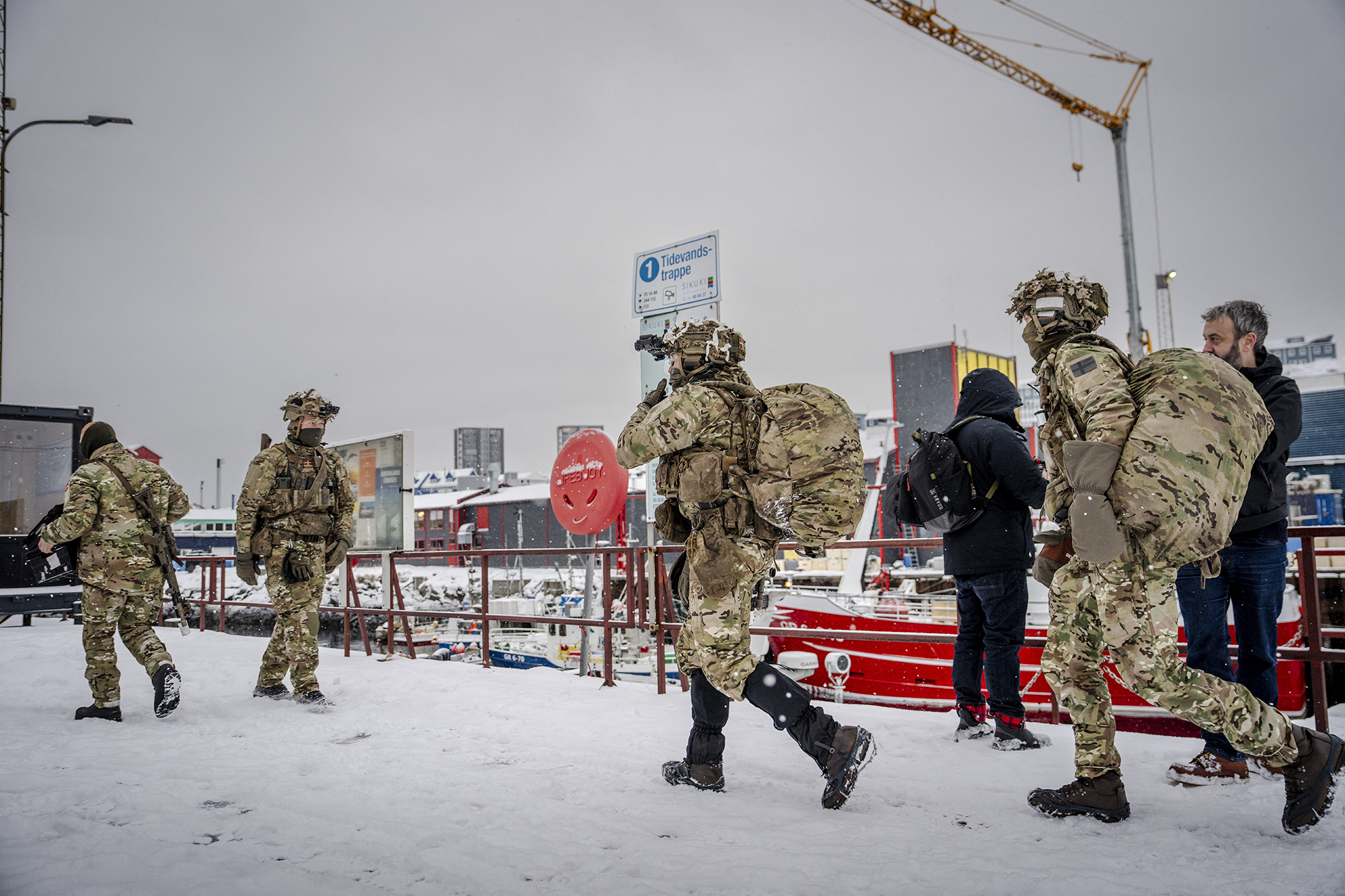 Arrival of Danish troops in Greenland (photo: Getty Images)
Ultimately, the United States does not necessarily need to buy Greenland. As The Economist previously reported, the Trump team is also considering the Compact of Free Association (COFA) with Greenland.
Such an agreement would provide that the US offers financial support while preserving the island's internal autonomy. At the same time, the United States would assume authority over defense and security matters. However, this would effectively mean the separation of Greenland from Denmark.
There is, however, another view — that minimum US demands could be satisfied through negotiations, but it appears Trump does want full annexation, RBC-Ukraine was told by the director of the Center for International Studies at Odesa National University, Volodymyr Dubovyk.
"I think Trump wants to try pressure first, then see what reaction will be, and accordingly plan next steps," he noted.
Ultimately, much will depend on Europe's response and whether it can give a joint response at all.
"If Europe is firm enough, principled and uncompromising, there will be greater chances that Trump backs away from maximum demands," Dubovyk stressed.
Europe prepares for talks
When Trump first spoke about his plans for Greenland, Europe tried to respond constructively. Additional Danish units led by army chief Peter Boysen were sent there, along with troops from several European countries. In addition, Denmark and Greenland proposed that NATO establish a separate Arctic mission.
The logic behind this step was simple: to show that Europeans can protect the island from Russia and China on their own. Therefore, the United States does not need Greenland.
However, after Trump's statement on trade tariffs, Europe's position changed. European Commission President Ursula von der Leyen has already held talks with European leaders and NATO leadership. European Council meeting with leaders of all EU countries is also scheduled for January 22.
According to Politico, one of the main response options to Trump's actions is a package of counter-tariffs worth 93 billion euros. It could take effect as early as February 6 if US tariffs come into force.
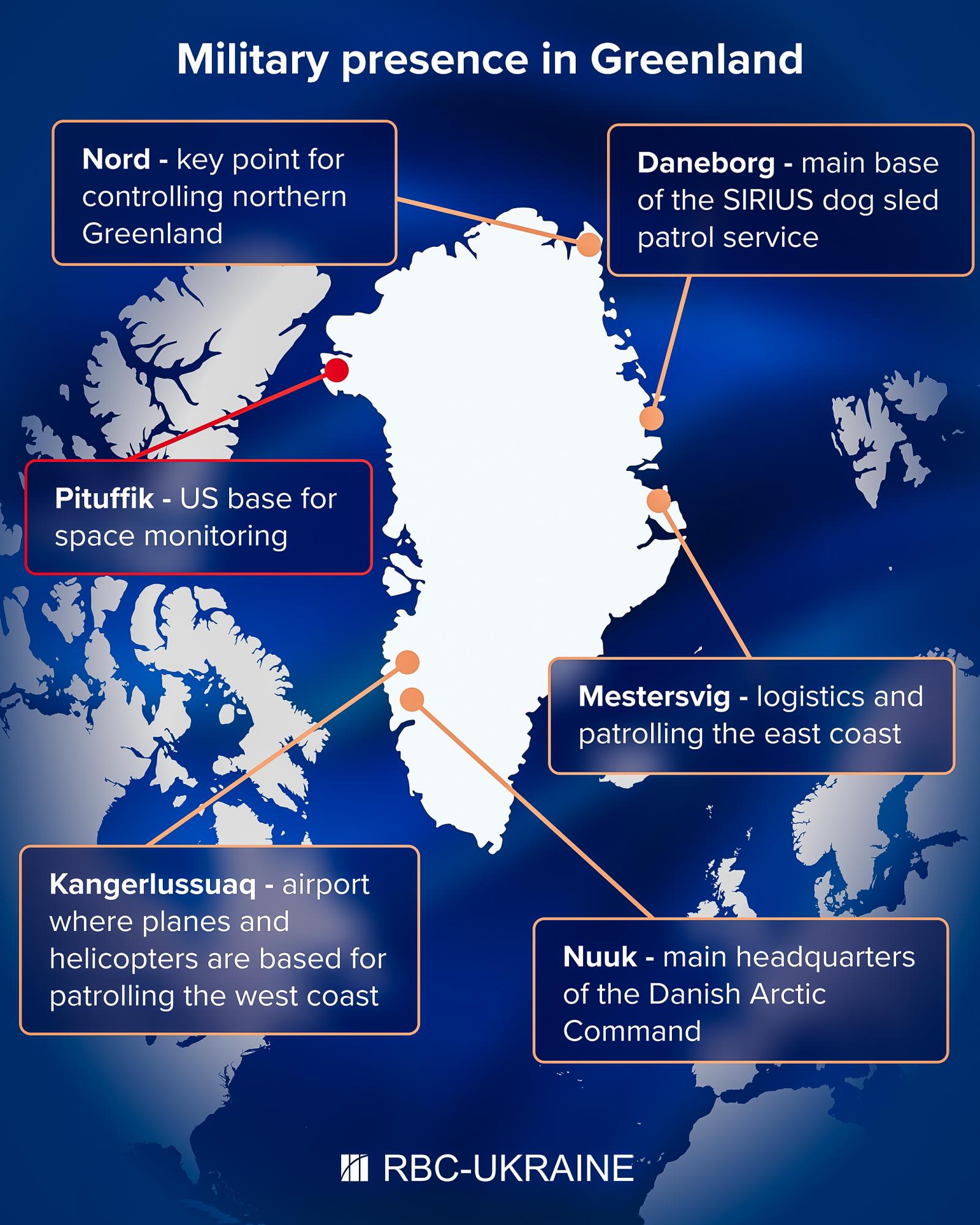 Military presence in Greenland (infographic: RBC-Ukraine)
Another option is the Anti-Coercion Instrument (ACI). It could limit US access to public procurement, investments or banking activity. It also includes restrictions on trade in digital services, where the United States has a surplus with the European Union.
As Reuters reports, the introduction of European tariffs as a first response has gained broader support. As for anti-coercion measures, the picture is currently very mixed — many prefer to avoid escalation and hope for negotiations.
Overall, the EU already has experience dealing with Trump's tariffs. Last year, it ended with a compromise trade deal: 15% duties on European goods in the US in exchange for zero tariffs on a range of American industrial products. But this time the situation is different, as it concerns issues fundamental to Europe.
"Previously, Europeans bent and tried — either the EU as a whole or individual countries — to somehow negotiate lower tariffs. Now they have no choice: they are defending principles, and this is more important than losses of several billion dollars," diplomat and director of the Center for Defense Strategies Oleksandr Khara told RBC-Ukraine.
Ultimately, it is in Europe's interest simply to drag out the process, as time works against Trump. The US midterm elections will take place this year. Against this backdrop, even lawmakers from his own party have begun to express disagreement with the president's current actions.
Recently, a delegation of US lawmakers visited Greenland and Denmark. The delegation's leader, Democratic Senator Chris Coons, said their trip aimed to listen to local residents and convey their views to Washington to "lower the temperature."
It is important that the delegation was bipartisan. That is, it included both opposition Democrats and ruling Republicans. All this is a warning sign for Trump. If Congress is not ready to go against the president now, this may change later.
"Congress will probably have slightly more influence if Democrats take control of the House of Representatives in November. But this is not guaranteed, and there is still a long time until November. That is why Trump is in a hurry to do everything now," Dubovyk said.
Consequences for Ukraine
For Ukraine, this dispute has not only symbolic but also very practical significance.
New escalation around Greenland has already pushed negotiations between Ukraine and the United States into the background.
This primarily concerns the planned meeting between Presidents Zelenskyy and Trump in Davos. At that meeting, the Ukrainian side would like to finalize the document on economic prosperity and post-war reconstruction. However, there is currently no certainty about this.
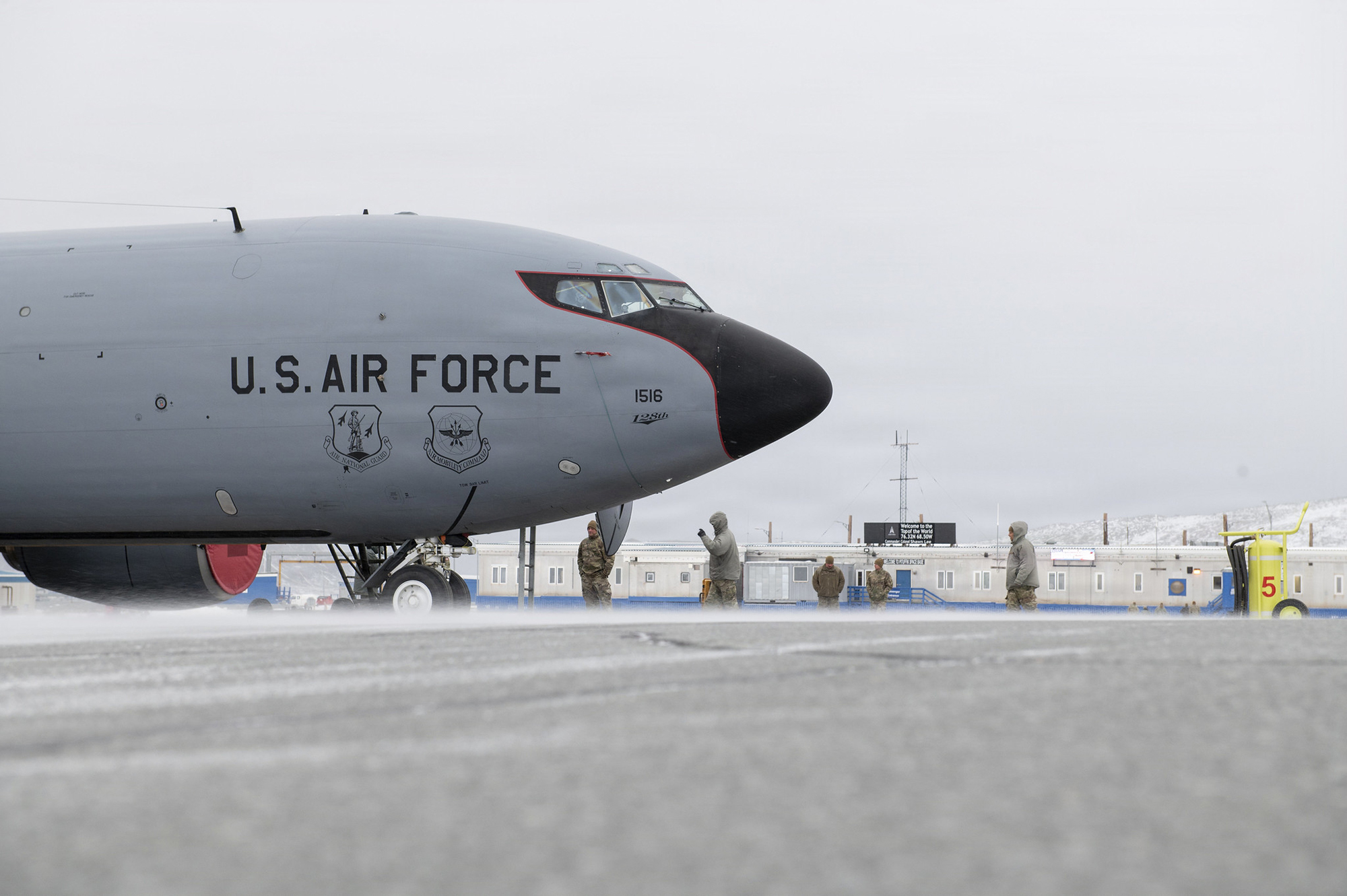 US Air Force aircraft at Pituffik military base in Greenland (photo: Getty Images)
Consequences of the crisis between the United States and Europe could also be material for Ukraine. At present, Ukraine receives weapons under the PURL program, which provides for the purchase of arms from the United States using European funds. Ammunition for air defense systems is located in a high-risk area.
"If Europeans now say that they will not buy anything from the United States, and they cannot give Ukraine what it wants because they do not produce it, then Ukraine may not receive American weapons," Ivan Us noted.
However, according to Oleksandr Khara, this mainly concerns future arms purchase contracts.
"I do not think Trump will resort to blocking arms sales to Ukraine paid for with European money. Theoretically, he could do this regarding future contracts, because if he were to slow down or try to cancel existing ones, legal procedures would of course be applied," the expert stressed.
In the longer term, Trump is also undermining the entire system of international trade, as his chaotic actions make planning impossible.
"Imagine yourself in the place of any businessman who needs to make calculations, and if this is related to foreign trade, the first question is what customs tariffs will be. And he is told: it is hard to calculate, because today it is like this, but day after tomorrow it may be different," Ivan Us explained.
Most importantly, under such conditions, the United States cannot be a security guarantor — neither for Europe within NATO nor, especially, for Ukraine.
The Greenland story shows that for Trump, foreign policy remains an extension of business negotiations, where allies are no less convenient targets of pressure than opponents.
If such logic sometimes brings quick tactical effect (though far from always), it also erodes many of the rules of the game on which the West is built. And it is precisely this erosion of rules that poses much greater danger for Ukraine than any tariffs or loud statements.
Sources: Reuters, The New York Times, Bloomberg, Politico, comments by Ivan Us, Volodymyr Dubovyk, Oleksandr Khara.