World without limits: How Trump and Putin open nuclear arsenals of US and Russia


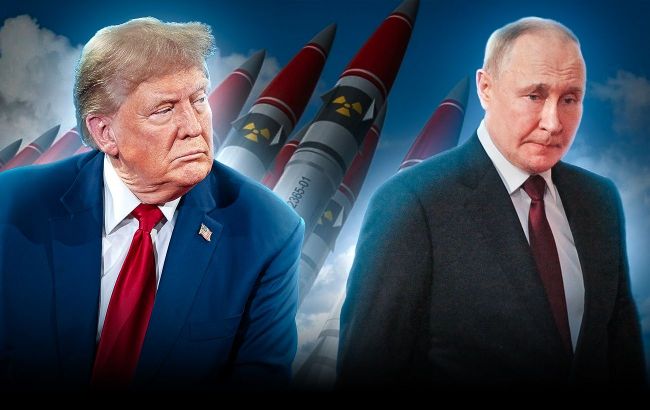 Donald Trump and Vladimir Putin (RBC-Ukraine collage)
Today, February 5, the treaty between the US and Russia on Measures for the Further Reduction and Limitation of Strategic Offensive Arms (known as New START) ceases to be in force. Why this increases the risks of nuclear war and how the world will respond to them — read in the RBC-Ukraine article.
Read also: Nuclear race 2.0: How Putin and Trump pushing world to new escalation
Key points:
- No limits: the United States and Russia are no longer constrained by anything in nuclear weapons.
- Risks: without control, crisis instability emerges.
- Russia: Poseidon, Burevestnik, and Oreshnik are not covered by previous restrictions. This allows the Kremlin to intensify nuclear blackmail.
- United States: the main incentive for Washington to build up its arsenal is China's growing nuclear power.
- Arms race: for the United States, it is an expensive and lengthy process; Russia is constrained by resources and technology.
- Consequences: Europe may strengthen its own nuclear and missile-defense capabilities; Ukraine is focused on modernizing the Armed Forces and defending against Russia.
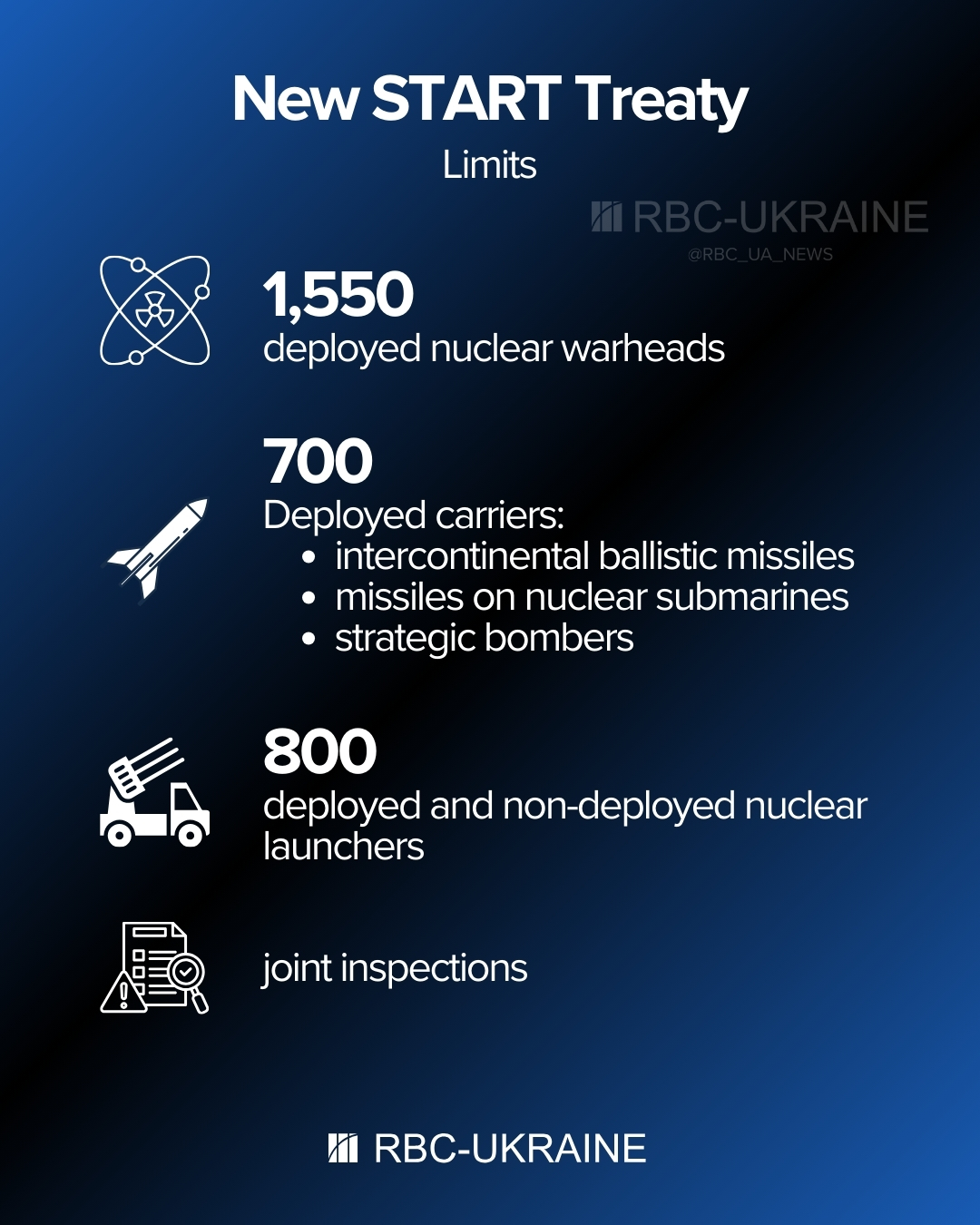 Limits set by the New START Treaty (RBC-Ukraine infographic)
Donald Trump and Vladimir Putin are shaking the world order. As a result, a chain reaction is unfolding in which more and more states are once again considering nuclear weapons. The world is entering a period of turbulence where the old rules no longer work and new ones have not yet been formulated.
This is no longer about exotic ideas of political radicals, but about a fully legitimate and public discussion among experts, military officials, and government representatives — what to do with deterrence in a world without clear limits.
The Russian-Ukrainian war has become a key catalyst for these conversations. In the first years of the full-scale invasion, Russia’s nuclear arsenal was not an abstract threat but a real factor in the war and in deterring the West.
Western experts and officials openly suggested that in the event of a collapse of the Russian front and a large-scale offensive by the Armed Forces of Ukraine, the Kremlin could resort to a nuclear strike. According to The Washington Post, during the Ukrainian counteroffensive in the Kharkiv region in 2022, the United States seriously feared such a scenario, conducted closed contacts with Moscow, and China ultimately played the role of a “calming factor.”
Against this backdrop, another turning point is approaching — the effective dismantling of the last functioning mechanism that controlled strategic nuclear weapons.
Why this matters
The United States and Russia have the world's largest nuclear arsenals — several thousand warheads each. They were created back in the days of the Cold War between the United States and the Soviet Union. The point is that when planning a nuclear strike, losses of the arsenal are factored in. If the enemy strikes first, it is necessary to have spare warheads for retaliation.
''Fear makes things look bigger than they are. Plus, if states build missile defense systems, one also has to assume that not 100% of what survives will reach the target, but, for example, 50%, and then this potential still has to be divided,'' Polina Sinovets, Head of the Odesa Center for Nonproliferation (OdCNP), told RBC-Ukraine.
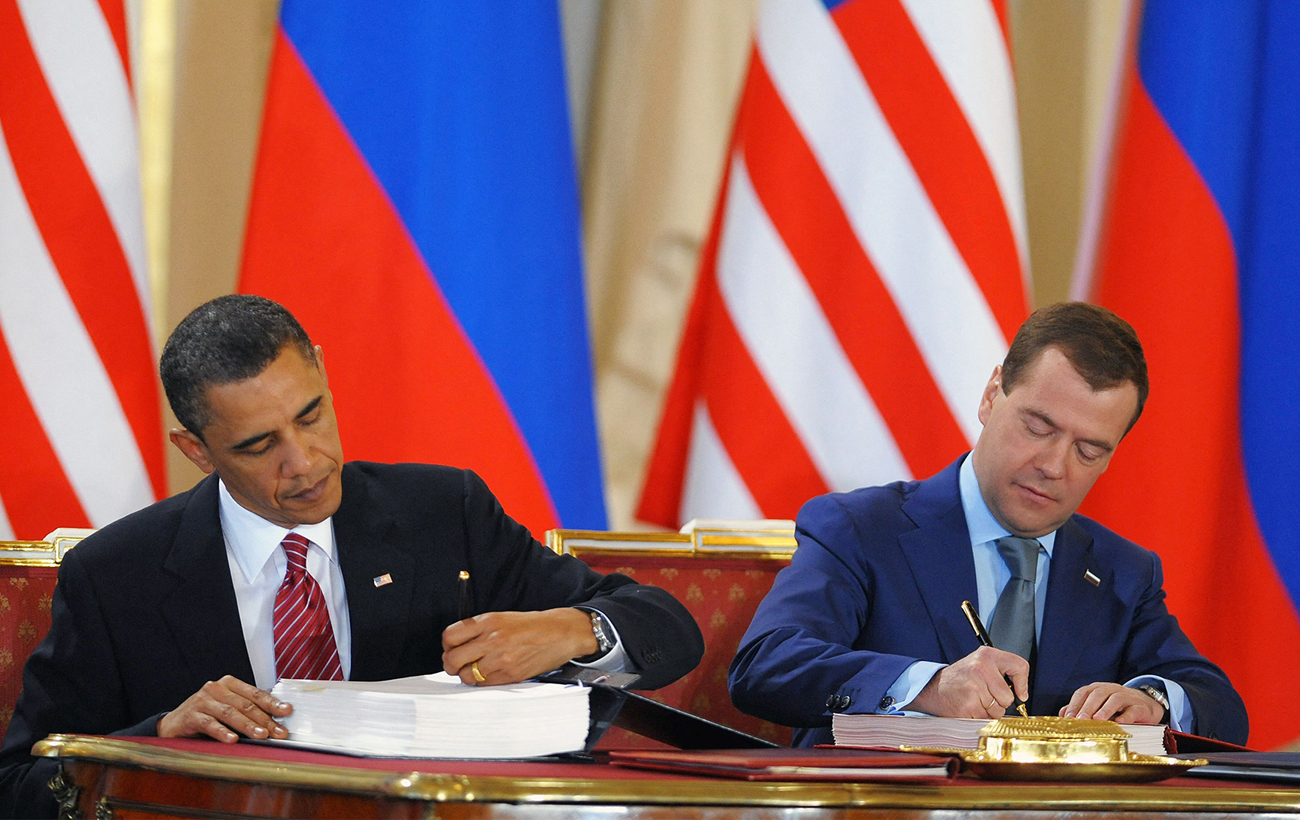 President of the United States Barack Obama and Russian President Dmitry Medvedev sign the New START Treaty (photo: Getty Images)
However, even with satellite intelligence and other means of surveillance, the United States and the Soviet Union did not have a complete picture of each other's capabilities. This, in turn, created situations in which the world stood on the brink of nuclear war.
So over time, both superpowers decided to negotiate. A whole series of treaties on limiting nuclear weapons were signed between them. The last of these was the Treaty between the United States and Russia on the Reduction and Limitation of Strategic Offensive Arms, also known as New START.
The treaty was signed after the collapse of the Soviet Union in 2010. But it continued the logic of the Cold War. The document provided limits on deployed strategic nuclear warheads and their delivery systems. In addition, the United States and Russia conducted inspections of each other to ensure that the other side was not violating the limits. Now this will disappear.
Threat of nuclear war
The termination of New START means that each of the signatory states will now be able to build as many nuclear weapons as it sees fit. And its opponent will not know all the details.
"Potentially, this creates opacity. And it always gives rise to figments of the imagination: it seems that the adversary has already built something like that and may already be preparing for a first strike. And if so, then it would be better for us to also build up and strike first," Sinovets explained to the publication when outlining the potential risks.
In military analysis, such a situation is known as crisis instability — when fear of a first strike forces states to act faster, more harshly, and more riskily, even in the absence of a real intention to start a war.
Ultimately, this can even lead to an unplanned conflict, because everyone fears one another and everyone fears that the other will strike first. In history, there have been several cases when this was avoided literally by a miracle.
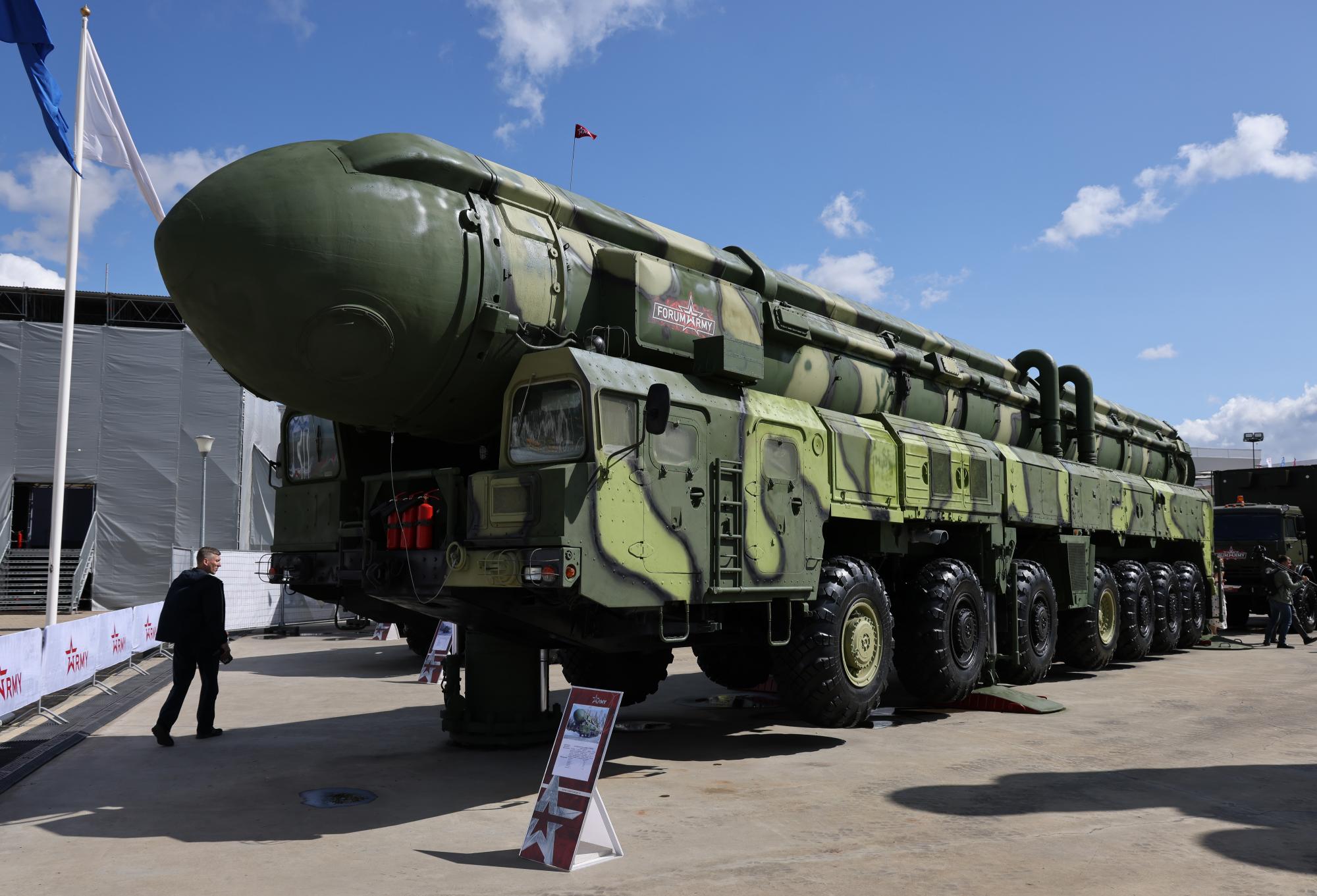 Russian intercontinental ballistic missile Topol-M (photo: Getty Images)
In 1962, the Soviet Union deployed nuclear missiles in Cuba, and the United States imposed a naval blockade of the island. But the leaders of the two states at the time — Kennedy (the 35th president of the United States, serving from 1961 until his assassination in 1963) and Khrushchev (First Secretary of the Communist Party of the Soviet Union) — reached an agreement at the last moment and avoided catastrophe.
In 1983, the Soviet early-warning system mistakenly detected the launch of American missiles against the Soviet Union. Officer Stanislav Petrov, violating instructions, decided that it was a false alarm and did not report it to the command. At that moment, the actions of one person saved the world from nuclear war.
All these dilemmas and risks were described and calculated back during the Cold War. So why, then, are Russia and the United States moving toward terminating the treaty? There are plenty of reasons, and first and foremost, in the United States.
Why the treaty ends
With the start of the russian invasion of Ukraine, relations between the United States and Russia deteriorated to an unprecedented level. This, in turn, affected their contacts on nuclear weapons.
In 2023, Russia suspended its participation in the New START Treaty but stated that it would not violate the limits it set on deployed delivery systems and nuclear warheads. However, the United States lost the ability to verify whether this was actually the case — inspections on Russian territory ceased.
In addition, several new russian developments are not covered by the treaty:
- Poseidon — an autonomous nuclear-powered underwater drone with a nuclear warhead and a virtually unlimited range thanks to a nuclear reactor;
- Burevestnik — a nuclear-powered cruise missile that provides an unlimited flight range and low altitude to bypass air defense systems;
- Oreshnik — a medium-range hypersonic ballistic missile with multiple warheads, capable of carrying a nuclear or conventional warhead and reaching speeds ten times the speed of sound.
Thus, the termination of the treaty creates room for political and psychological pressure for Russia. Even without a real buildup of the arsenal, this allows the Kremlin to raise the stakes and intensify nuclear blackmail in relations with the West.
Moreover, the topic of nuclear weapons gives Russia additional leverage in peace negotiations on ending the Russian-Ukrainian war.
At the same time, the United States has continued to comply with the treaty, so its extension was beneficial for Russia. For the United States itself, however, it only got in the way. And deterring Russia is far from the main factor here.
Read also: On the brink of abyss: Will Iran build nuclear weapons and how to halt it
The key rival of the United States in the world remains China. According to estimates by the Stockholm International Peace Research Institute, China's nuclear arsenal currently amounts to roughly several hundred warheads, but in the coming years it could grow severalfold. At the same time, Beijing is actively building new missile silos and developing the naval component of its nuclear forces.
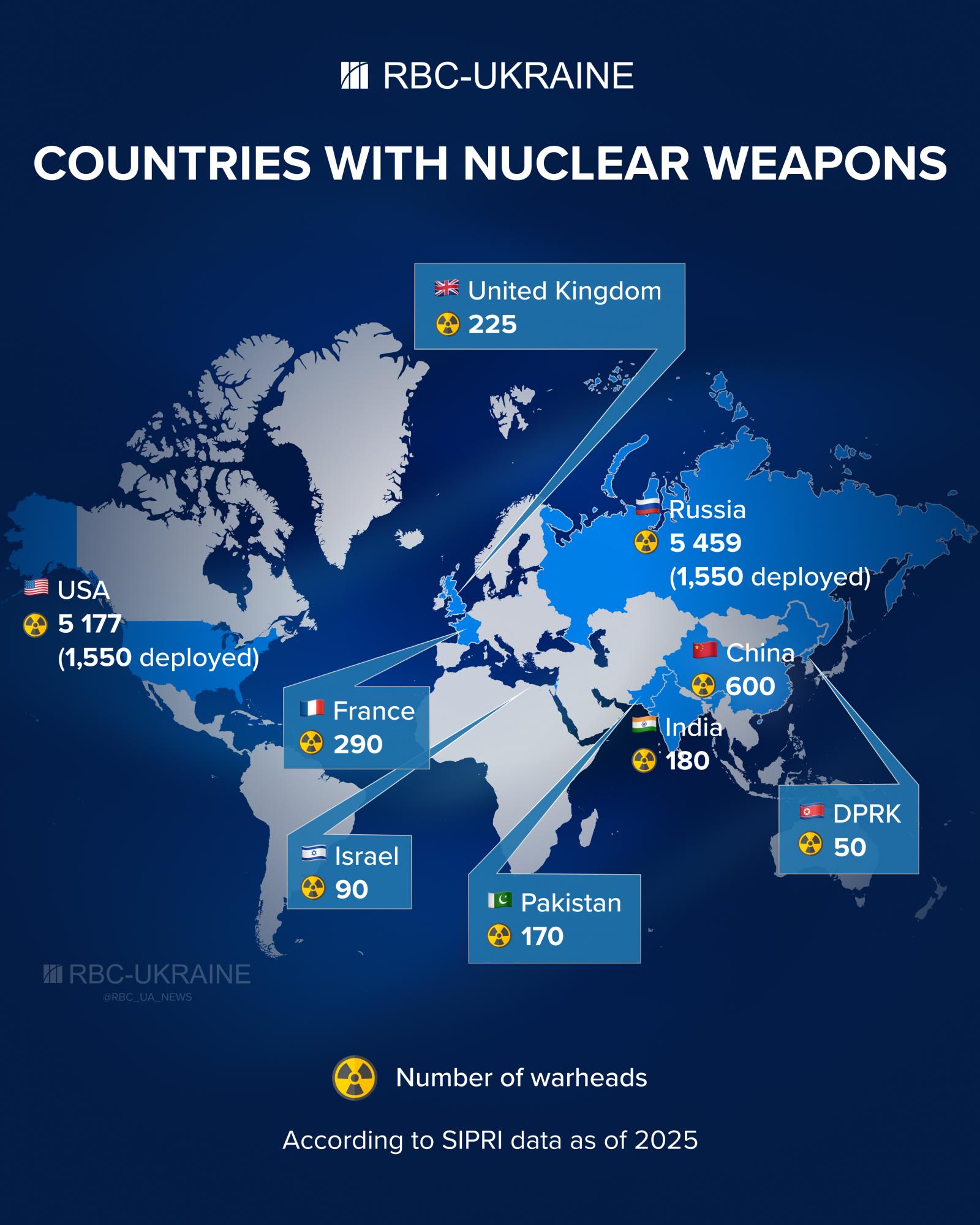 Nuclear-armed countries (RBC-Ukraine infographic)
Combined with Russia’s forces, this constitutes serious nuclear capabilities that pose a real threat to the United States. Therefore, according to Sinovets, Washington now faces the task of deterring both Moscow and Beijing at the same time.
"In fact, it may be necessary not to double, but to significantly increase the American nuclear arsenal, because the Chinese are developing their own and they do not want to join any arms limitation treaty," the expert noted.
Overall, the growing size of China's nuclear arsenal will be the main driver of nuclear weapons production among major powers, John Caves, a Senior Research Associate at the Wisconsin Project on Nuclear Arms Control, agreed in a comment to RBC-Ukraine. At the same time, in his view, the termination of New START is a rather secondary factor.
US plans
If the New START Treaty is not extended, the world will plunge into a new arms race for the first time in four decades, Anton Zemlyany, a senior analyst at the Ukrainian Center for Security and Cooperation, told RBC-Ukraine.
For the United States and Russia, this will be a signal to develop their capabilities, but the challenges facing each country will differ.
When it comes to the United States, a potential arms race would mean a costly and lengthy process of modernizing nuclear weapons, one that would require decades and enormous investment.
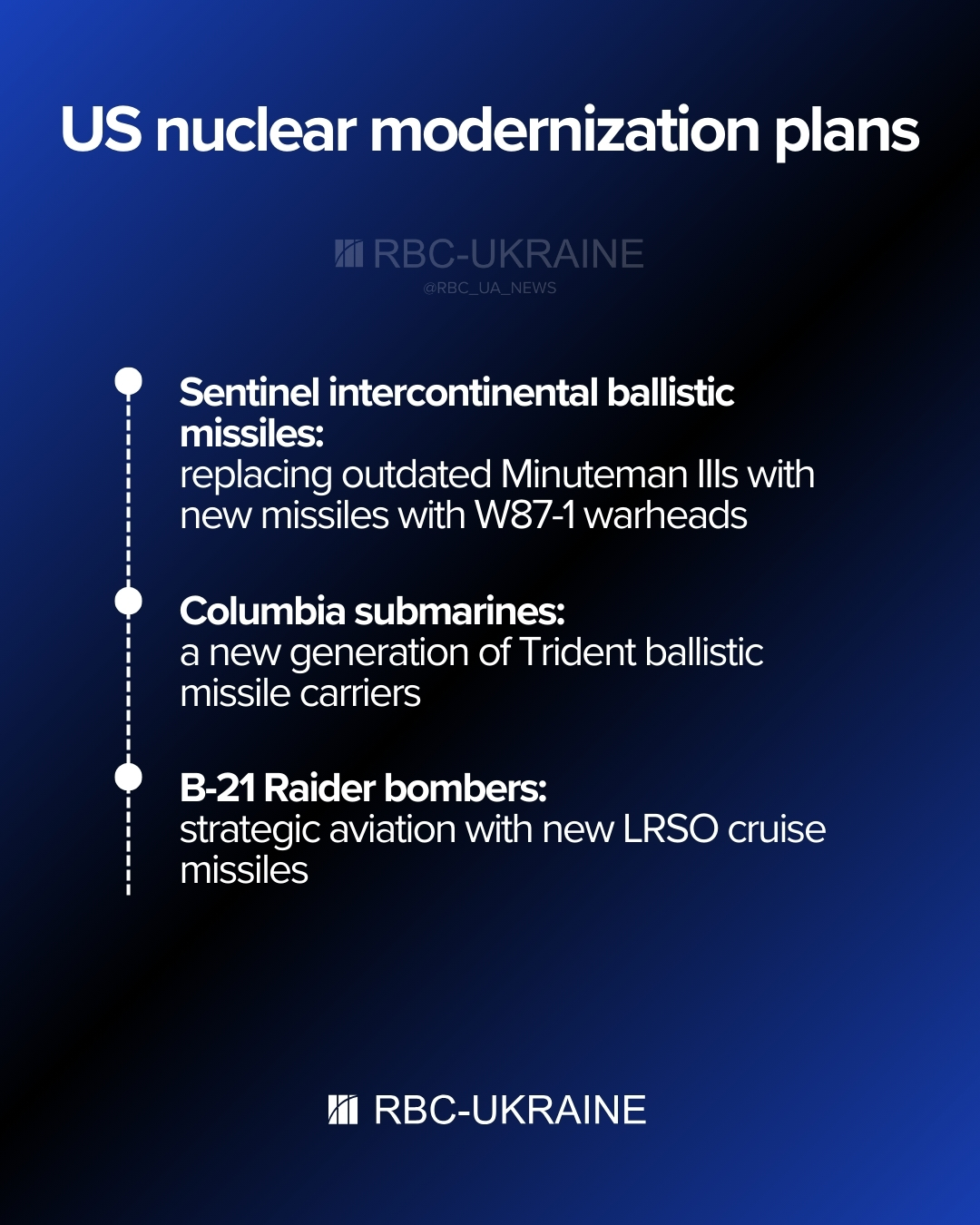 US plans for modernizing nuclear delivery systems (RBC-Ukraine infographic)
"In the case of the United States, the main problem is the development of new missiles, something that has not happened for more than 50 years. The current US arsenal already represents the 13th iteration of the B-61 bomb (in service since 1968 — ed.)," Zemlyany said.
According to estimates by the United States Congressional Budget Office, all of this will cost 946 billion dollars by 2034.
The Kremlin's dilemmas
For Russia, the problem lies primarily in resources and technology, which significantly limit its ability to respond symmetrically. This is one of the reasons why Russia has been trying in every possible way to extend the treaty.
For example, in September last year, Putin proposed extending voluntary compliance with the treaty's main limits for one year, but the United States did not respond to this proposal.
"Such a step may indicate our enemy's lack of readiness to actively participate in nuclear competition, especially given the recent problems with the development and deployment of Russian strategic-range missiles and the constant issues during missile tests," Zemlyany said.
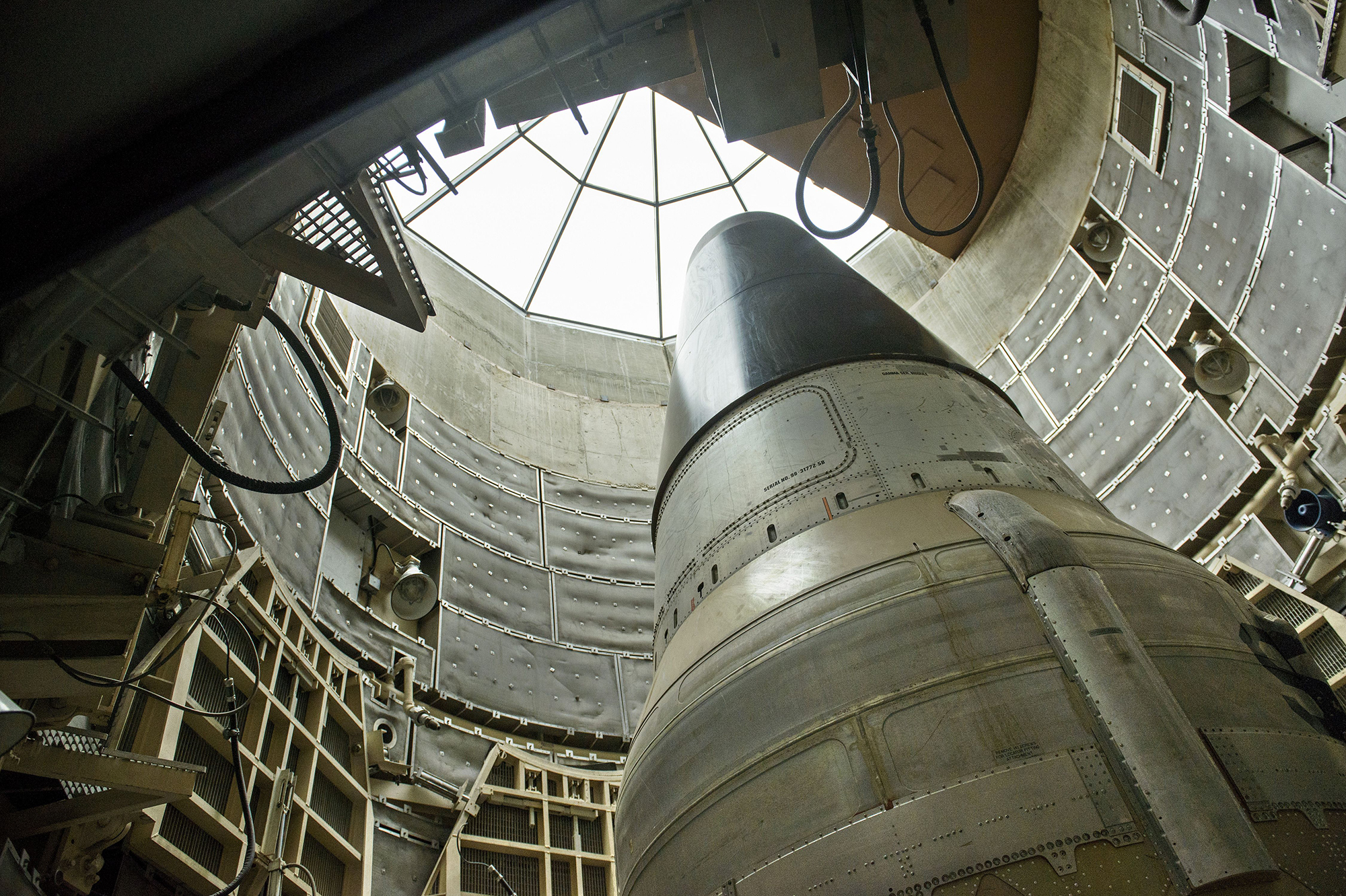 Titan II missile, which was in service with the United States until 1987 (photo: Getty Images)
John Caves doubts that Russia is currently inclined to bear a significant financial burden to expand its arsenal solely because the treaty has expired.
"However, the expiration of New START could provide a pretext for either Russia or the United States to produce more nuclear weapons if one or the other already feels compelled to do so to maintain the strategic balance," Caves explained.
The Kremlin has other priorities. The main one is continuing the war against Ukraine. Still, it appears that Russia may not have much of a choice.
"The Russians do not really want to spend a lot of money on nukes, but they will be forced to, because the Americans will now be spending a lot," Polina Sinovets said.
Read also: Russia's war chest will run dry in two years? What's wrong with its economy and who keeps it afloat
According to estimates by the Russian PIR Center (an independent nongovernmental organization), Moscow must at least maintain the status quo and introduce new developments to counter US progress in high-precision guided munitions and missile defense.
Putin regularly emphasizes that Russian nuclear systems such as Poseidon and Burevestnik ensure military superiority. These developments are considered cost-effective.
The logic is as follows: a small number of advanced weapons creates a minimal burden on the budget, allowing Russia to maintain parity without significant economic strain.
Still, this represents additional spending for the Kremlin. The exact amounts are classified, but according to estimates by the Stockholm International Peace Research Institute, the sums involved run into billions of dollars.
Consequences for Ukraine and Europe
The termination of New START means new challenges not only for the United States and Russia. The consequences will also affect Europe and Ukraine, which have found themselves closest to the potential zone of new nuclear instability. This, therefore, requires a response.
"For Europe, such changes could be an opportunity to improve its own nuclear potential. In particular, there are known discussions of such programs in Germany — namely, the creation of a joint nuclear umbrella with the United States," Zemlyany said.
In this regard, the development — and most importantly, the active production — of new missile defense systems remains strategically important. It is this direction that could fundamentally change the balance of power in nuclear deterrence, Anton Zemlyany believes.
"When the sides have sufficient stockpiles of strategic weapons capable of destroying each other, the ability to counter these threats comes to the fore," the expert emphasized.
However, Donald Trump's actions regarding Greenland indicate that Europe cannot rely entirely on the United States and needs at least partial autonomy.
"First, Europeans need to create their own early-warning system for ballistic missile launches. Second, they need to begin seriously working on the development of their own medium-range ballistic and cruise missiles that would be able to reach Russia," Polina Sinovets added.
Read also: Europe ramps up arsenal with Ukraine helping drive effort for potential Russia war
As for Ukraine, our main priority at present is the development and modernization of our own Armed Forces to effectively resist Russia.
"Given this, creating a system of protection against nuclear weapons is currently not relevant for us," Zemlyany noted.
Overall, the prospects for signing a new treaty on nuclear arms control are now almost nonexistent. The world is entering a period of strategic uncertainty, where fear, assumptions, and demonstrations of force will replace clear rules.
In this reality, Russia’s war against Ukraine becomes not only a regional conflict but a key factor of global security: its outcome will determine whether nuclear blackmail becomes an effective instrument of policy.
Or, conversely, whether the failure of such blackmail — due to Ukraine's resilience and Western support — will finally undermine it as a means of pressure, forcing Russia to seek other ways to achieve its goals. And this could potentially open a window for restoring dialogue on arms control in the future.
Quick Q&A
— Why is February 5 described as entering a nuclear gray zone?
On February 5, the Treaty between the US and Russia on Measures for the Further Reduction and Limitation of Strategic Offensive Arms (known as New START) ceases to be in force. This means that there are no longer any official limits between the world's two largest nuclear powers on the number of warheads and their delivery systems, and the mechanisms of mutual inspections also disappear. The world enters a state of strategic opacity, where each side can expand its nuclear arsenal at its own discretion.
— Why did the United States show little interest in extending the treaty?
The main incentive for Washington is China's growing nuclear power. China is actively building new missile silos and increasing the number of warheads, while not being constrained by any treaties. To deter both Moscow and Beijing simultaneously, the United States is compelled to significantly expand its nuclear arsenal and undertake large-scale modernization — a task hindered by the limits imposed by New START.
— Why is the termination of New START an economic challenge for Russia?
Russia has far fewer resources than the United States and China. Entering a full-scale nuclear arms race requires spending billions of dollars amid sanctions and enormous expenditures on the war against Ukraine. Experts note that Moscow would have preferred to extend the treaty, as it allowed Russia to maintain parity with the United States at a relatively low cost.
— What challenges does Europe face in connection with the new nuclear arms race?
European countries are being forced to think about strengthening their own autonomy. Experts highlight three main areas:
- Creating a joint nuclear umbrella with the United States or an independent one;
- Developing a European early-warning system for missile launches;
- Producing their own medium-range ballistic and cruise missiles to deter Russia.
— How does the collapse of the nuclear control system affect Ukraine?
For Ukraine, the war with Russia is a key factor in this global crisis. The outcome of the war will determine whether nuclear blackmail becomes an effective instrument of world politics. For now, Ukraine's priority remains the modernization of its conventional Armed Forces to resist aggression, rather than creating its own protection against nuclear weapons, which is currently considered an irrelevant task.
Sources: data from the Stockholm International Peace Research Institute, PIR Center, Center for Strategic and International Studies, Washington Post, Reuters, Politico, comments by Polina Sinovets, John Caves, and Anton Zemlyany.