50-year era of nuclear control is ending — FT explains what happens next

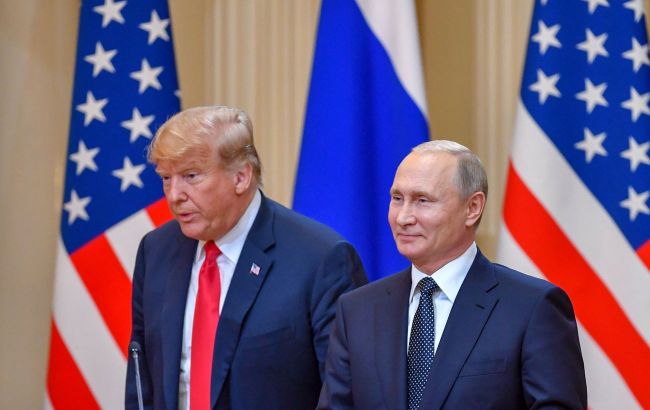 Photo: US President Donald Trump and Russian leader Vladimir Putin (Getty Images)
On Thursday, February 5, the New START treaty, which limited the number of nuclear warheads held by the United States and Russia, expires. After that, there will be no binding restrictions left between the world’s two largest nuclear powers, the Financial Times.
The end of the arms control era
As the outlet writes, the expiration of New START effectively marks the end of more than 50 years of nuclear agreements between Moscow and Washington — from the first Cold War–era accords to post-Soviet treaties.
"I genuinely believe we are now at the threshold of a new arms race. I don’t think in my lifetime there is going to be another treaty limiting numbers," said James Acton, co-director of the nuclear policy programme at the Carnegie Endowment for International Peace.
Positions of the US and Russia
Earlier, Russian leader Vladimir Putin proposed voluntarily adhering to the treaty’s limits for another year, but without the restoration of inspections, such a proposal is largely symbolic.
In response, US President Donald Trump said he would like a new agreement that would also include China, but Washington has so far taken no concrete steps.
"President Trump has spoken repeatedly of addressing the threat nuclear weapons pose to the world and indicated that he would like to keep limits on nuclear weapons and involve China in arms control talks," a White House spokesperson said.
At the same time, Trump ordered the Pentagon to resume nuclear testing "on an equal basis" with Russia and China. Despite this, experts believe Trump could still accept Putin’s proposal at the last moment to observe the treaty’s limits for another year.
Risk of a new nuclear arms race
Former US chief negotiator for the treaty and former Under Secretary of State for Arms Control Rose Gottemoeller said that accepting Putin’s proposal for a voluntary extension makes no sense.
She warned that the United States could find itself in a weaker position if both countries begin competing to increase the number of nuclear warheads on their missiles and bombers.
"The Russians can add warheads faster than we can," she said.
Experts warn that without verification mechanisms and data exchanges, the risks increase of:
-
misjudging each other’s intentions;
-
uncontrolled buildup of nuclear warheads;
-
resumption of nuclear testing.
"The lived experience of arms control treaties is in the implementation, and that includes the inspections, the data exchanges, and the notifications of which there were thousands," said Samuel Charap, a senior political scientist at the Rand Corporation.
The China factor
The United States is increasingly focused on the nuclear threat from China, whose arsenal has grown significantly in recent years. At the same time, Beijing has little interest in negotiations until it reaches parity with Washington.
Nuclear relations in the world
In December last year, delegations from South Korea and Russia held closed-door talks in Moscow on North Korea’s nuclear program and other pressing regional security issues.
At the same time, North Korean leader Kim Jong Un ordered his forces to maintain full readiness to use nuclear weapons, which he said would ensure the country’s most effective defense.
Meanwhile, in early December, Donald Trump stated that the United States, Russia, and China are all interested in the denuclearization of nuclear weapons.