Missile shortage looming? How Middle East conflict could impact Ukraine's air defense


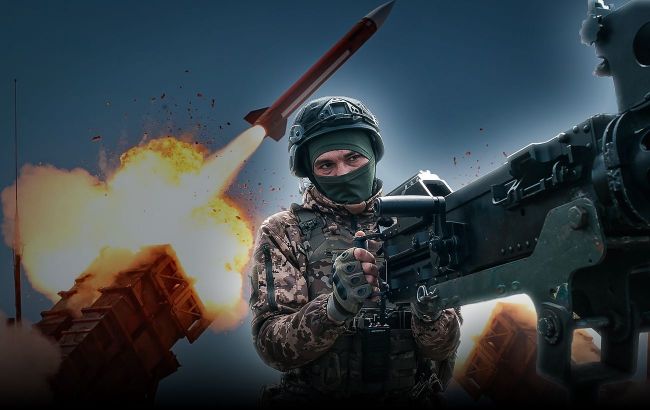 War in the Middle East may cause a global shortage of Patriot missiles, including for Ukraine's air defense (collage: RBC-Ukraine)
Two simultaneous large-scale wars — in Ukraine and in the Middle East — have exposed a problem for which the global defense industry was not fully prepared. Patriot air defense missiles are being used much faster than they can be produced.
Whether a severe shortage of these missiles is possible and what Ukraine should prepare for is analyzed by RBC-Ukraine.
Main points:
- Patriot is the key to missile defense. Patriot today remains the main system capable of intercepting ballistic missiles both in the Gulf countries and in Ukraine.
- Risk for Ukraine. The biggest challenge is not new Patriot batteries, but a possible shortage of missiles for existing systems in the coming months.
- Production cannot keep up with the wars. Global production of PAC-3 MSE interceptors amounts to hundreds of units per year, while in modern conflicts, they are used in the hundreds within weeks.
- Scarce resource. In just 16 days of war in the Gulf, the United States and its allies may have used more than one thousand PAC-3 missiles, while Ukraine this winter alone may have used about 117 such missiles.
- Search for alternatives. Ukraine may try to compensate for the shortage through the development of its own air defense systems, new SAMP/T NG systems, and strikes on Russian ballistic missile production.
Escalation around Iran has sharply increased the burden on the United States air defense systems. This primarily concerns Patriot systems, which have proven effective in intercepting missiles, drones, and aircraft.
These systems are now helping the United States and Gulf countries repel Iranian strikes in the region and helping Ukraine counter Russian missile attacks. Although purchasing countries have to wait years for delivery of these surface-to-air missile systems, production of interceptor missiles for them is far more limited, particularly PAC-3 versions capable of countering ballistic targets.
The simultaneous deployment of two large military conflicts and the possible outbreak of new ones are already creating competition for air defense resources. A much greater challenge for Ukraine is not a theoretical queue for new Patriot systems in the coming years, but a more acute shortage of missiles for existing systems in the near term.
Math of depletion
According to open-source data, in 16 days of the new phase of the conflict, Tehran launched more than one thousand missiles and more than three thousand kamikaze drones at countries in the Middle East and the Gulf.
The peak of the attacks came in the first week of the conflict. After seven days, the number of missiles and drones launched by the Islamic Revolutionary Guard Corps began to decline sharply, effectively decreasing by three to four times. It can be assumed that this was the result of depletion of its own stockpiles, as well as active hunting by the United States and Israel for Iranian military launchers.
The United States and its allies in the region are managing to intercept more than 90 percent of missiles and drones. American THAAD systems, Aegis ship-based systems, fighter aircraft such as F-15, F-16, and Rafale, as well as short-range systems, are being used to repel the attacks. However, interception of most ballistic targets is being carried out specifically by Patriot systems. Saudi Arabia has the largest number of such systems, with up to 25 fire units or batteries.
Data in Western media and calculations based on open figures indicate that the United States and its allies may already have launched more than one thousand PAC-3 missiles to intercept Iranian missiles and drones. This figure may be significantly higher given that, under standard procedures, American air defense crews can fire up to four interceptors at a single target. In addition, Gulf countries also use this system to shoot down Shaheds.
For comparison, officials previously stated that over four years since the start of the full-scale invasion, Ukraine received only about 600 PAC-3 missiles from its partners. At the same time, this winter alone, according to Air Force reports, Ukraine's air defense shot down 117 ballistic, aeroballistic, and hypersonic missiles launched by Russia.
If we assume that Ukrainian air defense crews use Patriot missiles sparingly and fire only one interceptor at each enemy target, then 117 missiles are about one-sixth of annual production. One thousand missiles, used by the United States and its allies to repel Iranian attacks, equals two years of production.
While Lockheed Martin is only expanding capacity to reach a rate of 2,000 missiles per year by 2033, reality in 2026 is much harsher: in 2025, the American company produced 620 PAC-3 MSE missiles, in 2024, about 500, and this year's target is about 650 units. The production cycle for one such missile currently stands at 25 months.
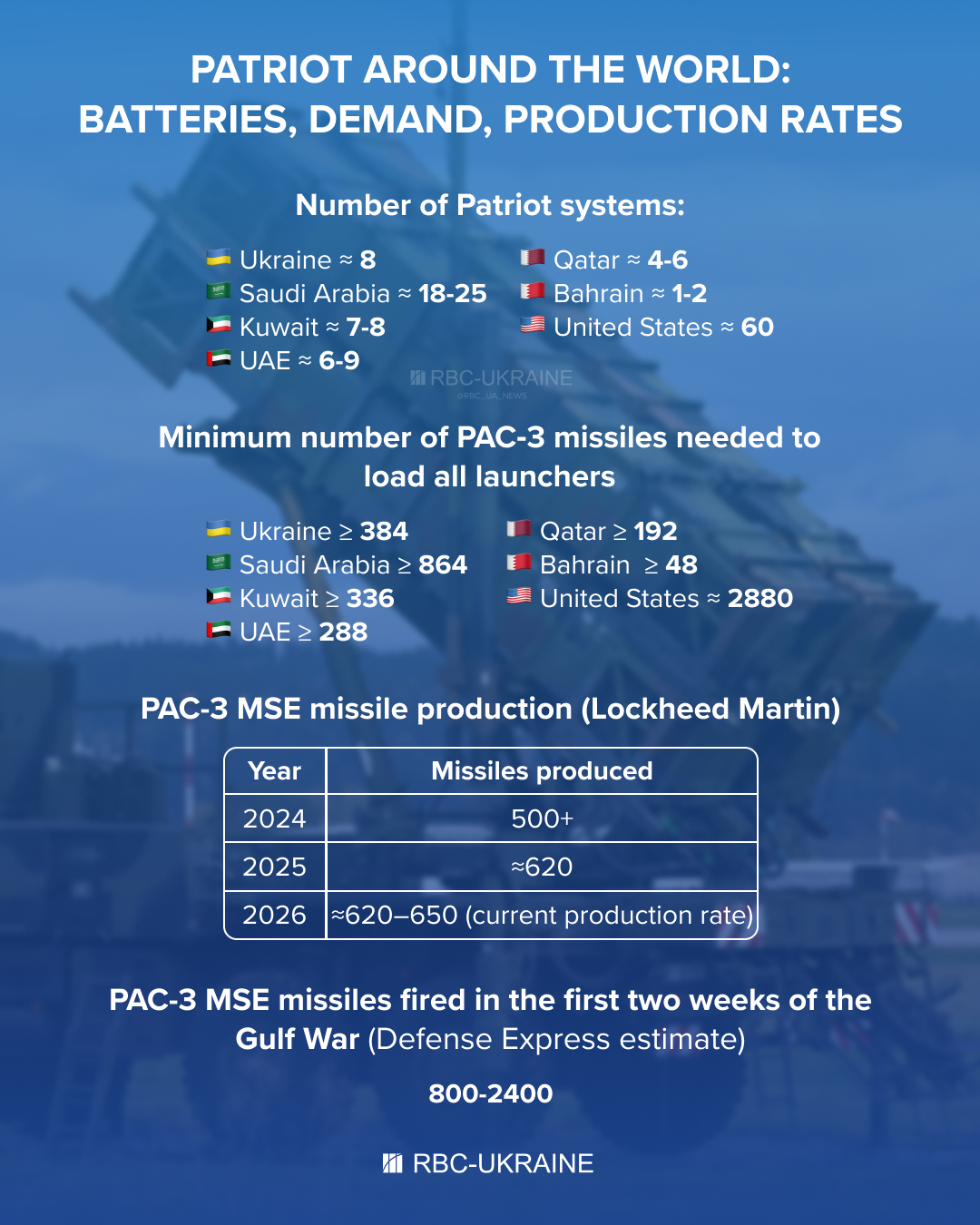
Surface-to-air missile system Patriot: scale of missile demand and production volumes (infographic: RBC-Ukraine)
For Ukraine, this means not just competition, but a struggle for the physical availability of missiles in partners' stockpiles. Western interceptors are becoming a very expensive, scarce resource of modern times, while the Russian ballistic arsenals and Iran's are being replenished straight from production lines.
Ukraine's air defense had already been operating at its limits. Both the president and the Air Force command had previously stated that this winter, Ukraine's air defense repeatedly faced situations where air defense systems were almost empty.
"Now we do not have large numbers of missiles. But I think this war will influence a decrease in the number of missiles and reduce opportunities to obtain more missiles," Volodymyr Zelenskyy said recently.
At the height of the conflict in the Gulf, Germany, together with its allies, assembled 35 PAC-3 interceptor missiles for Ukraine's Patriot systems. According to Spiegel, citing assessments by German officers, this aid package may be enough for only half a month, depending on the intensity of Russian attacks.
"The longer the war in the Middle East continues, the more it becomes a problem for us. It is clear that for Washington, protecting its own forces and partners there will be a higher priority. Already now, the cost of Patriot missiles is rising. Even after a ceasefire there, the risks will not disappear — Gulf countries will seek to replenish what was used and build stockpiles in case of a renewed conflict," one informed military source told the publication.
Sources of RBC-Ukraine assess the timeframe differently in which Ukraine may face a severe shortage of Patriot interceptors. However, all estimates refer to the near term — from one to three months.
"In the short term, we may very quickly face a situation where we need Patriot missiles, but we will not be able to find even 30, because they may not be available either in Europe or in the United States. And this will be a big problem. It turns out that Russians manage to produce more ballistic missiles than Americans are theoretically able to produce Patriot missiles," said a serviceman of the 413th regiment Raid, defense expert at Defense Express Ivan Kyrychevskyi.
Search for solutions
For strikes, Iran uses a very similar arsenal of means as its partner Russia: the vast majority of missiles in salvos are short- and medium-range ballistic missiles, far fewer are cruise missiles, and swarms of Shahed drones.
Moreover, according to informed sources of RBC-Ukraine, Moscow has begun helping Tehran with components for Shahed drones, including Kometa-M communication systems. Whether finished products are being supplied by Russians is still being studied, one of the publication's sources noted.
At the same time, Moscow itself, according to RBC-Ukraine sources, no longer feels critical dependence on components for its Geran drones from Iran.
Ukraine's experience in countering Shahed drones and massive combined attacks is becoming valuable export knowledge, and interceptor drones already used by the Ukrainian army and produced by domestic manufacturers may reduce the cost of interception. The president has already sent teams of specialists to Middle Eastern countries to help them with experience in countering Iranian unmanned aerial vehicles.
He also stated that in exchange for assistance, Ukraine would primarily like to receive scarce Patriot missiles or diplomatic support from Gulf countries in pushing Russia toward a ceasefire. However, several RBC-Ukraine sources assessed skeptically how realistic it is that Gulf countries will be able to help in this. In their view, interest from the Middle East may rather open a new market for Ukrainian manufacturers. However, this is primarily about investment, expansion of domestic production, and reputational advantages for Ukraine as a player in the defense market.
"If we talk about critical assessments of where we will get interceptor missiles in autumn and winter, on the other hand, this will definitely lead to an improvement in our internal efficiency. Perhaps the shortage of air defense missile supplies will eventually push our production to search for solutions and accelerate the development of our own anti-ballistic systems. I think that as a result of the targeted work of all components and bodies of the Defense Forces of Ukraine, structures of the Ukrainian defense industry, and military-political authorities, some asymmetric solution will be found by this autumn," Kyrychevskyi said.
The president recently stated that among the strategic priorities for the new team of the Ministry of Defense is the development of Ukraine's own air defense system and closing the sky.
Another solution for Ukraine could be active actions against the Russian defense industry — enterprises involved in the production and assembly chain of ballistic missiles. One example of such actions recently occurred at the Kremniy-El plant, which specializes in microelectronics production, in Bryansk.
At present, Patriot is the only type of air defense system in service with the Ukrainian army capable of countering ballistic missiles, and there is no official data on the interception of such missiles by the Franco-Italian SAMP/T system.
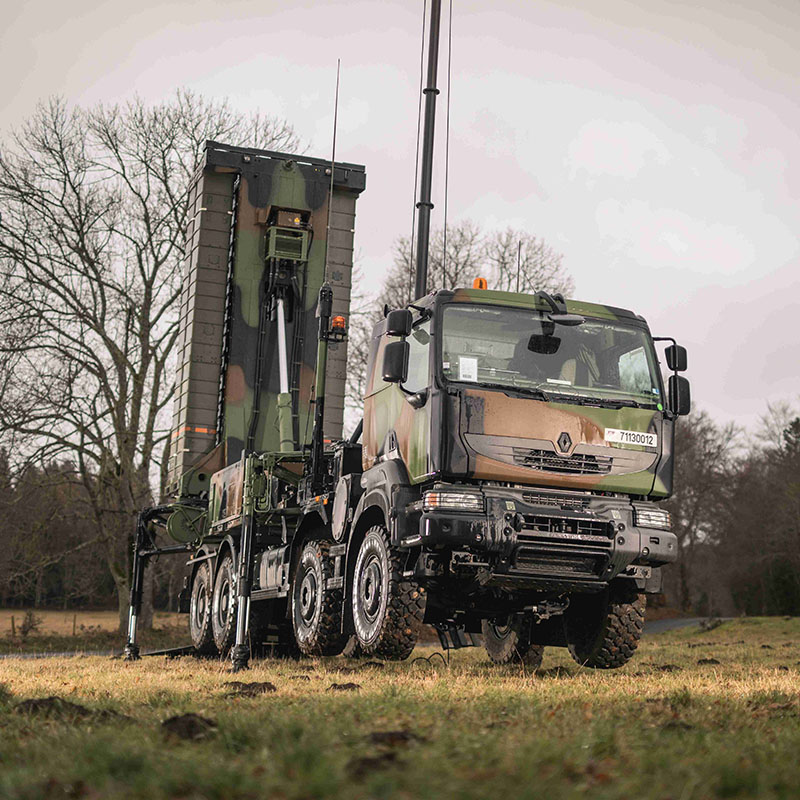
SAMP/T NG (photo: Eurosam website)
"This system performs well in engaging aerodynamic targets. But in intercepting ballistic targets, problems were identified in 2023. The main issue lies in the radar characteristics and computing capacity of the fire control system. However, the French have taken these factors into account and refined the software so that it can deal with ballistic targets. At the same time, it is known that the naval version of Aster 30 missiles has already intercepted anti-ship ballistic missiles launched by Yemeni Houthis," Kyrychevskyi said.
As the expert explains, Europeans have been working for several years to improve their system. If at the beginning of 2023 the production cycle of one missile for SAMP/T was 48 months — four years — it has now been reduced to 21 months.
The Eurosam consortium went further and decided to create an updated version of the system — SAMP/T NG, which is expected to intercept both ballistic missiles and Kinzhal missiles. France has already promised to deliver eight of these new systems, with the first expected to arrive this year and be tested in real combat conditions. In fact, they may also partially compensate for the future problem with Patriot.
For Ukraine, the main risk from the war around Iran is not even the abstract shift of global attention, although that too, but competition for limited air defense ammunition.
Escalation in the Middle East does not automatically mean a reduction in assistance, but it may intensify the global shortage of air defense systems and missiles for them. The world is entering an era in which demand for missile defense significantly exceeds production. Ukraine, in this world, remains one of the main fronts of a new war of technologies.
Under these conditions, the development of Ukraine's own air defense capabilities, integration of new weapons, and asymmetric solutions are becoming increasingly important. These may become the factor that will reduce dependence on scarce Patriot missiles.
Quick Q&A:
– Why does the war in the Middle East affect Ukraine's air defense?
Because to intercept missiles in the region, the United States and its allies use the same systems and missiles as Ukraine — primarily MIM-104 Patriot systems with PAC-3 ballistic interceptors.
– Why are Patriot missiles becoming scarce?
Global production of PAC-3 MSE missiles is about 650 units per year. At the same time, in just a few weeks of escalation in the Middle East, allies may have used more than one thousand such missiles. Ukraine this winter may have used about 117 PAC-3.
– When may Ukraine face a shortage of missiles?
According to estimates by RBC-Ukraine sources, the risk of a shortage may appear in the short term — in the coming months, depending on the intensity of Russian missile attacks.
– What solutions may help Ukraine?
This includes increasing domestic production of air defense systems, strikes on the Russian defense industry to destroy missiles at the production stage, as well as new SAMP/T NG systems from France, the first of which are expected to arrive in Ukraine this year.