Big deal or all-out war? 3 Trump scenarios in Iran and what they mean for Ukraine


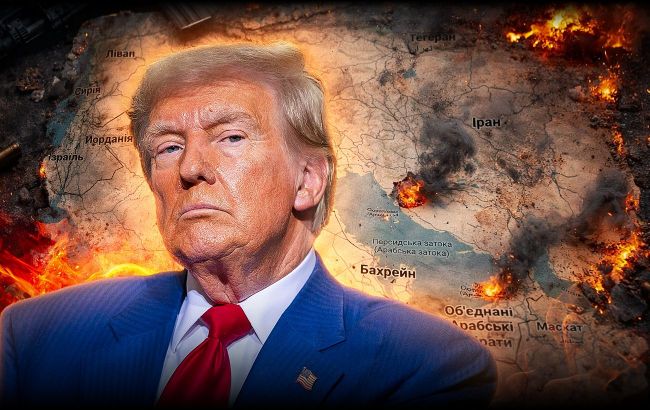 President of United States Donald Trump (collage: RBC-Ukraine)
The war between the United States and Israel against Iran has been ongoing for almost two weeks. Prospects for its end remain unclear.
What scenarios are now available to Donald Trump? Read the article by RBC-Ukraine.
Key points:
- Ukrainian interest. The Iran campaign has once again pushed Ukraine down the global agenda and worsened the shortage of Patriot missiles. However, Kyiv may play its own card by offering Gulf countries real military assistance and combat experience.
- Three paths for Trump. White House faces three scenarios: prolonged war to the end (risk of new Syria and huge profits for Russia from high oil prices), Grand Deal (repeat of Venezuela scenario), or outsourcing war (shifting responsibility to Israel and Arab countries).
- Strategic uncertainty. Donald Trump has taken the method of uncertainty to an extreme: goals, methods, and even the definition of victory in war with Iran remain unclear even to his own administration, which resembles Kremlin actions in Ukraine.
Three scenarios for Iran that Donald Trump could choose (RBC-Ukraine infographic)
Ukraine is no stranger to its war being pushed to the background of global attention for certain periods.
The most vivid example was the attack by Hamas terrorists on Israel on October 7, 2023, and the subsequent actions by Israel that followed shortly after. Given that the Middle East has always occupied more space in Western consciousness than Central and Eastern Europe, global media and political circles quickly shifted attention to the new war.
Something similar happened last summer during the previous 12-day war between Iran and Israel.
However, since Russian aggression against Ukraine continued throughout this time, no one in the West could forget about it for long.
Israeli-American operation against Iran has once again pushed Ukraine down the global agenda. Perhaps again only temporarily. But the consequences this time are expected to be more long-term.
Trump's uncertainty
The United States has long relied on the method of strategic ambiguity and has successfully applied it for decades, for example, in relations with Taiwan and China. On one hand, without formally recognizing the island, and on the other, promising to help it in case of attack from the mainland, while at the same time successfully developing pragmatic relations with both Beijing and Taipei.
It is unclear whether US President Donald Trump is aware of this method. But in the case of the current war in Iran, he has taken it to an absolute level.
It remains completely unclear — apparently even for the American administration itself — what goals of war are, what methods may be used to continue it, how it should end, and what should actually be considered victory.
And if US plans are unknown even to the United States itself, then no Iranian intelligence service would be able to intercept them, even in theory.
Of course, parallels with Russian aggression against Ukraine are too obvious not to notice. Even at a purely stylistic level. Trump's phrase "We haven't even started hitting them hard" is almost a literal repetition of Putin's statement in the summer of 2022.
The goals of the Russian invasion remain completely unclear, even in the fifth year since it began, primarily for its initiators and participants. Official Kremlin rhetoric continues to repeat the same set of claims: from arguments that Ukraine would have attacked first to denazification, from protecting Russian speakers to stopping NATO expansion.
Trump and his enthusiastic allies also generate new arguments every day while repeating old ones: from claims that Iran would have attacked first to the need to defend allied Israel, from destroying the nuclear program to freeing the Iranian people from tyranny.
Most likely, both the Kremlin and White House follow the old rule: whatever we hit becomes a goal, whatever we achieve becomes an objective.
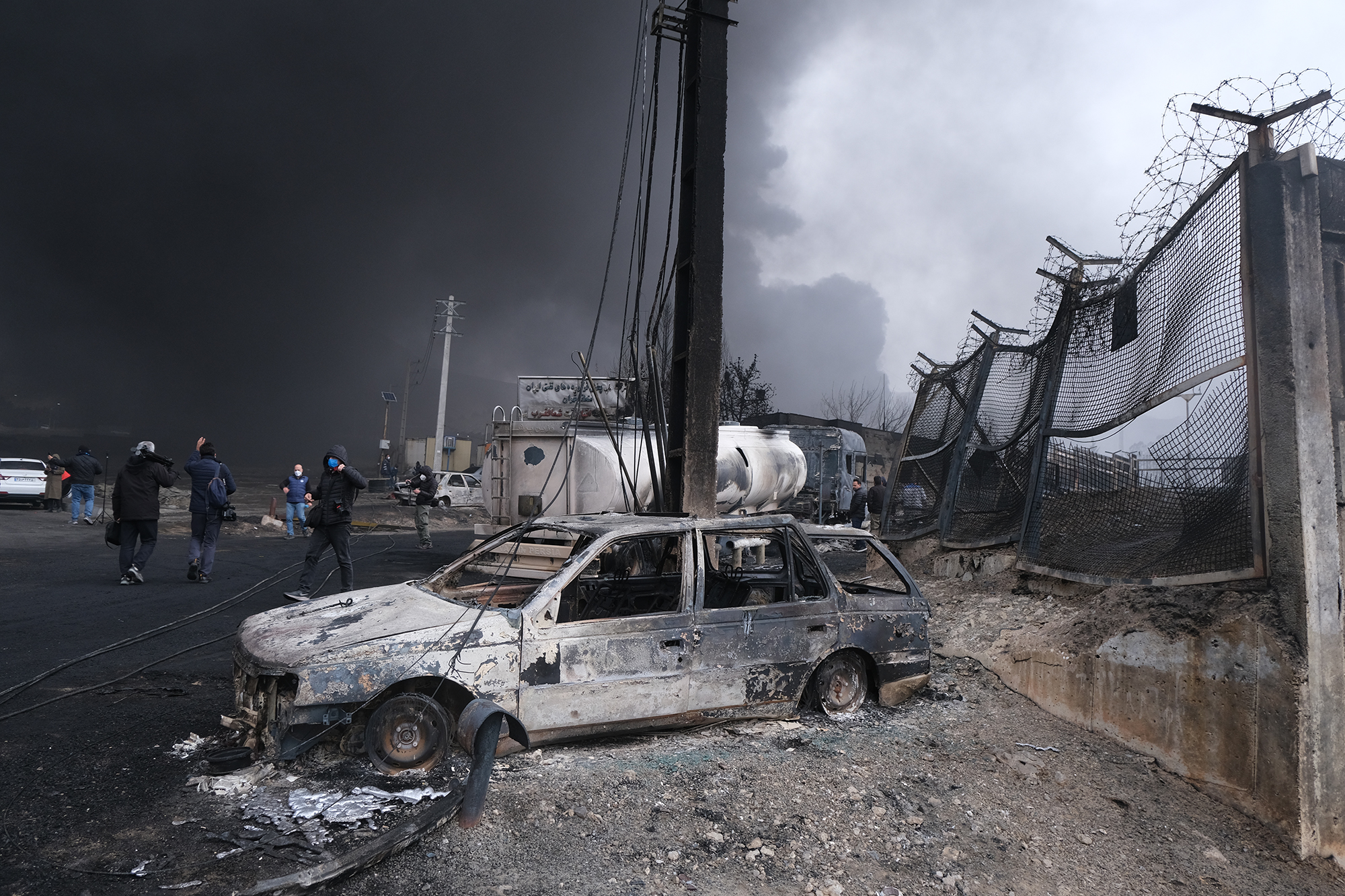
Aftermath of strike on oil refinery in Tehran (photo: Getty Images)
Of course, Russian propagandists have eagerly seized on this entire story, saying: Why is it allowed for them now but was not allowed for us then? Since Stalin's famous line, "and you are lynching Negroes," the techniques have remained unchanged.
The main, fundamental difference, however, lies on the surface: unlike peaceful democratic Ukraine, Iran in recent decades has posed a real threat to nearly all its neighbors, both immediate and more distant ones. And it has repeatedly turned these threats into reality by directing and supporting various terrorist groups and other people's militias.
Another matter is that threats can be addressed in different ways. If one imagines Iran (and more broadly, the entire Middle East) as one large and leaky barrel of gasoline, the most obvious method would be to ensure maximum fire safety and preventive measures around it.
Donald Trump, however, launched a series of fireworks into that barrel. Entirely in his own style, he distracts the attention of Americans and the rest of the world from one crisis by creating another.
At least in pro-Democratic American media and especially in satirical political shows, which are very popular in the United States, the version that the war in Iran is mainly a way to distract attention from the Epstein files is quite widespread.
"We didn't start this war, but under President Trump, we are finishing it," US war minister Pete Hegseth promises.
In reality, the situation is much more complicated, and almost any war is always easier to start than to end.
The set of options now facing Trump is actually very limited.
War to the end
Iran stubbornly refuses to capitulate, continuing to strike back and attack its neighbors around the perimeter, while possibly saving its most serious missile capabilities for last, when enemy air defenses are already exhausted by Shahed attacks.
Iran's conventional forces have also been heavily battered, but the regime is holding. Trump finally decides on a ground operation, apparently using the long-suffering Kurds. Multinational and multi-religious Iran turns into bloody chaos — Syria on steroids.
Even in the case of eventual victory of the supposed good guys over the bad guys, following the Syrian example, it would remain a source of instability in the region for a long time.
In the process, oil prices break through the ceiling. Russia repairs its hole-ridden budget and continues the war of attrition against Ukraine for many more years.
Big deal
This is likely the most desirable scenario for White House, which is stated almost openly. Essentially, Venezuela 2.0.
However, the Iranian regime appears far more resilient than the Latin American one. It demonstrated this in practice, even during these two weeks of war, the death of any leader or commander does not paralyze the system. Vacant positions are quickly filled by new people.
In addition, in the case of Venezuela, it was not necessary to take into account factors such as the willingness of a large number of people to give their lives for the arrival of the Hidden Imam, Muhammad al-Mahdi, and the end of times. This component may have been overlooked by Trump and his team of geopolitical strategists led by Steve Witkoff.
On the other hand, the Iranian regime does not appear completely monolithic. After the death of Ayatollah Khamenei and the election of his son as the new leader, all power in the country effectively shifted to the military elite — the Islamic Revolutionary Guard Corps.
Based on the number of indirect signs, it can be concluded that other, more moderate wings of the Iranian elite are not enthusiastic about this development. Therefore, they are capable of negotiations. But only if they manage somehow to seize control of the situation, for now, the Islamic Revolutionary Guard Corps positions appear quite strong.
For Ukraine, a big deal could also be the best possible option. Especially if it includes the return of vast Iranian oil reserves to the global market. But even unblocking the Strait of Hormuz alone would lower global oil prices — and therefore reduce the flow of petrodollars to Moscow.
War outsourced
It would not be the first time Trump abandons his allies. Syrian Kurds could tell many stories about that.
The United States, and Trump personally, of course, have far stronger ties with Israel and the monarchies of the Persian Gulf. But not to the extent that their interests would become more important to the US president than his own.
If polling data becomes convincing enough for Trump to realize the possible catastrophe for Republicans in congressional elections, the United States may well withdraw from the war.
Most likely shifting responsibility for its continuation to Israel and the Arab Gulf states, possibly with American support through intelligence sharing and air defense missiles.
This last point is most unpleasant for Ukraine in such a scenario. Shortage of Patriot missiles — which Arab countries used more of in the first days of war than Ukraine in four years — is a real problem already voiced at the highest political level.
However, precisely here, Ukraine may finally have "cards" that Trump has so far stubbornly ignored. Practical military assistance to Gulf monarchies is something Kyiv could play — including with the participation of Americans. Ukraine, as a contributor to global security, is no longer just a beautiful phrase from panel discussions in Munich, but a reality.
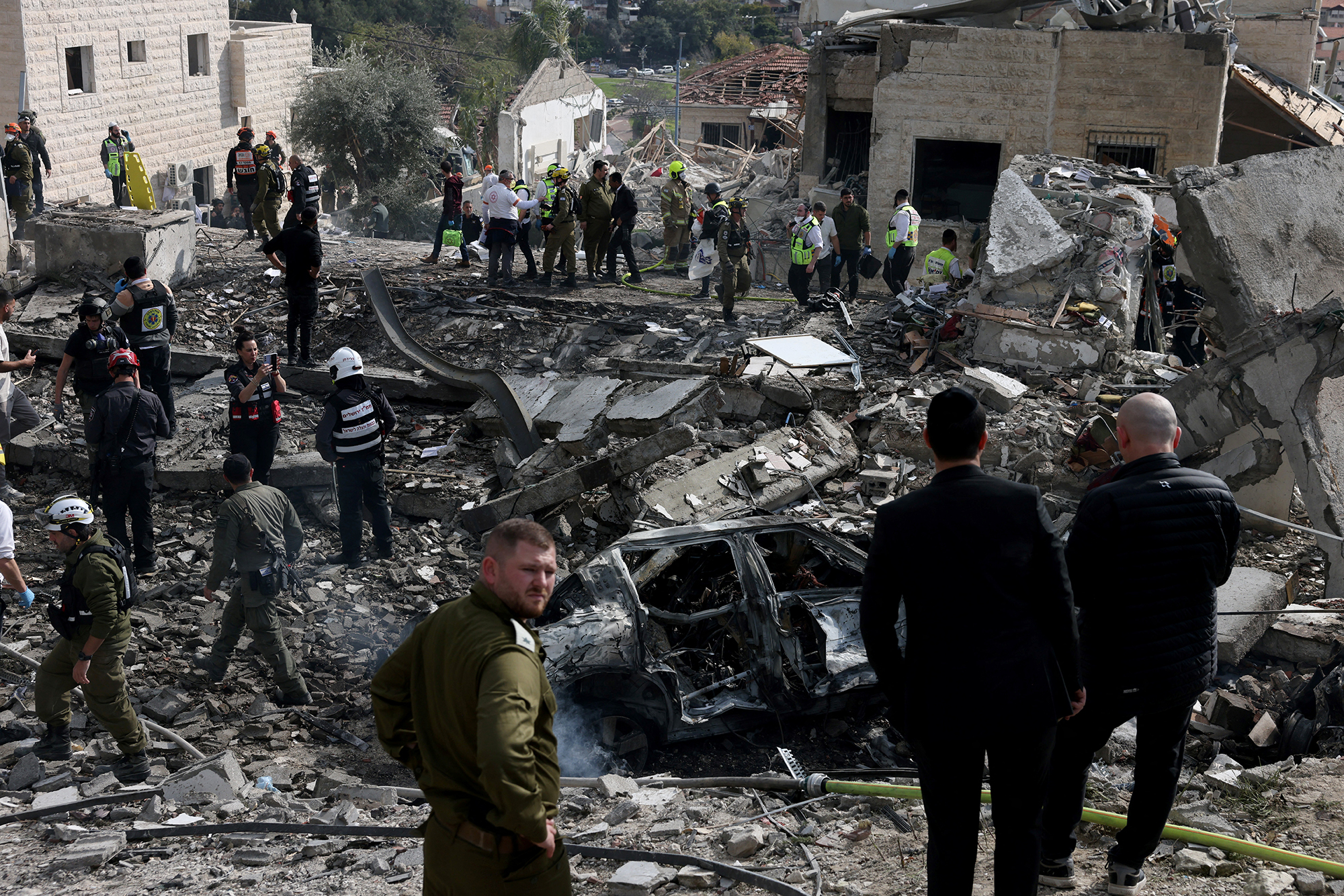 Aftermath of Iranian strike on Israel (photo: Getty Images)
At the same time, the Middle East region will continue to burn, or at least smolder, for a long time. The Iranian regime, having lost part of its military potential, will compensate with the potential of anger. Oil prices will remain at levels higher than before the war, with possible easing for Russian oil as well. This would increase Russia's ability to continue the war, though not as confidently as in the first scenario.
Much will depend on how the US exit from the war is arranged. Whether it will be gradual and carefully planned, or in Trump's style — unexpected for enemies, allies, and even his own administration.
Anyone who regularly watches Trump's public speeches can easily imagine the US president declaring something like a great American victory — perhaps even the greatest in history, bigger than in 1945 when Nazi Germany was defeated.
Especially since Cuba is waiting. And Greenland has not been mentioned for a long time.
Quick Q&A
– Why is the new war in the Middle East dangerous for Ukraine?
It once again pushes Ukraine down the global agenda and creates a long-term threat of resource shortages. In particular, US allies in the Gulf used more Patriot missiles in the first days of the conflict than Ukraine used in four years.
– What similarities exist between the actions of Trump and Putin?
Both use similar rhetoric where goals and methods of war are unclear, even to their own administrations.
– Which of Trump's scenarios is most beneficial for Kyiv?
Scenario of big deal (Venezuela 2.0). Unblocking the Strait of Hormuz and the return of Iranian oil to the global market would push down global prices, depriving Moscow of windfall profits needed to continue aggression.
– How can Ukraine protect its interests in this situation?
Kyiv needs to become a contributor to security by offering Gulf monarchies its practical experience in countering drones. This would turn military support for Ukraine into a pragmatic exchange of resources and technologies.