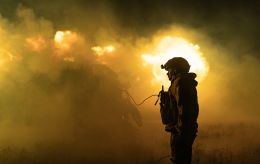
Spring offensive begins: Russia ramps up attacks across multiple front lines in Ukraine


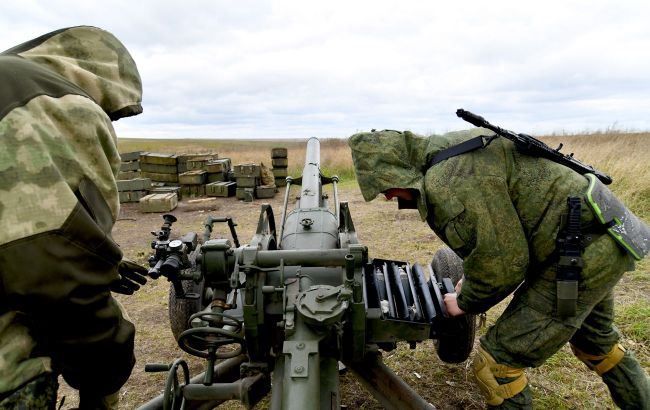 Russian forces begin spring–summer offensive on several frontline sectors (photo: Getty Images)
Amid unsuccessful negotiations, Moscow will once again try to achieve its goals on the battlefield. Russian forces have already intensified offensive operations on several frontline directions.
What plans and intentions Russian forces have for the spring–summer campaign, read in the RBC-Ukraine article.
Key points:
- A new phase of the offensive. Since mid-March, the Russians have intensified attacks in different directions of the front, but they have several priority targets.
- Fortified cities are the main target. Moscow aims to reach Sloviansk and Kramatorsk, trying to encircle the agglomeration from several directions.
- Cities are the key to defense. As long as Kostiantynivka and Lyman hold, it will be difficult for the enemy to begin battles for Sloviansk and Kramatorsk.
- Russian deadlines. Moscow wants to occupy Kostiantynivka by April 25, and the entire Donetsk region by the end of the year.
- The south is the second axis of pressure. Russia is building up forces at the junction of the Dnipropetrovsk and Zaporizhzhia regions and is simultaneously preparing for actions in the Huliaipole and Orikhiv directions.
- No breakthrough. Despite ambitious goals, the Russian offensive is already facing limitations and so far does not demonstrate the ability to achieve rapid breakthroughs.
Since mid-March, the Russians have launched their spring–summer offensive campaign, resuming attacks in most directions of the front. Ukrainian Defense Forces managed to repel the first enemy assaults, which have already cost Moscow thousands of losses.
At the moment, the enemy's increased activity can rather be described as reconnaissance in force. Trends from previous years indicate that after the winter decline, the enemy moved to a significant intensification of offensive actions in April, when the ground finally dries out, and more vegetation appears, which assault units can use for cover.
In addition, the enemy does not have the forces to conduct large-scale assaults along the entire front line, which stretches over more than 1,200 kilometers. Most likely, across most sectors, it will carry out tactical actions to pin down our troops. Instead, the Russians will concentrate their main efforts on several priority directions, where they will attempt to achieve results over the next five months.
Fortified belt
The enemy's main priority for the spring–summer period will be creating conditions for battles for Sloviansk and Kramatorsk in the Donetsk region. For this purpose, the enemy has already intensified activity in three directions (according to the General Staff's naming) – Lyman, Sloviansk, and Kostiantynivka, and continues to push in a fourth – Pokrovsk.
"At the moment, in the area of responsibility of the Operational Strategic Group East, we are recording the highest number of combat engagements precisely in the areas of Pokrovsk and Kostiantynivka. The enemy will not be able to carry out any large-scale offensives in other directions as long as Pokrovsk and Myrnohrad hold," Hryhorii Shapoval, spokesperson for the Operational Strategic Group East, told RBC-Ukraine.
According to him, the 7th Corps is doing a lot of work in the areas of Pokrovsk and Myrnohrad and continues to remain in these cities, having established logistics. "Part of these cities is still under our control. A significant part of the territories in this agglomeration is in the grey zone, but the enemy is currently stuck there," Shapoval said.
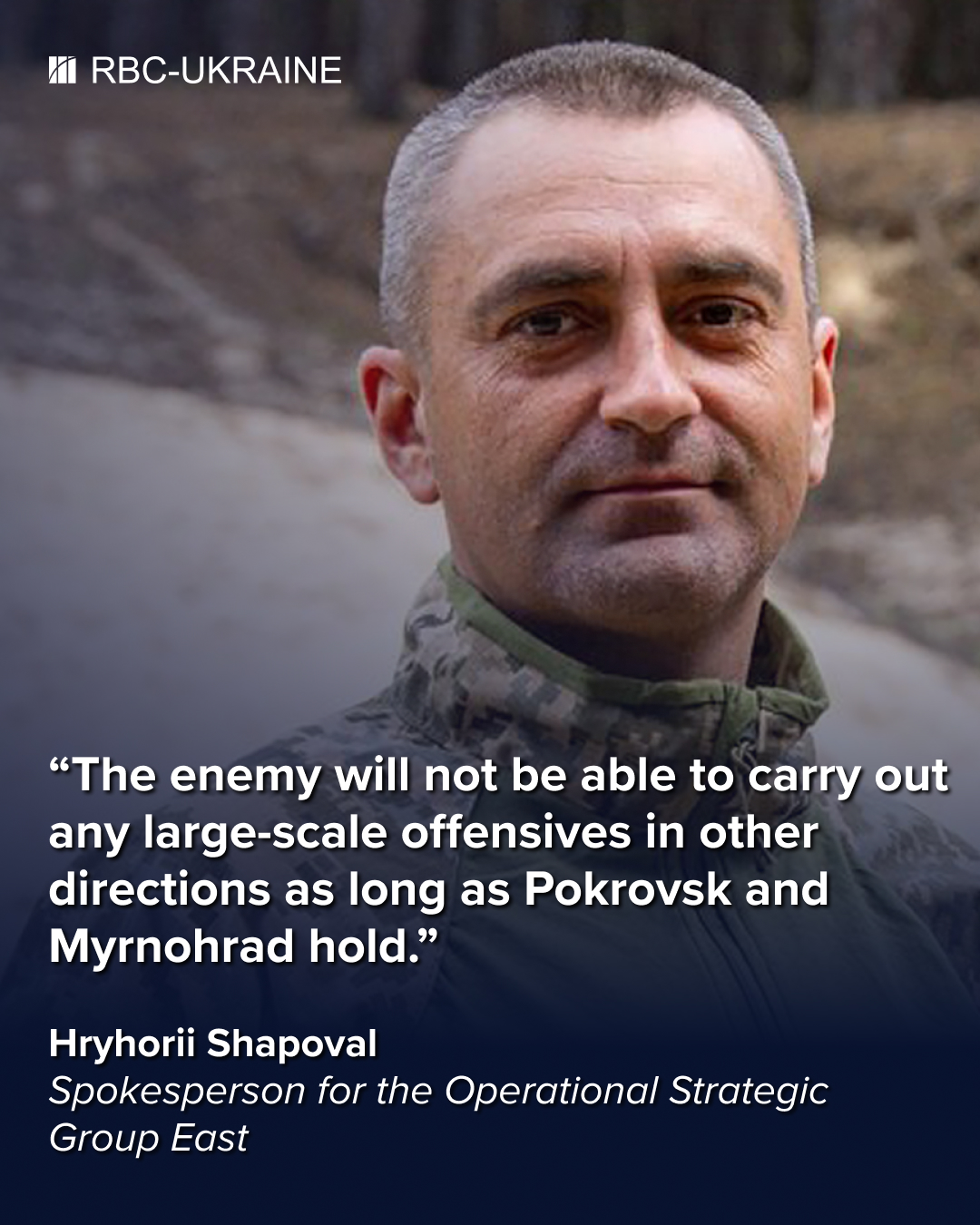 Hryhorii Shapoval — on the Pokrovsk direction and Russian offensive capabilities (photo: RBC-Ukraine infographic)
The enemy's strategy regarding Sloviansk and Kramatorsk is based on attempts to encircle them to avoid exhausting frontal clashes. The enemy's plan provides for strikes from four sides. In particular, one enemy grouping from the areas of Pokrovsk and Dobropillia would move west toward the administrative borders of the Donetsk region and, at the same time, northeast to bypass Kostiantynivka and Druzhkivka from the west.
Those forces that are fighting for Kostiantynivka itself plan to advance further toward Druzhkivka and Kramatorsk from the south. The northern flank will be secured by an offensive from the Lyman direction toward Sloviansk. Units advancing from the direction of Siversk and Soledar will try to approach the agglomeration from the east.
So far, only the last of the listed groupings is closest to fulfilling these tasks. The other flanking units are currently conducting not very effective battles for Kostiantynivka and Lyman, and not in the cities themselves, but only on their approaches.
Recently, the 3rd Army Corps reported repelling one of the largest Russian mechanized assaults in recent times in the area of Borova and Lyman, involving 28 units of armored vehicles and about 100 units of motorized equipment. The enemy seeks to occupy Borova, located near the Oskil River, as well as to encircle Lyman from the west, north, and south. At present, it is already putting pressure on the city from the east.
The spokesperson for the 3rd Army Corps, Oleksandr Borodin, says that despite the failed mechanized assault, the enemy has not stopped offensive actions in their area of responsibility. However, the enemy has now returned to the tactic of small infantry groups, sometimes using quad bikes or motorcycles. According to him, enemy soldiers are trying to infiltrate toward Lyman, but these infiltration groups are quickly detected and neutralized.
"The offensive actions we saw recently, and what we saw in 2022 – maneuverable, mechanized blitz offensives by the Russians – are costly for them, because restoring equipment is quite expensive. The Russians chose a tactic aimed at undermining our personnel rotation capabilities through small-scale assaults. They do not count their losses, so from an economic standpoint, this approach is beneficial for them," Borodin explained to RBC-Ukraine.
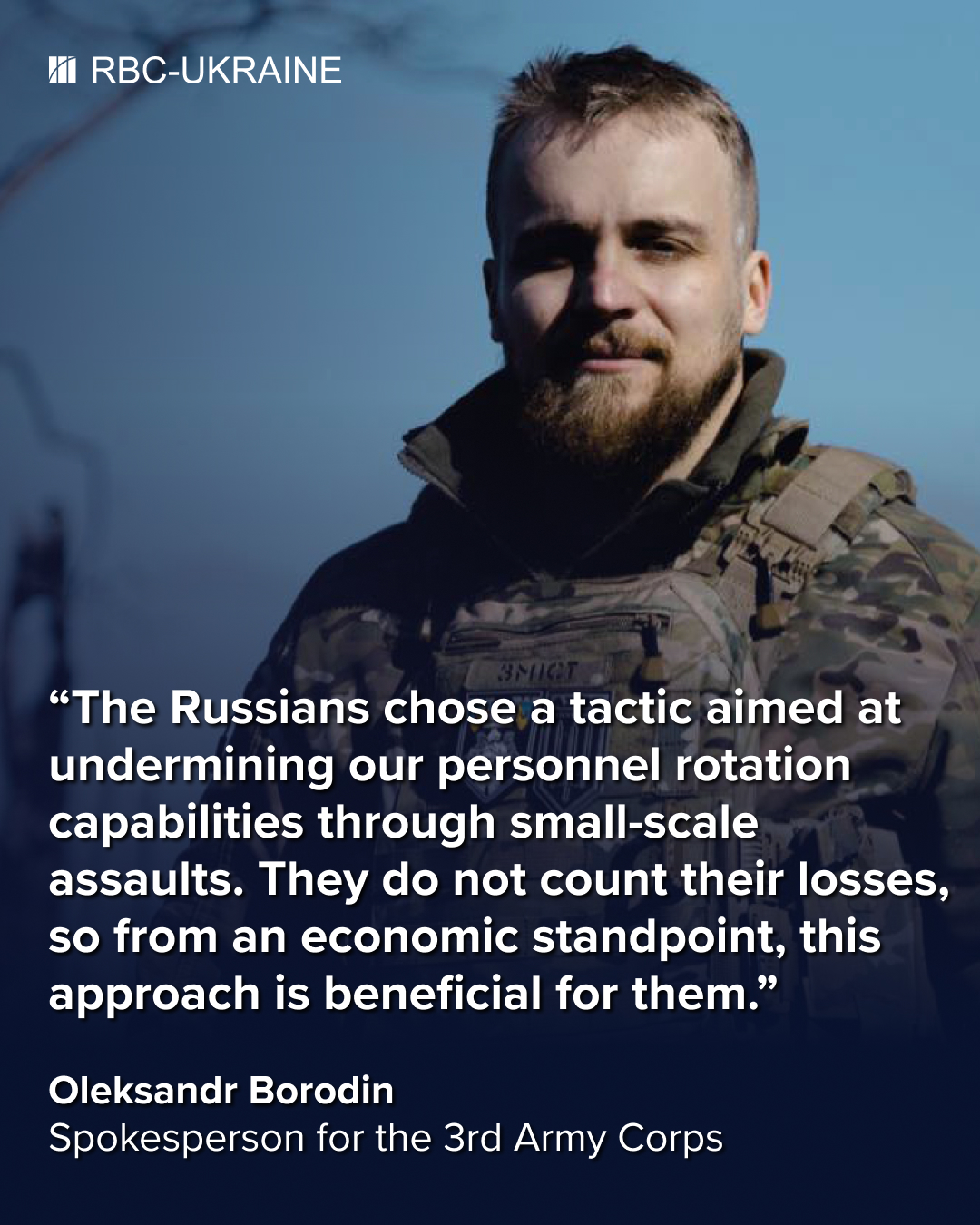 Oleksandr Borodin — on Russian tactics on the front line (photo: RBC-Ukraine infographic)
Using the same tactic, the enemy is also operating in the area of Kostiantynivka, trying to constantly send infiltration groups into the city. Dmytro Zaporozhets, spokesperson for the 11th Army Corps, which is holding the defense in the agglomeration area, notes that the Russian command has set a deadline for itself to capture Kostiantynivka by April 25. At the same time, he considers these timelines unrealistic.
Based on the nature of their actions, the enemy is primarily trying to enter the settlement itself. This creates favorable conditions for hiding personnel, but also forces them to conduct urban combat. And urban combat will not allow them to quickly capture the settlement, while flanking maneuvers are currently not working for them, Zaporozhets explained.
"Therefore, the timelines they have planned for themselves can be multiplied by N months. If they carry out active assault actions and commit all available resources to capturing Kostiantynivka, then, in my opinion, they may achieve something, but not earlier than October," the serviceman suggested in a conversation with RBC-Ukraine.
He added that the Russians are preparing to use equipment and motorized vehicles and will likely build their offensive actions against Kostiantynivka in several waves: first, faster transport such as motorcycles will be used, the second wave may include buggies and cars, and then armored vehicles with personnel may follow. Their task will be to secure positions on the outskirts in order to later conduct combat operations within the city itself.
"Some infantry is being pulled into Kostiantynivka, and it becomes harder to eliminate them. If in open terrain one FPV drone is enough for one enemy soldier, then to flush out one enemy soldier in urban areas it already takes five FPV drones. When a larger number of enemy forces infiltrates the city, they will be able to coordinate the actions of other personnel during offensive operations. And, most likely, these offensive actions will be combined with their actions in the Kramatorsk direction," the spokesperson for the 11th Corps believes.
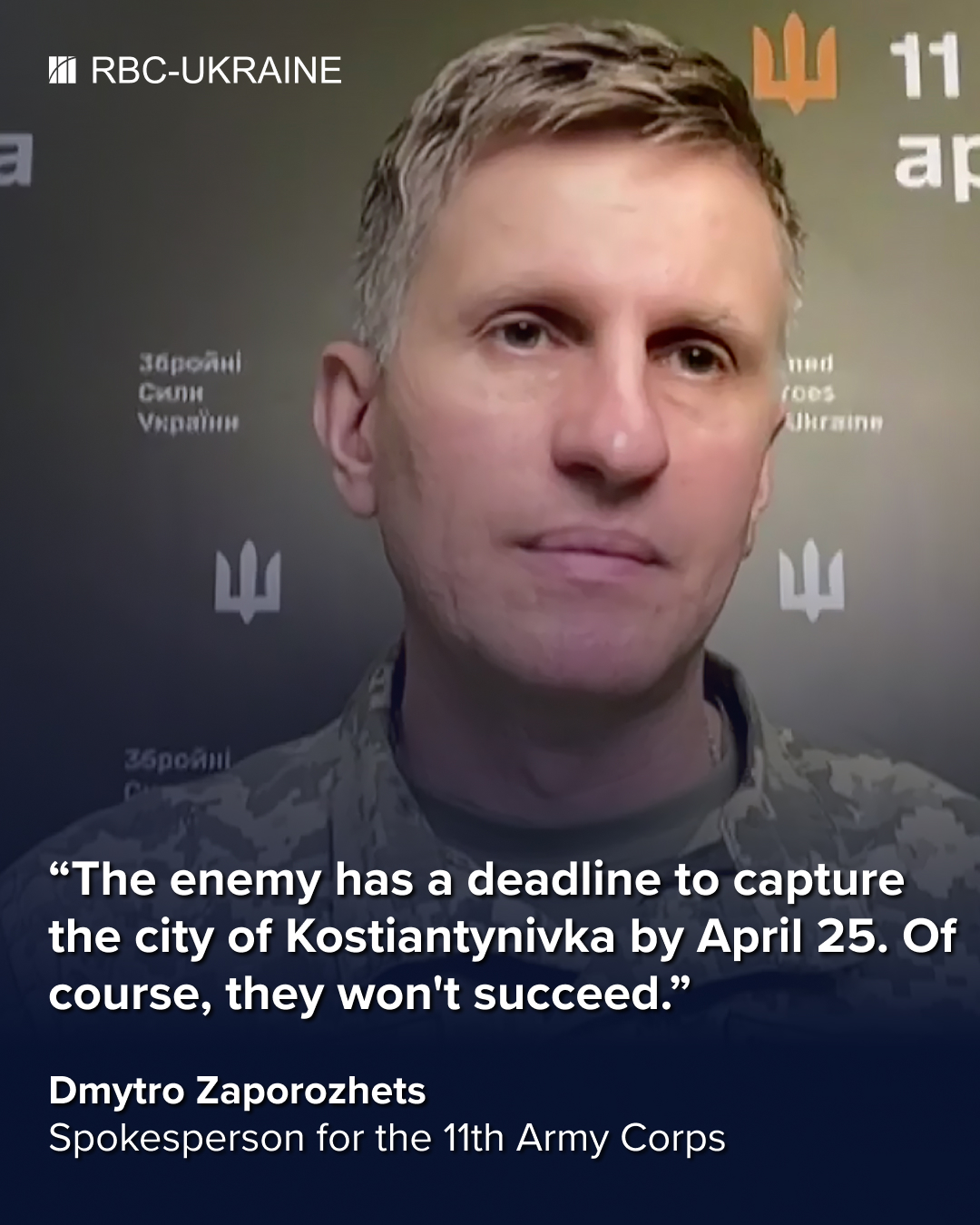 Dmytro Zaporozhets — on Russian plans regarding Kostiantynivka in the Donetsk region (photo: RBC-Ukraine infographic)
However, before moving toward Kramatorsk, the enemy needs not only to capture Kostiantynivka but also to align its flanks in Chasiv Yar. At present, the closest enemy positions to Kramatorsk are located 17 kilometers to the east, in the areas of Pryvillia and Fedorivka Druha. The distance to Sloviansk is approximately the same.
"If we take Sloviansk, for example, Raihorodok, and Mykolaivka, these are settlements from which they can gradually build up offensive actions toward Sloviansk itself. And for them, this is more advantageous in terms of logistics than approaching from the direction of Kramatorsk. If supply routes to Sloviansk and logistics toward Izium are cut off, then it will be more difficult to conduct any defensive actions in the Kramatorsk direction, since the main logistical artery from Kramatorsk runs through Sloviansk. That is why the enemy’s focus is currently more concentrated on the Sloviansk direction rather than the Kramatorsk direction," the serviceman said.
The south and buffer zones
Another priority direction for the enemy during the spring–summer campaign will be the Oleksandrivsk direction, the so-called junction of the Dnipropetrovsk and Zaporizhzhia regions. Over the past two months, the Defense Forces have carried out counteroffensive actions in this area, liberating most of the territory in the Dnipropetrovsk region where the enemy had previously managed to advance.
The head of the Main Operational Directorate of the General Staff, Oleksandr Komarenko, explained that the Russians are trying to advance in the Dnipropetrovsk region to create a buffer zone there near the Donetsk region, which they also aim to fully occupy.
The spokesperson for the Southern Defense Forces, Vladyslav Voloshyn, noted that the enemy has begun transferring additional units to the southern direction of our front, which it typically uses not for defensive but for assault operations. Some of these units are currently undergoing restoration, replenishment of personnel, and re-equipment with military hardware. In particular, the 120th Marine Division has been placed under the operational command of the 29th Russian Army, which is operating in the Oleksandrivsk direction, Voloshyn said.
"The 120th Division will receive from the Russian grouping Vostok up to 50 tanks, about 4,500 personnel, up to 150 armored vehicles, and up to 150 units of other weapons and military equipment. They are preparing for this division to operate in the direction of the settlement of Pokrovske in the Dnipropetrovsk region," the spokesperson for the Southern Defense Forces told the media outlet.
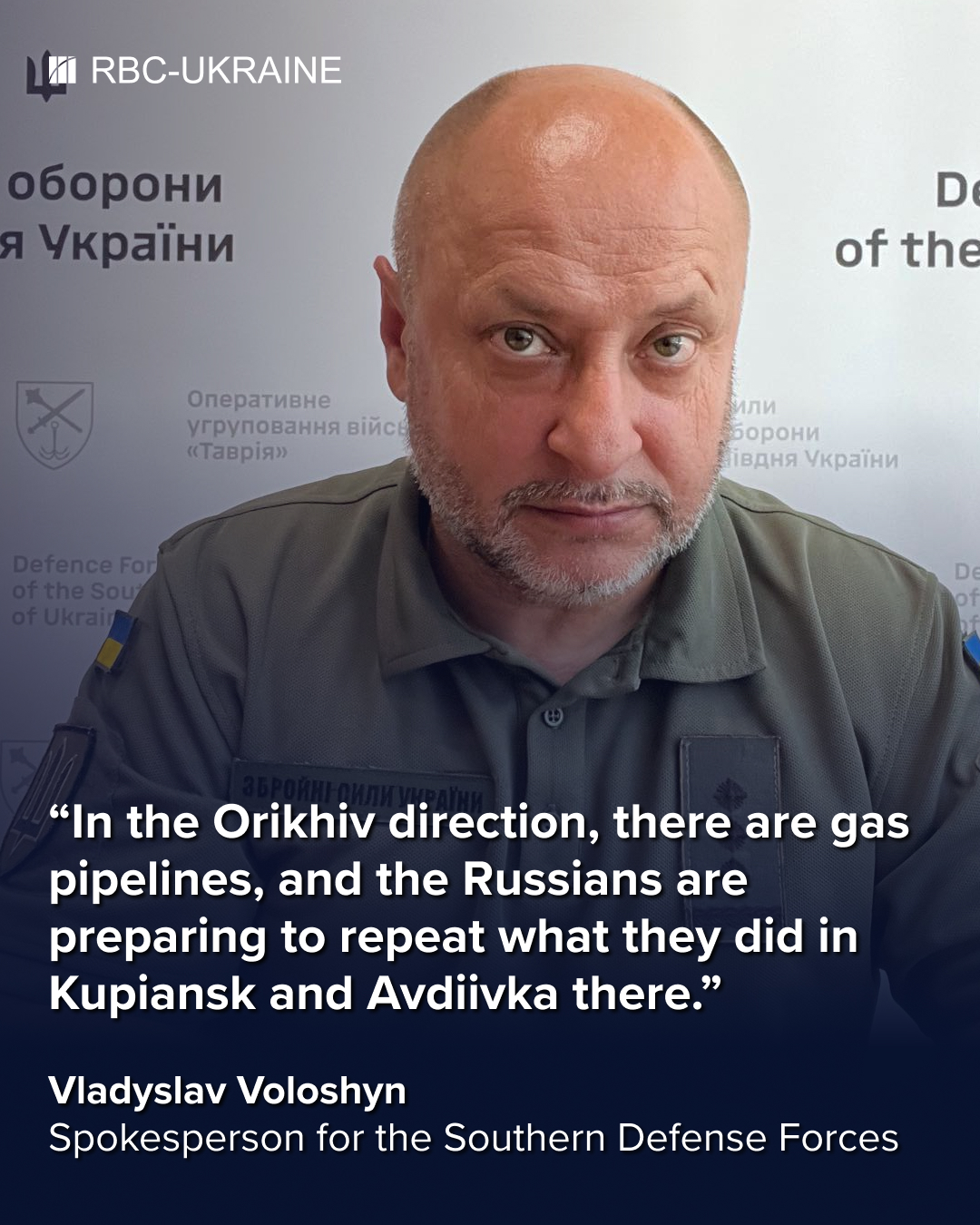 Vladyslav Voloshyn — on Russian intentions in the Zaporizhzhia region (photo: RBC-Ukraine infographic)
According to him, the task of this division is to block our counteroffensive actions, seize the tactical initiative, and continue attempts to advance in the Dnipropetrovsk region.
At the same time, the enemy is reinforcing its grouping on the neighboring Huliaipole sector of the front, from where it plans to develop its offensive westward, deeper into the Zaporizhzhia region. The 40th Separate Marine Brigade of the Pacific Fleet has recently arrived in this direction, Voloshyn said. He clarified that the Russian 5th Army, which operates directly in the Huliaipole direction, has also received the 55th Marine Division of the Pacific Fleet under its operational command.
"Currently, their 299th Airborne Regiment is training at one of the training grounds in our temporarily occupied territories, practicing movement through gas pipelines. They have a pipe mock-up with various elements and are training to move and transfer logistics along the pipeline. In the Orikhiv direction, there are gas pipelines, and the Russians are preparing to repeat what they did in Kupiansk and Avdiivka there," Voloshyn specified.
This also indicates Russian plans to intensify activity in the Orikhiv direction, the interlocutor added. They are also trying to move their forces from staging areas to forward positions near Orikhiv. This is a section of the front located west of Mali Shcherbaky and east of Mala Tokmachka.
"One of the tasks of their command is to get as close as possible to Orikhiv, enter it, and try to establish positions on its outskirts. We, in turn, to prevent these actions and ensure our safety, do not allow them to bring these assault groups forward positions. That is why they are not conducting assaults, because we actively strike them when they try to move. In the Orikhiv direction, there is currently one of the highest levels of fire activity, both on our side and on the enemy’s side," Voloshyn commented.
A secondary task that the Russians have been trying to accomplish for over a year and will continue to pursue this spring and summer is the creation of a 20-kilometer-deep buffer zone in the Sumy and Kharkiv regions.
"From the beginning, this was done supposedly to prevent Ukrainian forces from repeating the effect of the Kursk operation, so that Ukrainians would not cross over and attack Russian territory. This task has not been fulfilled. During all this time, they have only managed to create several points of penetration. But none of them reaches 20 kilometers, and this goal is unattainable for the Russians," Viktor Tregubov, spokesperson for the Joint Forces Task Force, told RBC-Ukraine.
The Russian Ministry of Defense periodically reports that its soldiers have entered another border settlement. Their attempts have somewhat intensified in recent months, although this looks more like separate, unconnected penetrations rather than a continuous zone of control.
"They will certainly try to accomplish this task and will commit forces to it. There is almost no risk that Russian forces will succeed in establishing a buffer zone in the Sumy and Kharkiv regions during the spring–summer campaign. And I do not think they themselves are counting on major success here. Moreover, this is not a priority for them right now. What is happening in the Donetsk region or, for example, in the Zaporizhzhia region is more important to them than any control zones in the Kharkiv region," Tregubov commented.
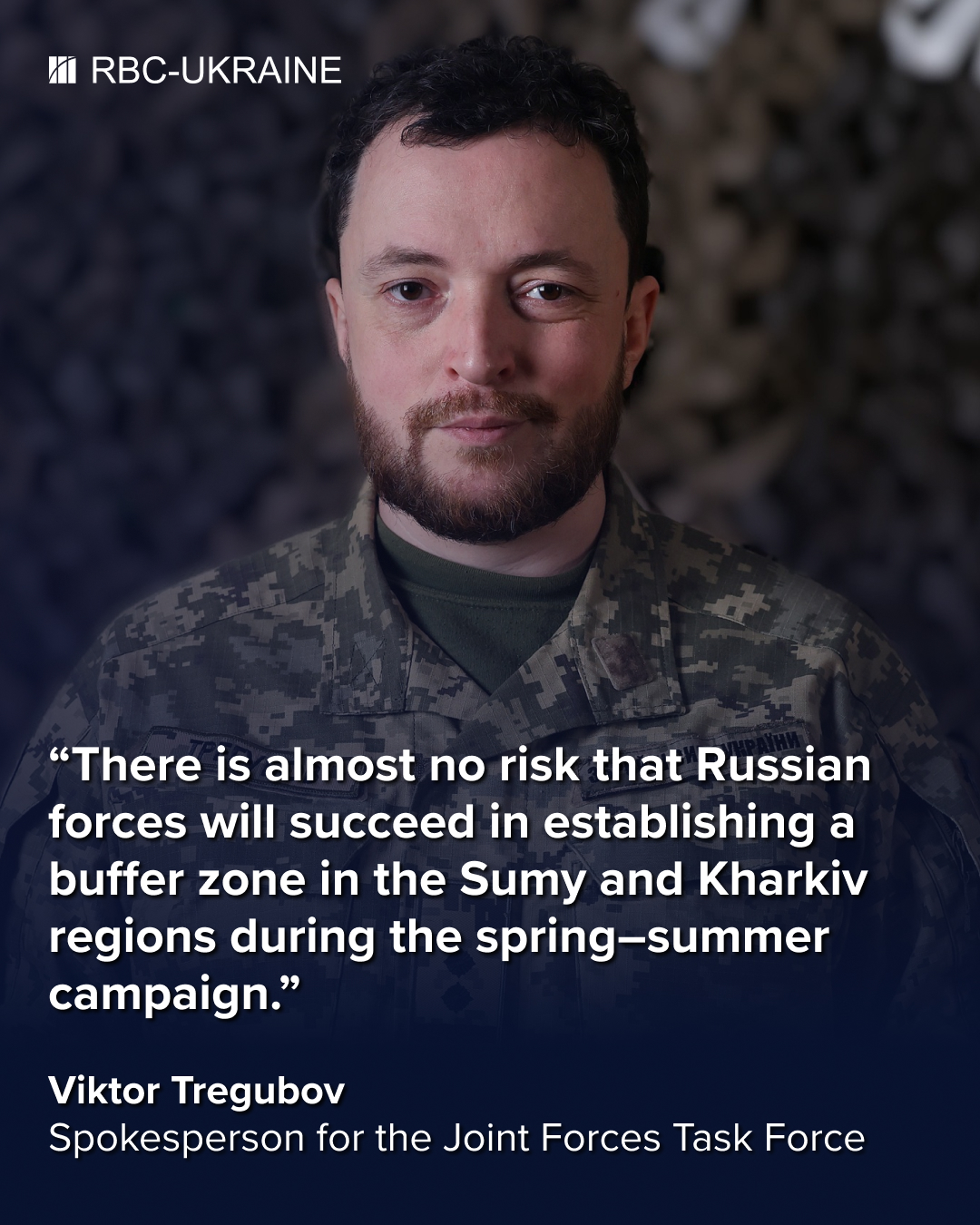 Viktor Tregubov — on chances of Russian forces creating a buffer zone along the border (photo: RBC-Ukraine infographic)
The Donetsk region indeed remains the number one target for the enemy. According to the media outlet, the Kremlin aims to reach the administrative borders of this region by the end of the year. However, the media outlet's sources in military circles doubt that this objective can be achieved within such a timeframe.
Despite ambitious plans, the Russian offensive is already encountering problems at the outset. One of them is the systematic distortion of the situation on the front line, when Russian commanders report upward about capturing positions that are ten kilometers away from the actual line of contact, and any counterattack by Ukrainian forces creates chaos in their defense.
At the same time, the Defense Forces are approaching this campaign having learned lessons from previous battles. Ukrainian forces have strengthened aerial reconnaissance and are tracking enemy movements both on the approaches and deep in their rear. As a result, instead of large-scale mechanized assaults, the Russians are once again forced to rely on small-group tactics, which allow them to advance but do not enable breakthroughs.
Quick Q&A
– Has Russia launched a new offensive?
Yes, since mid-March, the Russian army has intensified combat operations in most directions, although this is not yet the peak phase.
– Where are the main battles taking place now?
The most intense fighting is taking place in the Donetsk region, particularly in the areas of Pokrovsk, Kostiantynivka, and Lyman, as well as in the Oleksandrivsk direction.
– What is Russia's main objective?
The key goal is to create conditions for battles for Sloviansk and Kramatorsk, gradually encircling these cities from several directions: from the north (Lyman), the south (Kostiantynivka), the west (Pokrovsk), and the east (Siversk). Another objective is to stop our counteroffensive actions in the Oleksandrivsk direction and advance into the Dnipropetrovsk region.
– Is there a threat of creating a 20-kilometer buffer zone in the north?
At present, the risks are not significant. The enemy's attempts to create a continuous zone of control in the Sumy and Kharkiv regions have turned into fragmented penetrations. For Russia, this task is secondary compared to, for example, the battles for the Donetsk region.
– Why are the Russians not advancing along the entire front?
They do not have enough resources for large-scale assaults in all directions, so they are concentrating on several sectors.
– What offensive tactics is Russia using now?
Primarily, small assault groups, infiltration, and the gradual exhaustion of Ukrainian forces, instead of large-scale breakthroughs. This tactic allows them to move forward but does not provide rapid breakthroughs. A recent attempt by the enemy to resume mechanized assaults ended in failure and losses.