Hard winter ahead: How Russia's strikes push Ukraine's economy to the brink


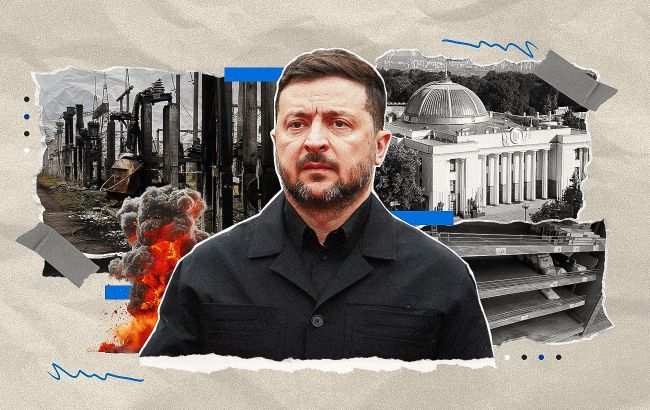 President of Ukraine Volodymyr Zelenskyy (RBC-Ukraine collage)
Russian strikes on logistics and businesses, the shutdown of entire sectors of the economy, and a huge hole in the state budget — the coming fall and winter season really does look set to be difficult.
How Ukraine will make it through to spring, where it will find the money it needs, and why the country is likely to see more relocation to the west — read more in the RBC-Ukraine's report.
Key points:
- The aggressors’ strategy: Russia has changed its approach and is deliberately targeting production facilities, warehouses and exporters, forcing businesses to shut down or cut staff.
- A financial abyss: A budget shortfall and inaction in parliament are putting state payments at risk.
- Drone terror in the capital: Ukraine was not prepared for the continuous attacks by jet-powered drones, and Kyiv residents are more pessimistic than people elsewhere in the country.
- A move west: Surviving businesses and wealthier residents are relocating en masse to Ukraine’s western regions.
- A deadlock in parliament: Political ambitions and corruption scandals are making it harder to secure support from the IMF and EU in the middle of the budget cycle.
"Another difficult military winter lies ahead." In the first years of the full-scale war, statements like these were treated as outright "betrayal" or, at the very least, hostile Russian information operations. Later, they became a subject of debate on social media. Now, they are being openly voiced by the country's top officials.
There are at least two reasons for this. First, expectations about the end of the war have clearly declined. Debates over the "1991 borders" have faded on their own, while the word "victory" has long since given way to the phrase "a just end to the war."
Second, Russia has launched a large-scale campaign to destroy Ukraine's logistics and economy that is significantly greater in scope than previous campaigns. You do not need access to sources in high-level government offices to understand that if another business, production facility, or warehouse is being destroyed or shut down almost every day, difficult times lie ahead.
But RBC-Ukraine has that access, along with the ability to analyze how close Ukraine could come to a crisis in the coming months—and how deep this rabbit hole could go.
Limits of escalation
A certain shift, at least in public expectations, came no later than July and intensified after Independence Day. The 40-day operation to "force Russia into peace," although it produced striking results in terms of the number of enemy targets destroyed, did not achieve its ultimate goal — the Kremlin did not become more willing to engage in genuine negotiations.
Read also: "Oil refineries, Wildberries warehouses and more were burning: Timeline of Ukraine's 40-day SBU operation against Russia"
Instead, taking advantage of the Ukrainian Defense Forces' severe shortage of ballistic missile interceptors, Russian forces began systematically destroying Ukrainian businesses, paralyzing entire sectors.
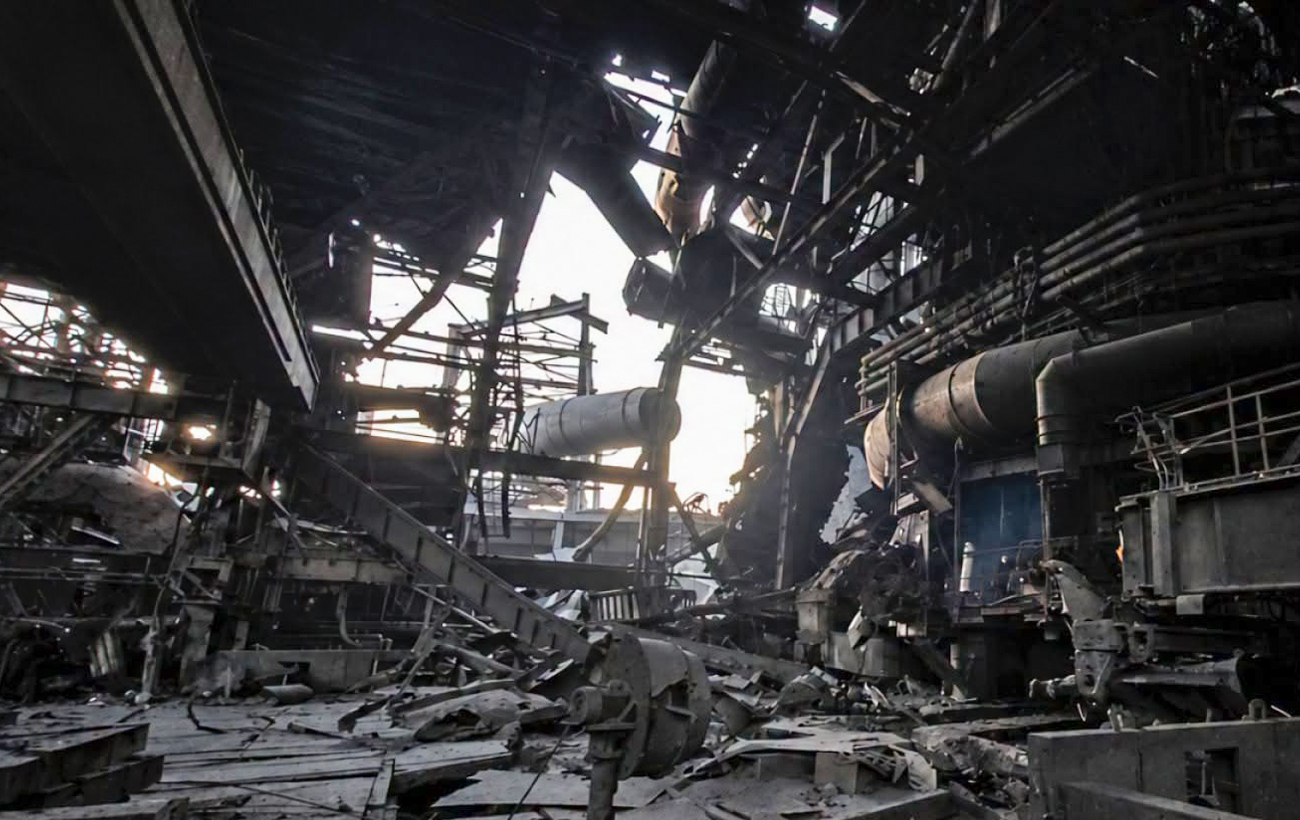
The aftermath of a Russian strike on Zaporizhstal (photo: facebook.com/zaporizhstal)
And since the end of summer, Kyiv and the surrounding region have also faced continuous attacks by jet-powered drones. Combined with the sluggish response of local authorities, this also caused chronic traffic gridlock in the capital, which took several weeks to partially resolve.
"This kind of terror against Kyiv was the 'black swan.' Few people expected them to attack the capital so brazenly, so constantly and in this kind of pattern: one, two or three drones an hour instead of one large wave, which is what we had already become accustomed to," a source in the country's leadership told RBC-Ukraine.
Ukraine urgently began looking for ways to counter the jet-powered drones. Days ago, President Volodymyr Zelenskyy reported that Ukraine was already managing to intercept more than half of the jet-powered Gerbera drones. But it is still far from the roughly 90% interception rate achieved against conventional Shahed drones. According to Andriy Budanov, head of the Presidential Office, Ukraine will be able to deploy interceptor drones on a large scale in several months.
"It turns out we were looking in the wrong direction and ordering the wrong things. Politically, you could say that Fedorov failed completely, but in reality, it started even before Fedorov... Many designers had warned earlier that there would be trouble with the jet-powered drones because we don't have jet engines, while shooting them down with conventional systems is either expensive or requires luck," a source in the government told RBC-Ukraine.
At the beginning of September, when Russian forces were systematically destroying businesses and warehouses around Kyiv, the source predicted which targets would come under attack next: Kyiv's gas stations and data centers.
"All that is left are Kyiv's bridges and the government district. But they will probably strike those only if we take some kind of step — for example, an attack on the Kremlin or another operation similar to 'Spiderweb.' Essentially, that is where Russia's entire non-nuclear escalation potential ends," the source said.
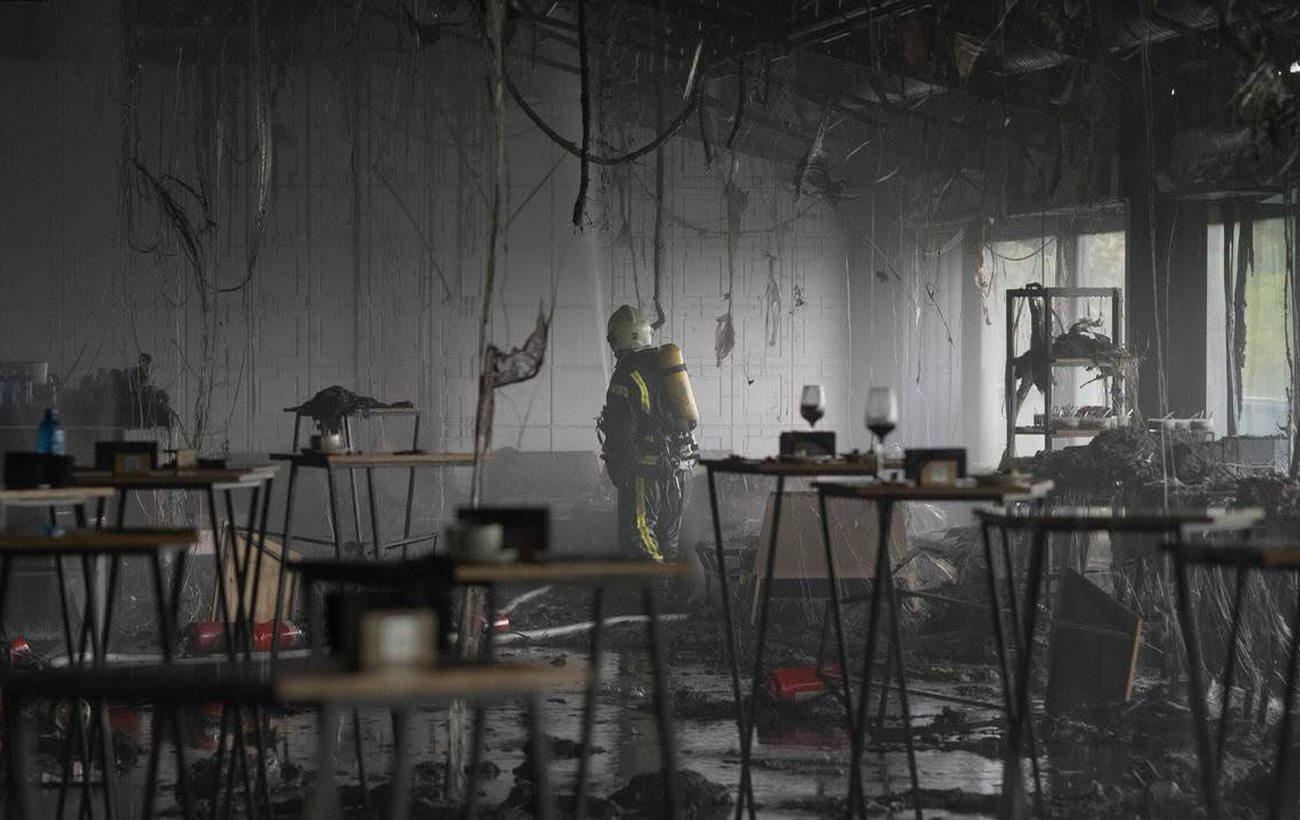
The aftermath of a strike on the Parkovy Convention and Exhibition Center and the data center located there (photo: facebook.com/DSNSKyiv)
Another RBC-Ukraine source close to Zelenskyy believes this approach is an unnecessary attempt to rationalize the attacks.
"Since the beginning of the year, they have had an operation against logistics: railways, Nova Poshta, some bridges and ports. Then they moved to water infrastructure, such as water intake facilities, then added warehouses and major logistics facilities, and moved on to the economy as a whole. Data centers are simply a continuation of that," the source explained.
According to the source, Russia has apparently changed the person or entire team responsible for planning deep strikes, and those attacks have become more deliberate.
"There are various signals that this or that facility could be targeted this time. But there is no kind of 'strike scale.' For example, when it comes to bridges, it's not just about Kyiv — it could happen at any time, but not necessarily according to some sequence of 'after this, they will hit that,'" the source said, discussing attempts to identify an overall pattern in the Russian strikes.
How to save the economy
After several seasons of attacks, both the population and businesses have generally learned how to cope with power outages. But now a new problem has emerged — Russian forces have begun destroying the businesses themselves.
This automatically sets off a chain of negative consequences for the economy: no businesses means less tax revenue, fewer jobs, unemployment, lower consumer spending, and problems with demand even for companies that survive. And so on.
After a prolonged struggle, even the flagship of Ukraine's heavy industry recently gave up: ArcelorMittal said it could no longer continue operating after repeated attacks. In effect, the entire steel industry, which was once the backbone of Ukraine's exports, has now come to a complete halt.
The situation is also difficult for farmers, who have been hit by the blockade of the ports of Greater Odesa. Attempts to negotiate a new "grain deal" to reopen the Black Sea have so far produced no results.
"I have spoken to farmers recently, and the mood is not great. Without exporting agricultural products, less foreign currency will enter the country. Take corn, for example: they may leave it in the fields. If we're lucky and there is no snow, it could survive until spring and even remain marketable. Wheat will also be left in grain bags, but then spring planting will be smaller, and the following fall planting even more so. There aren't enough grain elevators, and they could be bombed too," a government source told RBC-Ukraine.
In these circumstances, RBC-Ukraine's sources expect a new wave of business relocation to the relatively safer western regions of the country. Of course, this applies to companies that can technically afford to move — you cannot simply relocate a steel plant to Zakarpattia.
People are following businesses westward, particularly wealthier residents, driving up home sale and rental prices in Lviv, the Carpathians and Uzhhorod to extremely high levels.
However, for obvious reasons, not everyone can afford to move. According to polls by the Rating Group, even in the event of a sharp deterioration on the battlefield and a Russian breakthrough, more than half of Ukrainians do not plan to leave their city or village. According to a June Rating Group poll, prolonged shortages of water or electricity would also not prompt most Ukrainians to leave — around 80% said they would stay.
"When we ask people how much longer they are prepared to endure, some say they aren't prepared to endure anything at all. But, excuse me, we endure and keep living because we have no choice. And if we stop enduring, then what? Will the war end? Or will we die?" said Oleksiy Antypovych, head of the Rating Group, in comments to RBC-Ukraine.
He also confirmed that recent events have prompted people to consider moving west, and that not everyone can afford to do so.
The sociologist made another interesting observation: Kyiv's mood differs significantly from that of the rest of Ukraine.
"Kyiv residents' mood is not necessarily panicked or catastrophic, but we see that their assessment of both Ukraine's future and the current situation in Kyiv is noticeably worse than among other Ukrainians, even compared with Kharkiv, Dnipro and Odesa. In regional terms, Kyiv is probably the most concerned about the situation in the country right now," Antypovych said.
Overall, he noted that Ukrainians are becoming somewhat more apathetic and detached from the situation in the country. People want to withdraw from the situation and hide away in their own "burrow." The reasons include the attacks as well as numerous political and corruption scandals in recent weeks.

The beauty salon in Kyiv continues operating after a strike (photo: Getty Images)
In addition, Ukrainians are likely to face the traditional fall and winter wave of attacks on energy infrastructure. According to then-Energy Minister Denys Shmyhal, the aggressors are approaching the issue in a highly systematic way this time, having developed detailed plans for strikes on electricity, heating and water supplies. Meanwhile, according to an anonymous nationwide survey conducted by the We Build Ukraine center, 78% of communities do not have sufficient fuel reserves, while 44% have none of the key resources — fuel, water, generators, communications and so on.
But while people can, in general, somehow cope with a lack of electricity or water, they cannot do without food.
After several weeks of targeted attacks on food warehouses, it became clear that outright starvation, at least for residents of areas away from the front line, is not currently a threat. Empty shelves in some supermarkets are still more of a social media phenomenon than a real threat.
"Producers say they will be able to supply goods, simply breaking deliveries into smaller batches, with some companies using their own transport to distribute them. Of course, all of this will be reflected in prices. Some things will go up by a hryvnia, others will become much more expensive. Premium consumers will be unhappy and will have to buy something simpler, while poorer people will also be hit by rising prices," a government source told RBC-Ukraine.
At the same time, the source does not expect a complete economic collapse, with hyperinflation, delayed pensions and other "nightmare scenarios" reminiscent of the 1990s.
"Even under the worst circumstances, the state will continue purchasing for the military and paying their salaries. That is consumption, that is VAT. The military economy and external support will make it possible to keep the situation under control," the source said.
However, the overall trend of "moving west" will continue.
"On the left bank of the Dnipro, the situation will be bad; from Kyiv to the Zbruch River, it will be so-so; beyond the Zbruch, there will already be economic activity, consumption will be strong and the service sector will be developed. They will help pull the situation through," the source concluded.
Where to find the money
While the problems facing businesses because of large-scale Russian attacks are understandable, at the end of the summer it suddenly became clear that there was also a huge hole in the country's public finances. According to Prime Minister Serhii Koretskyi, it amounts to nearly 50 billion euros.
The long-forgotten word "sequester" has returned to everyday conversation, and the prime minister has even had to assure the public that government salaries and pensions will continue to be paid on time. But according to government officials, the overall situation is now the worst since the beginning of the full-scale war. Even amid the chaos of the first weeks of the invasion, the state managed to meet all of its social payment obligations.
One of the main causes of the crisis, according to the Cabinet of Ministers, is the inactivity of the Verkhovna Rada, which has been reluctant to pass legislation needed to secure external financing.
"Svyrydenko communicated about the problems in a 'women's' way, while Koretskyi decided to speak directly. It turned out that everything is bad, that nothing has been done on either the Ukraine Facility program or the IMF commitments," a lawmaker from the Servant of the People party said.
At the same time, some lawmakers, including members of the ruling party, question whether the situation is really so dire that some government spending has to be postponed until December. They point out that under the previous Cabinet, there seemed to be nowhere to spend the money, with various cashback programs being introduced one after another, while now the government suddenly says there is a critical shortage of funds.
Some have even suspected that David Arakhamia, described by the source as the "director of parliament," is playing political games behind the scenes. People close to Arakhamia categorically deny this.
The Ukraine Facility program, the EU's key financial support mechanism for Ukraine, works by assigning a predetermined "price" to each required reform. Once lawmakers pass the necessary bill, Ukraine receives the corresponding amount of funding from European partners. Not all of these reforms are controversial or politically sensitive, although the larger reforms naturally "cost" more than others.
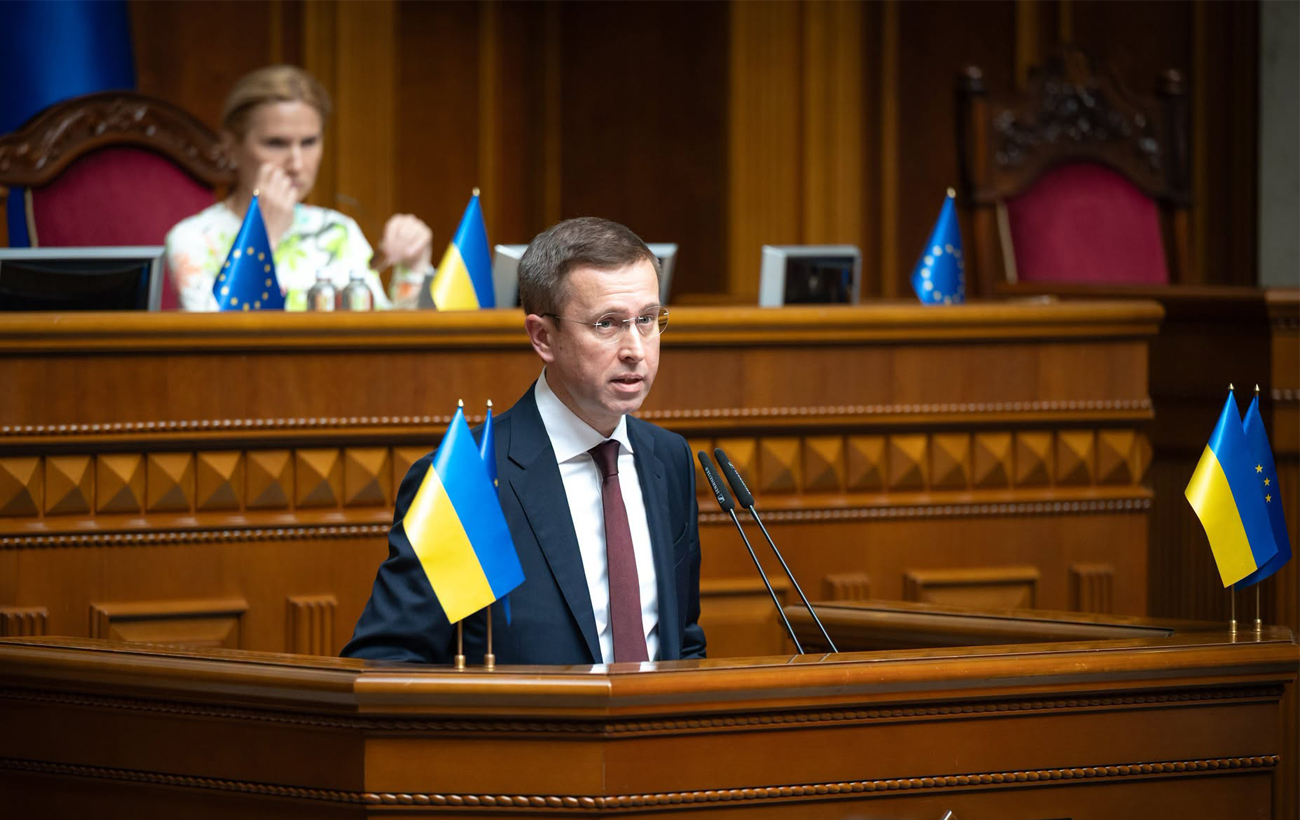
Prime Minister Serhii Koretskyi speaks in the Verkhovna Rada (photo: facebook.com/KabminUA)
Under strong pressure from the government, lawmakers have made some progress this month. For example, they passed the long-delayed bill on parcels in its first reading. This is part of Ukraine's commitments not to the EU but to the IMF, where a different principle applies: until all requirements from the relevant package are fulfilled, the money will not be transferred.
According to an RBC-Ukraine source in the Cabinet, no one will simply give Ukraine money without conditions. The source identified two main problems.
The first is that European partners do not like the fact that even during a crisis, Ukraine is not completing the work required of it while continuing to insist that it "needs money." RBC-Ukraine has heard similar concerns from the European side, including that Kyiv has not been able to clearly formulate what exactly it lacks funding for and in what amount.
The second, obvious reason is the recent corruption scandals involving senior officials. They do not directly affect funding, but they naturally damage the overall atmosphere in European capitals, where there is already a preference for allocating money, for example, to Ukraine's purchase of weapons from European suppliers rather than to paying teachers' salaries or pensions.
Sources in parliament told the media outlet that the Rada will eventually pass most of the required legislation, even if only barely, and that Ukraine will manage to balance its books this year.
The following year is more concerning. The 2027 budget is only at the beginning of its consideration by parliament, and its adoption will be difficult for purely political reasons as well.
"We have only one and a half incentives left for lawmakers, and the budget is one of them. So they can go back to their constituencies and say, 'Look what I secured for you, look what I brought you.' But there is no money for that, so the conflict between parliament and the Cabinet will continue to intensify," an RBC-Ukraine source in the Servant of the People party said.
But the problems of individual lawmakers are overshadowed by a much larger issue — the lack of clear sources of funding for 2027 in general. A source in the Cabinet estimates that the Defense Ministry alone will face a $75 billion funding gap next year.
On top of that comes a wave of elections in Europe and the possibility of far-right parties coming to power in several key European countries. Some of them oppose continued funding for Ukraine, as French National Rally leader Marine Le Pen, for example, has stated.
Read also: "Le Pen opposes further French financial aid to Ukraine"
"The thing I want least is to be in power at a time like this. It is all responsible, important, even historic, but when you look at the failed legislation and listen to farmers, you start thinking: maybe it would be better to share this responsibility with someone else..." a senior government source told RBC-Ukraine.
Quick Q&A
– Why could this winter be the most difficult of the war?
Russia has changed its tactics and moved from attacks on energy infrastructure to the systematic destruction of businesses, warehouses and logistics. Together with the budget shortfall and delays in Western funding, this creates the risk of a deep economic crisis.
– What is happening in Kyiv and the surrounding region?
The capital has faced continuous attacks by jet-powered drones. The enemy's new tactics have exposed a shortage of suitable defenses, while anxiety levels among Kyiv residents have become higher than elsewhere in the country.
– What is happening to Ukrainian businesses and the economy?
Key sectors, including steelmaking and agriculture, have been halted or disrupted. The destruction of businesses is increasing the risk of unemployment and declining tax revenues, potentially triggering another wave of business relocation to western Ukraine.
– Why has the state funding crisis emerged?
The budget has developed a shortfall of nearly 50 billion euros. The situation is being compounded by the slow pace of the Verkhovna Rada in passing reforms needed to secure payments from the IMF and the European Union.