Latin America: New push for mutually beneficial partnership


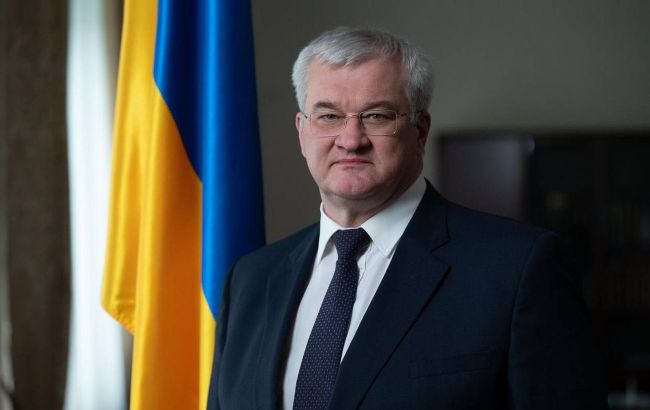 Photo: Andrii Sybiha, Minister of Foreign Affairs of Ukraine (t.me/Ukraine_MFA)
Billion-dollar markets, digital technologies, and security and scientific cooperation — Latin America is a zone of pragmatic interests for Ukraine.
In a column for RBC-Ukraine, Foreign Minister Andrii Sybiha explains what Kyiv is offering the region and how Ukraine plans to push out Russian influence.
Key points:
- Pushing out Russia. Kyiv is systematically expanding its diplomatic presence in the region to isolate the aggressor and counter Russian propaganda.
- Scientific diplomacy. Ukraine's own Antarctic station and the icebreaker Noosphere open the door to strategic cooperation with Caribbean nations.
- Digital exports. Ukraine offers the region its digital public service ecosystems and unique expertise in countering modern hybrid threats.
- Economic pragmatism. Deepening relations with Latin America could add billions of dollars to Ukraine's annual trade turnover.
When Ukraine discusses foreign policy, the focus is often on Europe, the United States, security allies, and its immediate regional neighbors. Yet the world is much broader. Geographic distance no longer means political or economic peripherality. That is why Latin America today is a key part of Ukraine's systematic, pragmatic strategy to expand partnerships.
Latin America comprises 33 countries, 662 million people, and 8% of global GDP. It is a region where countries are actively seeking new opportunities and partnerships. Some demonstrate steady economic growth, while others are undergoing complex transformations. But the overall trend is clear: the region is gaining increasing influence in the global economy, energy, food security, climate policy, and international diplomacy.
Moreover, many countries are seeking to diversify their foreign policy and explore alternatives to interactions with the US and China, making European countries particularly attractive partners in the context of developing cooperation.
For Ukraine, it is crucial not just to be present in this process but to be a proactive partner, offering new opportunities and unexpected advantages.
What Ukraine can offer
Deepening ties with Latin American and Caribbean countries is not a mere declaration of intent. It is a clear economic calculation for Ukraine. Even a modest expansion of bilateral trade and investment could potentially add billions of dollars to Ukrainian turnover annually.
We are talking about specific sectors: agriculture and food security; digitalization and e-government services; infrastructure solutions; machinery and energy; defense technologies - not in a confrontational sense, but as a means of deterrence and protection of human life.
Latin America, in particular, is actively investing in digital transformation. In recent years, Ukraine has built one of the most dynamic digital ecosystems for government services in the world. Our experience in digitalization is not theoretical. It is a practical tool that already works under wartime conditions. For many countries in the region, this experience is both applicable and in demand.
The security dimension of cooperation goes beyond military matters. The region faces transnational crime, hybrid and cyber threats, illegal trade, and growing influence from external actors.
Meanwhile, Ukraine has gained unique experience in countering modern forms of aggression - from cyber threats to the use of drones and situational awareness systems. This expertise is both technological and practical.
We do not impose models, but we are ready to share knowledge and solutions that have proven effective.
This is the core principle: mutual benefit. We are not coming to ask for support - we are offering our expertise and opportunities for mutually advantageous cooperation.
A specific focus is the Caribbean basin. Island nations in the region feel the acute effects of the climate crisis: rising ocean levels, devastating hurricanes, and shifting temperature patterns. For them, access to high-quality scientific research is a matter of survival.
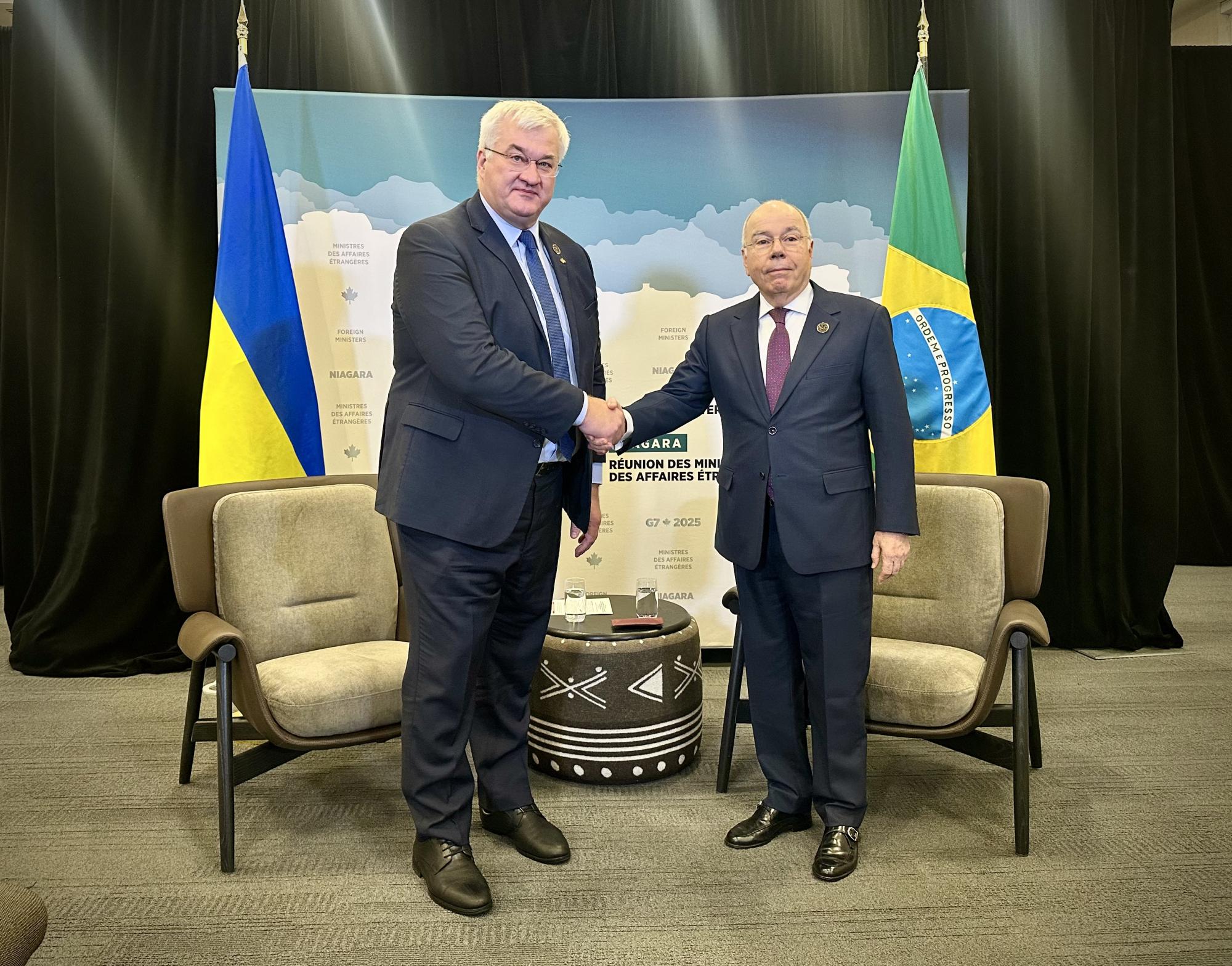
Andrii Sybiha meeting with Brazilian Foreign Minister Mauro Vieira (photo: MFA press service)
Ukraine is among a select few countries with a permanent presence in Antarctica. Our Akademik Vernadsky Antarctic Station and our Noosphere icebreaker represent global strength and advantage.
For Caribbean countries, engagement with Ukraine opens opportunities for scientific collaboration, joint programs, data exchange, and participation in international research projects.
This year, on my initiative, Ukraine adopted the Strategy for Activities in Antarctica, the Arctic, and the World Ocean for 2026–2035, aimed specifically at fostering this kind of pragmatic cooperation. I am grateful to President Volodymyr Zelenskyy for his support, and to Prime Minister Olha Sviridenko and my government colleagues for approving this document.
In recent years, Ukraine has steadily expanded its diplomatic presence in Latin America. We have opened new embassies in Panama, Ecuador, Uruguay, and the Dominican Republic, with several more countries to follow.
This demonstrates the long-term nature of our policy. New missions are opening, political dialogue is strengthening, and economic diplomacy is becoming more active. This is not a short-term campaign. It is an investment in long-term relations.
Combating Russian influence
Another key aspect of Ukraine's presence is countering Russian influence.
Currently, it poses a strategic threat to countries in the region due to a combination of aggressive media propaganda (RT en Español, Sputnik), which distorts perceptions of Russia's war against Ukraine, and military-technical support for anti-democratic regimes in Venezuela, Nicaragua, and Cuba.
The Kremlin uses Latin America as a platform to bypass sanctions and as a tool to weaken global solidarity, promoting the idea of a false neutrality that effectively legitimizes violations of international law.
Countering this influence is critically important for Ukraine, particularly to isolate the aggressor and successfully push back Russian narratives.
In Latin American countries, Ukraine has partners that consistently uphold international law and the territorial integrity of our state.
Recent statements on the anniversary of the full-scale invasion confirmed that, for many governments in the region, issues of sovereignty and non-interference are fundamental. These include Chile, Guatemala, Uruguay, Costa Rica, Argentina, Paraguay, Ecuador, the Dominican Republic, Panama, and others.
Such support is not automatic. It is the result of systematic work, dialogue, and clear communication of Ukraine's position. This is why it is important to engage not sporadically, but continuously and systematically.
Long-standing ties
Ukraine and Latin America are connected not only by contemporary interests. Our relations have a deeper history. Ukrainians have contributed to major infrastructure projects in the region, including the construction of the Panama Canal.
In the 19th century, waves of emigration from Western Ukraine formed significant communities in Brazil and Argentina, with each country today home to around half a million people of Ukrainian descent. These communities continue to play an active role in the social and cultural life of these and other countries.
One notable figure is Mykhailo Skybytskyi, known in Latin America as Miguel Rola, who became the right-hand man of Simón Bolívar, the hero of 19th-century Latin American independence wars. Another is Argentine lawyer and diplomat of Ukrainian origin, Roberto Kozak, who, through personal connections and skill, saved thousands from the prisons of Pinochet's regime — including the mother of former Chilean President and UN High Commissioner for Human Rights, Michelle Bachelet.
These are just two examples among many linking Ukraine and Latin America. These connections are not merely a cultural legacy; they build trust, foster personal relationships, and lay the foundation for modern partnerships.
Today, Ukraine has a window of opportunity to strengthen its ties with Latin America.
The world is entering a period of fragmentation and intensified global competition. We are witnessing a confrontation between two models: multipolarity and multilateralism. The first is based on confrontation, the second on cooperation.
Ukraine advocates the second model, building pragmatic partnerships that deliver mutual benefit, beyond established frameworks of East-West or North-South divisions.
We are convinced that supporting Ukraine is not about division, but about principles: respect for sovereignty and territorial integrity, the right of every nation to life, justice, freedom, independence, and security. These principles unite Ukraine with the countries of Latin America and the Caribbean.
In 2024, on the initiative of the Ministry of Foreign Affairs, we adopted Ukraine's first-ever Strategy for Developing Relations with the LAC countries. That same year, we also launched a Communications Strategy for the region. These documents laid a systematic foundation for our work. We view them as a dynamic roadmap, regularly reviewed and calibrated, allowing our diplomacy to be not only strategic but highly adaptive to contemporary challenges.
Countries in this region and beyond are actively seeking flexible alliances, new economic ties, and alternative technological solutions. Ukraine has much to offer. We are not only fighting for our own freedom but also shaping a new model of statehood - digital, mobile, and innovative. This experience is both relevant and valuable for many nations currently undergoing their own transformations.
Ukrainian strategy
For Ukraine, deepening relations with countries in Latin America and the Caribbean means expanding markets, strengthening political support on global platforms, creating new technological alliances, and enhancing our role in global processes.
This is why I plan to make an official working visit to the region soon, to advance Ukraine's national interests. We aim to be part of global processes not as passive observers, but as active partners. This is pragmatism, not symbolism.
The most important point is to understand clearly: we are talking about mutually beneficial cooperation. Latin America is not just a source of political votes for Ukraine, and Ukraine is not merely an object of solidarity for the region.
We can offer technological solutions, digital governance models, security expertise, scientific collaboration, and experience in running a state under unprecedented pressure.
In return, we gain access to new markets, economic growth, expanded geopolitical flexibility, and new strategic alliances.
This is how modern diplomacy works - through specifics, careful calculation, and long-term vision. Latin America and the Caribbean are not a distant horizon for Ukraine.
They are part of a broader strategy to diversify partnerships, boost economic growth, and strengthen our presence in a rapidly changing world.
That is why this direction is not optional, but strategic.
Quick Q&A:
Why is it important for Ukraine to strengthen its presence in Latin America?
This is part of a pragmatic strategy to expand partnerships, with a clear economic rationale. Expanding trade with this region could potentially add billions of dollars annually to Ukraine’s trade turnover.
What can Ukraine offer to countries in the region?
Kyiv offers not just political solidarity, but concrete expertise: experience in digital transformation of public services, solutions for the agricultural sector, food security, energy, and unique defense technologies.
How does scientific activity in Antarctica support diplomacy?
Ukraine's Akademik Vernadsky Station and the research vessel Noosphere give us an advantage in scientific cooperation. This opens doors for partnerships with Caribbean states, which are acutely affected by the climate crisis.
How is Ukraine countering Russian influence in the region?
Ukraine is systematically expanding its diplomatic presence by opening new embassies (Panama, Ecuador, Uruguay, and others) and actively working to counter Kremlin-promoted narratives.