US and UK stage military drills near Belarus

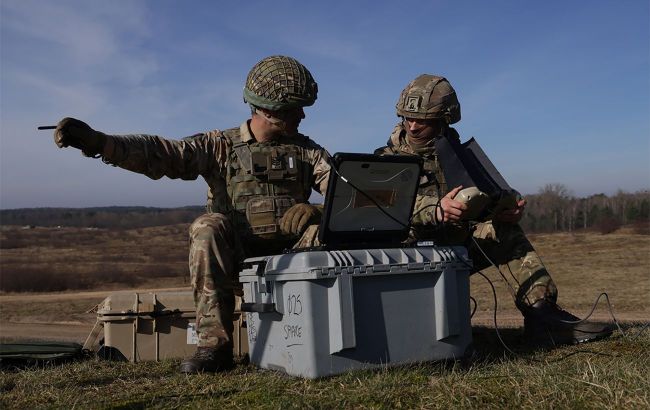 NATO military personnel, UK (Photo: Getty Images)
The US and the UK have conducted large-scale Flytrap military exercises in Lithuania to counter drones. The manoeuvres are part of NATO's efforts to improve anti-drone tactics and strengthen the defence of the Alliance's eastern flank, reports Forbes.
It is reported that the exercises represent the next stage in the development of NATO's capabilities to counter unmanned systems in modern conditions of maneuver warfare.
The Flytrap exercise series began last year as part of NATO's deterrence initiatives on the eastern flank. Previously, the training took place in Germany and Poland, and with each stage, their scale and complexity grow in line with the development of drone warfare technologies.
Details of the exercises
During the latest exercises, organized under the leadership of the US V Corps and the US Army Europe and Africa Command, American units together with British paratroopers practiced repelling drone attacks at the squadron level.
Participants tested over 50 cutting-edge developments, including interceptor drones, target detection systems, sensors, and unmanned ground platforms.
The military also provided manufacturers with real-time feedback on how the equipment performed in field conditions. The next stage of the exercises is planned to be conducted at the brigade level.
Purpose of the Flytrap exercises
The US Army's Chief Technology Officer, Dr. Alexander Miller, stated that the Flytrap project was created to integrate anti-drone capabilities directly into maneuver combat operations, rather than merely for the protection of stationary objects.
According to him, the key challenge was combining modern technologies with the ability of troops to continue maneuvering, fighting, and maintaining communication while protected by counter-drone systems.
"How do you bring this all together in a way that soldiers can still fight, move and communicate with the defense system working around them to protect them? That is the origin of Flytrap," he said.
Miller added that countering drones is not limited to high-tech solutions. Basic elements also play an important role, including maneuvering, camouflage, the use of protective nets, and other traditional tactical techniques.
He noted that all participating countries gain practical benefits from sharing experience. According to the US official, US military personnel quickly master new technologies and interact directly with engineers from development companies, helping to improve systems in real time.
Data sharing – improved
Special attention was paid during the exercises to integrating British and American data-sharing systems to counter aerial threats. Miller called the United Kingdom one of the key partners in developing such capabilities.
He also emphasised that British troops are actively implementing innovative solutions to protect personnel and are using modern unmanned systems. At the same time, other NATO allies are offering their own approaches, particularly regarding the use of technologies in urban environments.
According to Miller, one of the main tasks is not only to detect and destroy drones but also to create a unified information-sharing system among all sensors and allies for rapid retaliatory strikes.
Reducing the cost of countering drones
Additionally, the US Army is working on reducing the cost of countering drones. Instead of using expensive missiles or specialised interceptor drones, the military is testing alternative solutions, including munitions with proximity detonators.
Miller explained that such projectiles can be fired from conventional machine guns. They explode near the target, producing fragments that can hit drones.
In his view, effective counter-drone measures do not always require the most expensive technologies. Instead, it is important to correctly identify the problem and find a quick, practical solution.
The US expects that the preparation for the next phase of the Flytrap exercises will take longer, but it will be the largest and most technologically complex in the project's history.
Amid the growing role of drones in modern conflicts, such exercises not only increase the level of military training but also strengthen interaction between the US and European NATO allies.
Recently, NATO held exercises on the Swedish island of Gotland in the Baltic Sea, where they practiced a scenario of a possible Russian attack and landing of Russian troops.
The threat from Belarus has recently been discussed more actively. This concerns not only Ukraine but also NATO countries.
It was reported that Ukraine continues to strengthen defensive lines along the entire stretch of its northern border with Belarus.