NATO rehearses Russian invasion scenario on key Baltic Sea island

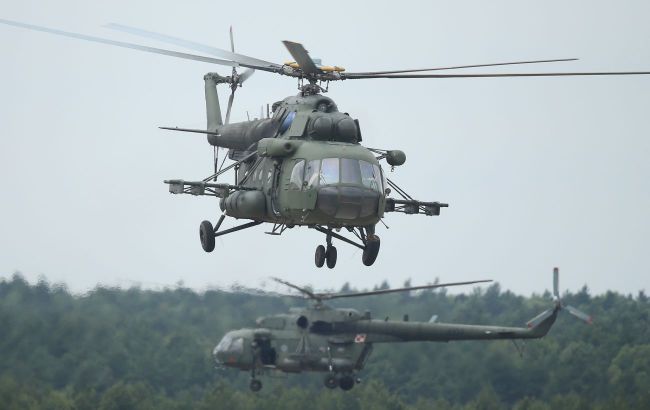 NATO rehearsed a scenario involving a Russian troop landing on the most important island in the Baltic Sea (photo: Getty Images)
NATO held exercises on the Swedish island of Gotland in the Baltic Sea, where troops rehearsed a scenario involving a possible Russian attack and landing operation, Politico reports.
Last week, Sweden completed the first NATO exercises on Gotland since the country joined the Alliance in 2024. About 18,000 troops from 13 countries trained on the island's dusty plains to counter a possible Russian attack.
During the exercises, the allies simulated various scenarios of a Russian attack, including an attempt to secretly land Russian troops from a civilian vessel, simultaneously with communication jamming and drone strikes on air defense systems.
A Russian attack "could happen anytime," Swedish Chief of Defense Michael Claesson said during the exercise while soldiers maneuvered between armored vehicles.
Why is Gotland important?
The island of Gotland is located about 300 kilometers from Russia's Kaliningrad and is considered one of the most important strategic points in the Baltic Sea.
Niklas Granholm, a deputy director of the government-backed Swedish Defense Research Agency, said that control over the island effectively means control over a large part of the Baltic Sea.
Due to its location, Gotland has earned the unofficial nickname unsinkable aircraft carrier. Fighter jets based on the island can reach the capitals of the Baltic states within minutes.
NATO fears that if Russia captured the island, it could deploy air defense systems there and effectively block allied supplies and reinforcements in the region.
"If NATO holds onto Gotland, it could close off Moscow's access to the Baltic Sea, use longer-range missiles to defend the region and fire munitions deep inside Russia," Politico writes.
Challenges and unexpected lessons
The exercises also revealed a serious issue: the United States reduced its participation amid uncertainty over Washington's commitment to European security under President Donald Trump.
The goal of the exercises was to test multinational cooperation. Canadian and Danish soldiers, Finnish F-18 fighter jets, British snipers, US and Norwegian marines, as well as Dutch Apache helicopters, took part in the maneuvers.
During the exercises, Ukrainian troops also demonstrated the effectiveness of drone use by quickly and conditionally destroying a Swedish armored unit.
NATO says that after Sweden joined the Alliance, defense plans for the Baltic region were significantly revised.
NATO prepares for threats from Russia
Against the backdrop of Russia's prolonged war against Ukraine, fears are increasingly being voiced in European capitals that Russian President Vladimir Putin may try to expand the conflict beyond Ukraine and increase pressure on European countries.
Recently, Reuters wrote that NATO is already preparing for a possible war scenario with Russia on the territory of the Baltic states.
In particular, the Alliance plans to strengthen its eastern flank with a new military structure that will allow forces to be rapidly deployed to Latvia and Estonia in the event of a threat from Russia.
Latvia has also begun installing the so-called dragon's teeth barriers and anti-tank trenches along its entire border with Russia.