NATO creating rapid deployment system for troops in Baltic region, Reuters reports

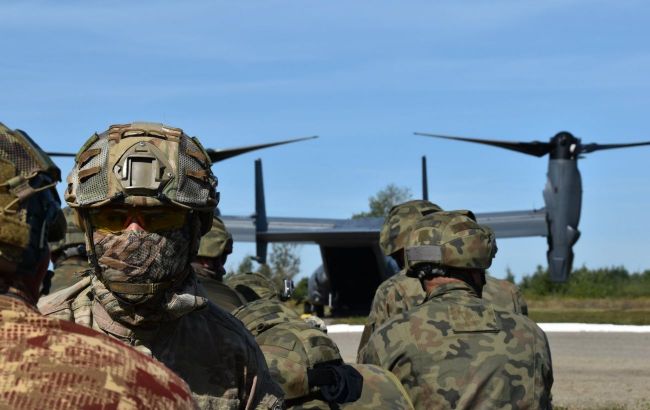 Photo: NATO troops (Exercise Rapid Trident)
NATO is strengthening its eastern flank
The North Atlantic Alliance plans to reinforce the defense of its eastern flank by creating a new military structure designed for the rapid deployment of forces to Baltic states.
The mechanism is intended to improve NATO’s response speed in crisis scenarios in the region.
New command structure for the Baltic region
Currently, all NATO forces in the Baltic states and northern Poland are subordinated to a single multinational headquarters located in the Polish city of Szczecin.
However, the planned changes foresee the creation of an additional command level.
Establishing a separate corps for the region would allow the Alliance to deploy large military forces more quickly, removing limitations related to operational depth and territorial vulnerability.
A fully formed army corps typically comprises 40,000 to 60,000 service members and commands several divisions, while in peacetime it serves as a basis for rapidly deploying specialized units.
Germany and the Netherlands to lead the project
According to sources, Germany and the Netherlands, in coordination with NATO, have agreed that their joint corps, based in Münster, will be deployed for the defense of Latvia and Estonia.
Allies are currently working on refining the structure and required composition of the units.
At the same time, NATO countries are expected to expand capabilities in key areas, including artillery, air defense, engineering, and medical units.
Strengthening Europe’s role and the US position
European allies are gradually taking on more responsibility for regional security amid criticism from US President Donald Trump.
He has previously stated that European countries are not sufficiently engaged and announced plans to withdraw part of the US contingent from Germany.
However, the timeline for launching the new structure and its final composition has not yet been determined, and official German and Dutch authorities are refraining from detailed comments.
NATO response and threat assessment
NATO has stated it will provide additional comments later. The Alliance also emphasizes that it has been recording a growing military threat from Russia for many years.
According to NATO military assessments, the potential threat of a large-scale conflict may persist in the long term. However, Moscow rejects such accusations and claims that NATO expansion increases tensions in the region.
Poland’s defense minister said that Ukraine should take a more careful approach in selecting targets to minimize the risk of incidents that could affect NATO countries. He noted that such situations could be exploited by Russia, making precision in operations important for regional security.
NATO’s rapid response corps has deployed an underground command post at London’s Charing Cross metro station, where it is conducting training exercises simulating "deep strike" scenarios against Russia in the event of a potential attack on the Alliance.