Zelenskyy watching for next move: What happened in peace talks this week

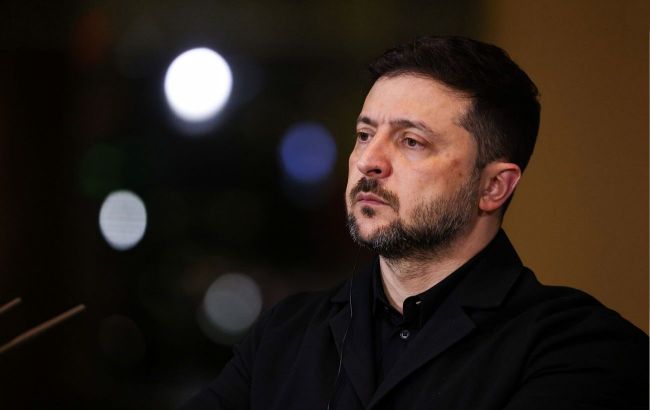 Volodymyr Zelenskyy (photo: Getty Images)
Last week, US President Donald Trump was distracted from Ukraine by Venezuela and Greenland. Nevertheless, noticeable progress was made in peace talks, at least at the Ukraine–US–Europe level.
RBC-Ukraine explains what was agreed on, where problems emerged, and when new rounds of talks may take place.
Key questions
- What did the "coalition of the willing" discuss in Paris?
- At what stage are US security guarantees?
- Under what conditions is a new meeting between Zelenskyy and Trump possible?
For several days, the center of diplomatic activity related to the Russia–Ukraine war shifted to Paris.
European leaders gathered there alongside Ukrainian President Volodymyr Zelenskyy, representatives of the United States, and even Putin’s envoy, Kirill Dmitriev.
However, the latter did not take part directly in the collective meetings, as broad negotiations involving Russia are not yet on the agenda.
Coalition of the Willing in Paris
On Tuesday, January 6, a meeting of the Coalition of the Willing at the leaders’ level took place in France, with the participation of Ukrainian President Volodymyr Zelenskyy.
Following the meeting, partners agreed to continue providing long-term military assistance to the Armed Forces of Ukraine. This includes the supply of defense aid packages, financing for weapons procurement, and technical support.
In addition, there was extensive discussion of multinational forces that would help restore the combat readiness of Ukraine's Armed Forces and deter threats in the air, at sea, and on land after the end of hostilities.
The willing also agreed to support Ukraine in the event of a renewed Russian attack through military assistance, intelligence sharing, logistics, and diplomacy, and, if necessary, to introduce additional sanctions.
Military mechanisms
A coordination group was established in Paris to ensure operational cooperation between coalition countries, the United States, and Ukraine.
The new format is intended to guarantee full coordination among all involved forces. The group will work alongside the Coalition's headquarters, which is already operating in Paris. French President Emmanuel Macron said the initiative covers two main tracks.
The first focuses on overseeing the implementation of a ceasefire. The United States will play a leading role here, with the involvement of other countries. The second track concerns long-term support for Ukraine's Armed Forces.
At the same time, President Volodymyr Zelenskyy stressed that signing the document is only the starting point that launches a broader process.
"These documents will also be legally binding. In most countries of the Coalition of the Willing, parliamentary approval is required. So after the declaration, after this process, countries will go to their parliaments. We are also counting on this support," he said.
In addition, chiefs of general staff of the armed forces from Coalition countries met in Paris. Among other issues, they discussed security guarantees for Ukraine and practical mechanisms for their implementation.
French Chief of the Defense Staff General Fabien Mandon said the current military-level work is meant to support political steps within a future peace agreement.
According to Politico, citing a senior EU official, six to seven strategic documents are currently being drafted.
US position
After the meetings, Trump's special envoy Steve Witkoff said the parties are ready to continue talks.
"We have made significant progress on several critical workstreams, including our bilateral security guarantee framework and a prosperity plan," Witkoff said after the first day of negotiations.
The US delegation included Witkoff himself, Jared Kushner, General Alex Grynkewich, US Ambassador to France Charles Kushner, and White House adviser Josh Gruenbaum.
According to Witkoff, the United States supports the view that credible security guarantees and clear commitments on economic recovery are essential conditions for achieving a lasting peace.
Witkoff said that security protocols are largely agreed. However, Politico reports that the United States did not sign the joint document.
Moreover, provisions on US participation in multinational forces in Ukraine were removed from an earlier draft of the agreement reviewed by the outlet. That earlier version also stated that the United States would commit to supporting these forces in the event of an attack and provide intelligence and logistical assistance.
Nevertheless, according to Zelenskyy, a bilateral document on US security guarantees for Ukraine is effectively ready. The Ukrainian president suggested that a new meeting with Trump could take place in the near future. At that meeting, the US president could provide an answer on security guarantees for Ukraine. Ukrainian Foreign Minister Andrii Sybiha later added that such a visit would require an appropriate signal from the United States.
Russia's position
After the meetings with the coalition, Witkoff and Kushner also met with Putin's envoy Kirill Dmitriev. As before, control over occupied territories remains the key issue for Russia in the context of peace talks, a source familiar with the matter told RBC-Ukraine.
"Effectively, the Russians are concerned only with territory; this is currently the focus of the key discussions," the source said.
Once again, everything comes down to whether Trump will begin applying pressure on Russia. While there were doubts about this earlier, the situation appears to be gradually changing, judging by Trump's actions on other fronts.
This week, the United States began detaining Russian tankers off the coast of Venezuela and again issued threats toward Iran's leadership, a Russian ally, amid protests in the country. At some point, this activity could escalate into new sanctions against the Kremlin if it refuses to make concessions.
Notably, discussions also resumed this week about advancing the Graham-Blumenthal bill in the US Congress. Among other measures, it предусматриває punitive 500% trade tariffs against Russia. One of the bill's authors, Senator Lindsey Graham, said that Trump has already given the "green light" for a vote.
At the same time, Trump's hyperactivity could also harm Ukrainian and broader European interests. This primarily concerns Greenland. If the US president continues attempts to bring it under US control, it would create a conflict between NATO members on both sides of the Atlantic. Such a scenario, which began unfolding over the past week, would be a gift to Russia and a problem for Ukraine.
The next key moment in the negotiation process will be a face-to-face meeting between Zelenskyy and Trump, at which the American leader is expected to outline Russia’s response to the proposed peace plans. Preliminary estimates suggest it could take place within the next week to a week and a half.
Sources: statements by Ukrainian, US, and European officials, reporting by Politico, Reuters, Axios, and Bloomberg.