Greenland under Trump’s spotlight: Potential dangers for Europe and Ukraine


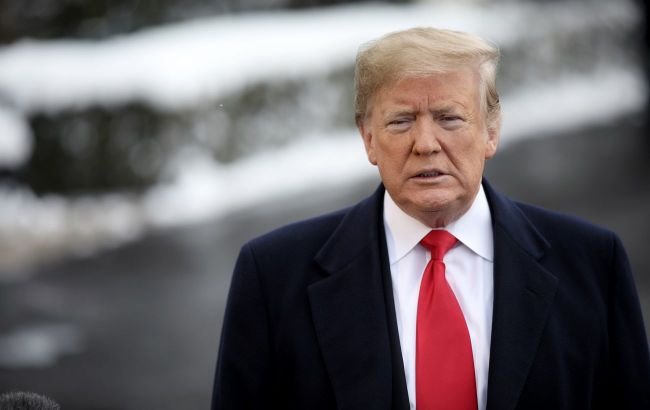 Donald Trump (Photo: Getty Images)
After a successful operation in Venezuela, US President Donald Trump mentioned Greenland once again. This time, it seems, he is seriously determined to annex the island to the US.
RBC-Ukraine explains why Trump is eyeing Greenland and what risks this situation poses to the world, and to Ukraine in particular.
Greenland is the world’s largest island, located in North America, near the coast of Canada. Politically, however, Greenland is part of Europe, as an autonomous territory of the Kingdom of Denmark.
Due to its harsh climate, very few people live there — on a territory three and a half times the size of Ukraine, only 56,000 people reside. Yet the island’s geographic location made it strategically important during the Cold War between the US and the USSR. American military bases, including those with nuclear weapons, operated in Greenland. Today, only the Thule Air Base remains, which the US uses to monitor outer space.
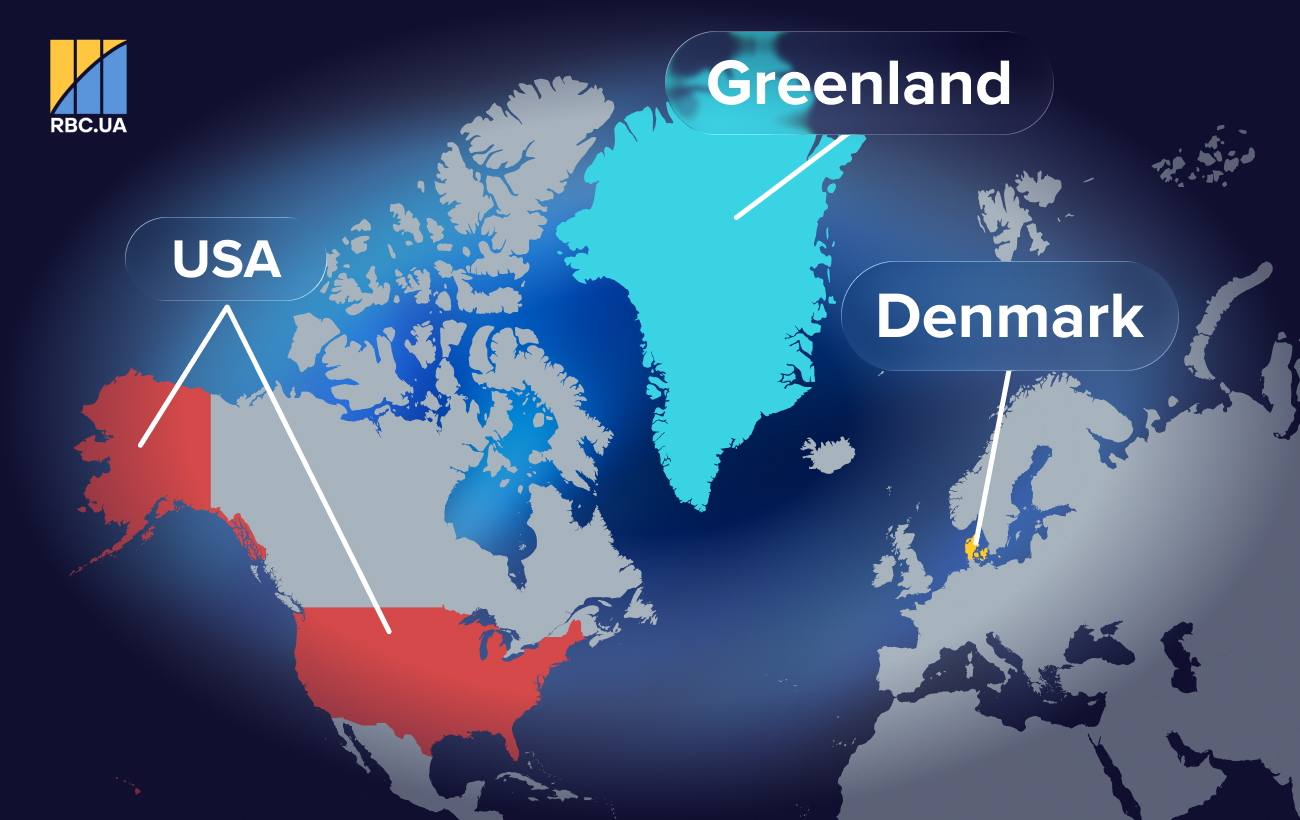
Greenland on the map (infographic: RBC-Ukraine)
In addition, the island has rich deposits of rare earth metals, which the US needs to maintain its leadership in high-tech industries.
Trump’s long-standing interest
Donald Trump expressed a desire to "buy" Greenland from Denmark back during his first presidential term — which at the time seemed half-joking.
However, when he returned to the White House last year, such talks resurfaced with new intensity and in a more public way. During one speech, Trump stated that he would take Greenland "one way or another." Later, even US Vice President J.D. Vance visited the island, where he was met with a less-than-welcoming reception.
For a while, Trump seemed to have forgotten about his interest in Greenland. But at the beginning of 2026, immediately after the operation in Venezuela, he declared that the US needs Greenland "for national security reasons."
US on the offensive, Europe on the defensive
On one hand, Trump may be using this approach to distract from the negative fallout of his actions in Venezuela, according to Serhii Dzherzh, head of the public Ukraine–NATO League.
"Venezuela might indeed take a democratic path of development. But there are questions about whether everything was done legally. So, to divert attention from this, the Greenland issue is being pushed with greater intensity," Dzherzh told RBC-Ukraine.
At the same time, a number of US moves indicate that this time, Greenland is being taken seriously. White House Press Secretary Karoline Leavitt stated that Trump and his team are considering various options for acquiring the island.
"And of course, utilizing the U.S. military is always an option at the commander in chief's disposal (Trump)," Leavitt added.
However, other signals are also coming from Washington. For example, US Secretary of State Marco Rubio ruled out the possibility of a US military invasion of Greenland along the lines of the Venezuela operation.
"I spoke on the phone yesterday with Secretary of State Marco Rubio. He confirmed that this is not the approach supported by the United States," said French Foreign Minister Jean-Noël Barrot.
The Trump administration is reportedly developing a draft agreement on Greenland that could potentially be offered to the island’s leadership, The Economist reports.
According to the outlet, this could be a Compact of Free Association (COFA). The US has already concluded similar agreements with Micronesia, the Marshall Islands, and Palau, all located in the Pacific Ocean. Such an agreement provides for US financial support, preservation of the island’s internal autonomy, and the transfer of defense and security powers to Washington.
The only problem is that the US is not asking those who legally own the island under international law — Denmark.
Denmark’s and Europe’s response
In Copenhagen and Greenland, preparations are already underway to push back against Trump. On January 4, Danish Prime Minister Mette Frederiksen and Greenlandic authorities called on Trump to stop speculating about a possible annexation of the island.
"It makes absolutely no sense to talk about the US needing to take over Greenland. The United States has no right to annex any of the three countries in the Danish Kingdom," Frederiksen said.
Denmark received support from other European countries as well. A joint statement on the matter was signed by the leaders of France, Germany, Italy, Poland, Spain, and the United Kingdom.
The document states that Denmark, together with Greenland, is part of NATO. Therefore, security in the Arctic must be ensured collectively, in cooperation with Alliance allies, including the United States. This should be done in accordance with the principles of the UN Charter, including respect for sovereignty, territorial integrity, and inviolability of borders.
Clearly, statements alone will not be enough on either side, and the situation is likely to escalate further. This, in turn, creates a range of risks — for Europe and even for Ukraine.
Implications for Ukraine and Europe
The main negative consequence of this crisis is already visible — a weakening of unity among NATO members on both sides of the Atlantic.
Donald Trump has previously stated that he might not defend Alliance members who spend little on defense. Last year, at the NATO summit in The Hague, the US president was appeased — European countries promised to increase their defense budgets.
Now, however, there is a risk of a conflict over Greenland even among NATO members themselves — between the US on one side and Denmark and other European countries on the other. In such conditions, the Alliance’s collective defense against external threats, such as Russia, could become merely theoretical.
"If the United States chooses to attack another NATO country militarily, then everything stops. That is, including our NATO," Danish Prime Minister Frederiksen said.
For Ukraine, the danger comes from indirect consequences — from problems with intelligence to disruptions in arms supply chains, even for weapons purchased from the US with European funding.
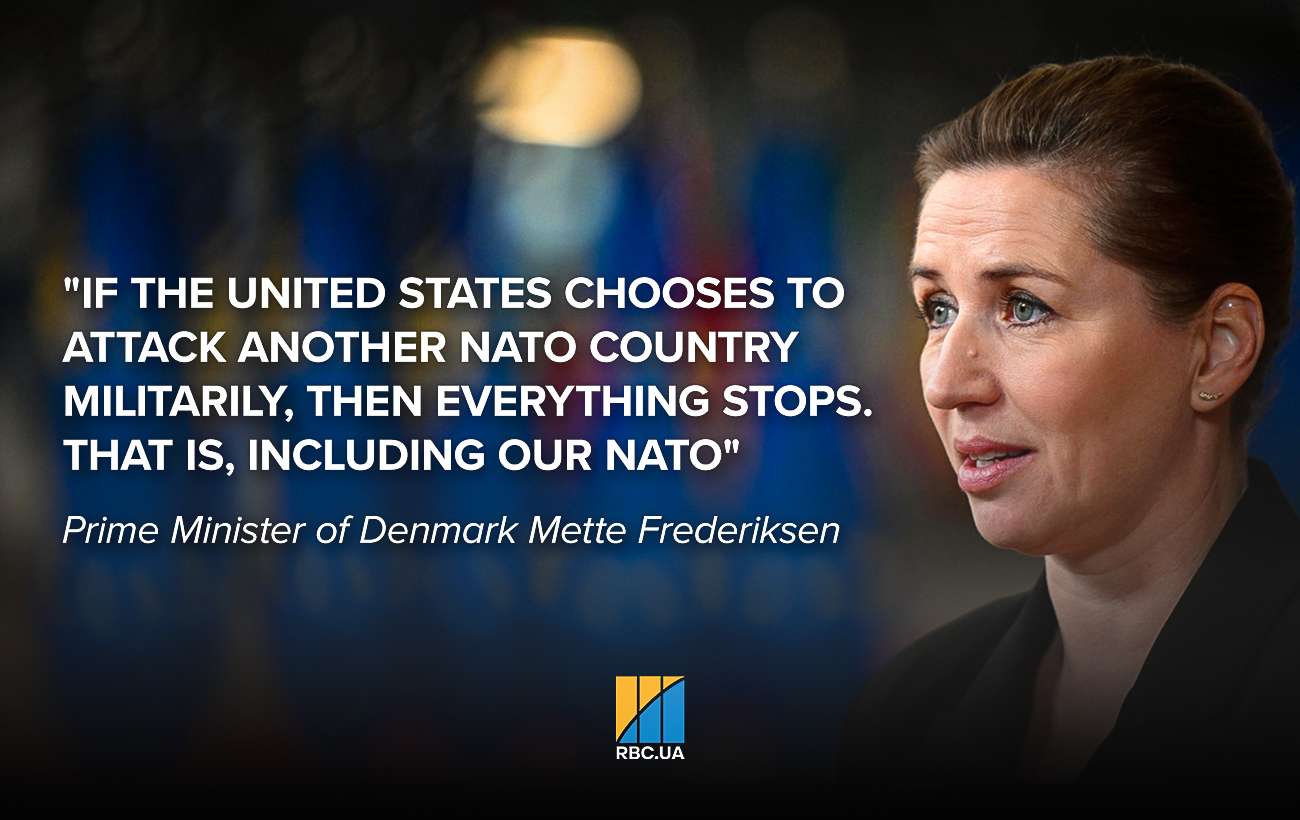
Infographic: RBC-Ukraine
Among other risks are a weakening of political support from certain NATO countries and a reduced priority of the Ukrainian issue on the agendas of the US and Europe — not to mention a potential final undermining of the principles of international law.
"Overall, this sets off a cascade of territorial wars and claims. And the main point — it would mean that one could disregard international law, international treaties, and the entire security system of the 21st century," Dzherzh noted.
However, opponents of Trump’s approach exist both in Europe and within the US — including in his own team, among members of Congress. But with the current US president, it is never clear in advance whether his advisors will be able to explain all the risks in time, or whether Trump’s personal ambitions will ultimately prevail.
Sources: statements from American and European politicians, comments from Serhii Dzherzh, and materials from Sky News, ABC News, The New York Times, Politico, and Axios.