Mass protests sweep Iran: Will regime fall, what it means for Russia and Ukraine?


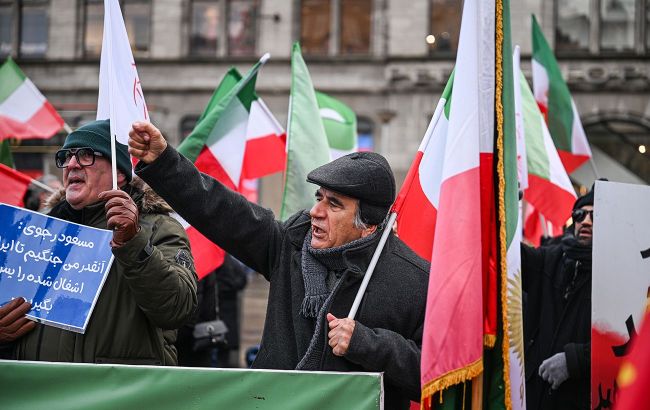 A diaspora rally in Amsterdam in support of protesting Iranians (photo: Getty Images)
The regime in Iran has been shaken by pressure from street protests. Will the people be able to overthrow the Islamist authorities, or will the government suppress the protests, and what consequences might this have for Russia as one of Iran’s closest partners?
Read more in a report by RBC-Ukraine.
Key questions
-
Why did the protests start in Iran?
-
What are the chances that the regime will be overthrown?
-
How could the US and Israel influence the course of events?
-
What do Iran’s problems mean for Russia and Ukraine?
Iran is convulsed by protests. Since the end of December, mass demonstrations have been taking place across the country.
The immediate trigger was another collapse of the national currency, the rial. In December alone, its black-market exchange rate against the dollar fell by 20%, causing a sharp rise in food prices.
The protests initially broke out in the capital, Tehran, but quickly spread nationwide.
Protesters have occasionally attacked and seized government buildings — for example, in the cities of Fasa and Lordegan. However, security forces have so far quickly regained control.
A new escalation occurred on the evening of January 8, ahead of the Iranian weekend. The Institute for the Study of War recorded at least 156 demonstrations — almost twice as many as the previous day.
The protests are sizable. In Tehran, thousands of people took to the central streets and squares. Mass demonstrations are also happening in major cities such as Mashhad, Kermanshah, Ilam, Lorestan, and in Kurdish regions. Today, even larger rallies are expected, as Friday is a day off in Iran, attracting the largest crowds.
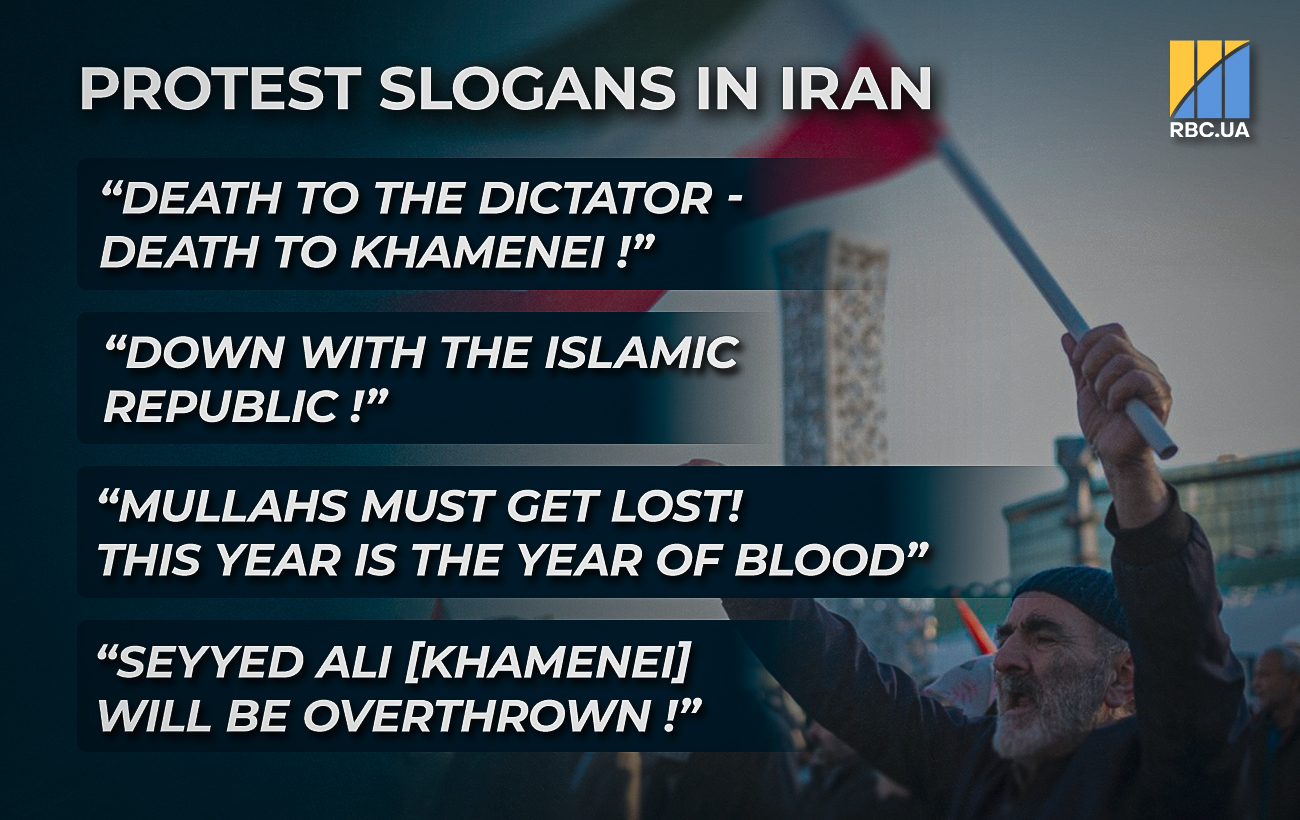
Infographic: RBC-Ukraine
The authorities are trying to respond with force. In addition, the internet and mobile networks have been completely shut down across the country. Previously, such a radical step was taken only in exceptional cases, making this a further indication of the seriousness of the situation.
New milestone
Protests are an integral part of Iran’s political culture. Despite the authoritarian nature of the regime, they occur regularly and often produce results at the local level on specific issues.
Nationwide protest waves happen every few years. The most recent one swept across Iran in 2022–2023 after the death of Mahsa Amini, a young woman detained and tortured by the so-called morality police.
Those protests, known under the slogan "Women, Life, Freedom, quickly spread across the country. Protesters — mostly young people — demanded the abolition of the mandatory hijab and broader democratization of the regime. The authorities responded with harsh force while simultaneously easing some hijab restrictions.
This time, however, the reasons for the protests are different and lie in the very nature of the political regime itself.
Vicious cycle for the authorities and the people
When the Islamic Revolution took place in Iran nearly half a century ago, not only religious slogans but also communist ones were popular. The new authorities decided to counter this by taking the initiative. The country implemented, in effect, Islamic socialism, regulating prices and providing subsidies for most consumer goods.
The gap between market and official prices is covered by the state budget, whose main source of revenue is, in turn, oil. Previously, this burden on the budget was moderate, as Iran was only partially isolated.
Everything changed after 2018, when Donald Trump withdrew the US from the nuclear deal with Iran and tightened sanctions. Since then, the country’s situation has only worsened. For example, the national currency has lost about 30 times its value, and inflation spikes like the current one occur several times a year.
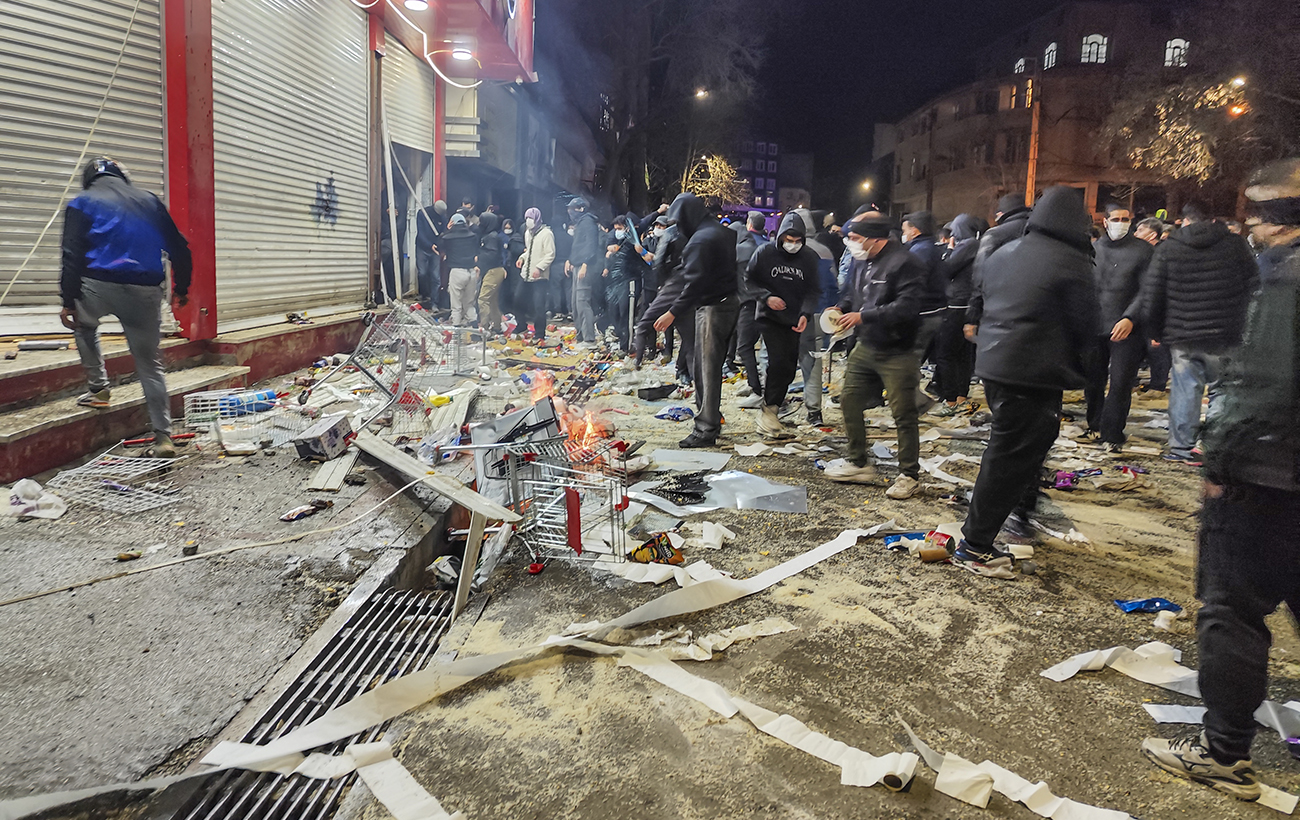
Protest in the city of Kermanshah (photo: Getty Images)
It is becoming increasingly difficult for the authorities to find funds for subsidies, and it is impossible to provide decent wages for the population if prices are left to market forces. Most importantly, under the current regime, there is no sign of improvement.
For Iran to emerge from international isolation, it would need to abandon aggressive actions in the Middle East, halt its nuclear weapons program, and end support for Russia. The country’s supreme leader, 86-year-old Ayatollah Ali Khamenei, has no intention of doing so.
This very despair and lack of prospects have brought both longtime opponents of the regime and those who recently supported it onto the streets.
"Different layers of society have joined in. First and foremost, the Iranian bazaar — the merchants. But even we have videos showing women in chadors walking around and saying, 'Death to Khamenei.' That is, the religious segment of Iran has also joined. This has never happened before," Iranian political scientist Amir Chahaki told RBC-Ukraine.
Outlook
Despite the growing scale of the protests, it is still too early to talk about the overthrow of the regime. These are only the first waves of certain changes, said Israeli National Security Institute Iran expert and former Israeli intelligence officer Beni Sabti in an interview with RBC-Ukraine.
"The important thing is that if the protests can go on for a long time, for example, two or three months, and bring cracks inside the regime. So this is the moment that we can see more changes," Sabti noted.
The regime relies on a powerful and still loyal security apparatus. This primarily includes the Islamic Revolutionary Guard Corps and the semi-military Basij militia. They report directly to the supreme leader, allowing the regime to effectively coordinate repression. In addition, the authorities control the internet and media.
A key factor will be how Supreme Leader Khamenei behaves. He has already made several statements about the protests, with a general message, "The demands are legitimate, but the rebels will not be spared."
However, the crucial question is how actively Khamenei himself is involved in governance. At the very least, his advanced age has long created challenges in this regard.
"Khamenei, after the 12-day war with Israel (June 13–24 last year - ed.), is not fully accessible. This hinders more concrete management of the process — what to do next? And when there is no feedback as before, it means more chaos within the state," said Amir Chahaki.
At the same time, according to the Times, Khamenei and his inner circle have developed a plan to flee to Moscow in case security forces fail to suppress the protests. If he decides to take such a step, the entire state apparatus would be forced to act on its own.
Leadership challenge
No matter how the protests develop, several factors are necessary for their success. Experience from previous regime changes around the world shows that, on one hand, there must be massive street pressure, and on the other, part of the elite needs to side with the protesters.
The protests are still growing, but there are no prominent leaders who could engage in dialogue with the authorities.
Within the Iranian elite, there is also a segment that recognizes the need to end international isolation — the so-called reformists. The key figure among them is former Iranian President Hassan Rouhani.
"In recent weeks, he (Rouhani - ed.) has begun to strongly criticize official policies. Some believe he is positioning himself as a potential alternative to Khamenei," emphasized Amir Chahaki.
According to Sabti, it is also important whether some officers from the army or the Islamic Revolutionary Guard Corps might switch sides. "But right now, we cannot predict this," the expert says.
For now, the reformists are not ready to openly side with the "street," partly due to concerns for their personal safety.
External assistance
The balance of power in Iran could be shifted by external intervention. Such signals have already begun to come from Washington and Jerusalem. Amir Chahaki notes that a "golden moment" has now emerged for Israel.
"I do not rule out that if protesters continue to develop their movement while the state keeps killing Iranian citizens, America will intervene together with Israel with the aim of eliminating Iran’s leadership — Khamenei," he said.
In practice, the purpose of such actions would be to remove the part of the system that most strongly resists change and to paralyze the security forces loyal to the regime. Subsequently, this could open the way for the formation of a transitional government led by Rouhani or another opposition figure.

Infographic: RBC-Ukraine
In this context, it is noteworthy that Reza Pahlavi — the descendant of the Iranian shah, who was overthrown in 1979 — has expressed support for the protests. It was after those events that the current Islamic Republic was established.
Posters in his support have appeared at the demonstrations. However, at this stage, Pahlavi’s level of influence is difficult to assess. Nevertheless, under certain circumstances, he could serve as a compromise figure for Iran’s political elites, with Western connections, at least during a transitional period.
Implications for Russia and Ukraine
Problems facing the Iranian authorities automatically spell trouble for Russia. Of course, everything depends on the scale of these problems and whether the regime itself survives.
"If this regime collapses, the influence and effect on Russia will be very great, and especially on the war with Ukraine, because the Iranian regime can't bring drones or other supplies and ammunition to the Russians," Beni Sabti noted.
Today, Iran supplies Russia with everything it needs via the Caspian Sea. Tehran also helps Moscow circumvent sanctions by buying and selling oil and fuel. If this mechanism disappears, Russia will suffer additional damage.
"The next regime, of course, we assess that they won't want such a relationship with Russia," Sabti said.
Amir Chahaki draws attention to the strong anti-Russian sentiment in Iranian society. This is partly rooted in history. For centuries, Russia pursued a hostile policy toward Iran similar to the one it is now pursuing against Ukraine, and on several occasions took part in the partition of the country together with other empires. This is still remembered in Iran.
Layered onto this history is the principle "the friend of my enemy is my enemy," as Moscow directly supports the regime in Tehran.
"Most of the Iranian people also blame Russia for all their own problems. This is often exaggerated, but Iranians understand the close ties between their government and the Kremlin. In other words, Iranians do not support Khamenei, and because of this, they are against Putin," explained Amir Chahaki.
However, Russia itself has limited ability to influence events in Iran. All its security resources are concentrated on Ukraine. As shown by the examples of Syria and Venezuela, at most, the Kremlin is ready to offer refuge to former dictators after they are overthrown.
Even if the authorities manage to suppress the current wave of protests, it will not solve the underlying problem. Economic exhaustion, international isolation, and the aging of the supreme leader make the Iranian regime increasingly unstable. Each new outbreak of discontent shortens the path to the next — larger and more dangerous for the system itself.
For Ukraine, this means more than just an internal crisis in a distant country. Iran’s future is directly linked to Russia’s ability to continue the war. The question is not whether Iran will change, but when — and whether this change will catch Moscow at a moment when it is most dependent on its pariah allies.