Why Russia's Zircon missiles are so hard to shoot down: Analysis

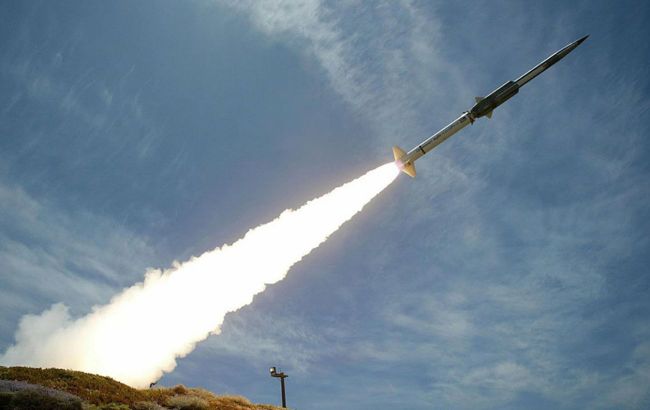 Photo: Due to a shortage of air defense missiles, Russian Zircons have become a new challenge for Ukraine (Getty Images)
Russian forces have increased their use of Zircon missiles during attacks on Ukraine. Last night alone, Russia fired 8 such missiles in a single strike, but Ukrainian air defense forces were unable to intercept them, as not all systems are capable of dealing with these aerial targets, according to Anton Zemlianyi, an analyst at the Ukrainian Center for Security and Cooperation, who discussed the characteristics of the Zircons and whether the Russians can launch these missiles in large numbers.
The 3M22 Zircon is a Russian anti-ship missile. Russia uses it on multiple occasions to shell Ukrainian cities, though in smaller numbers per strike.
Currently, these missiles have become an additional tool for enhancing the effectiveness of Russia's massive attacks.
Although the missile was originally designed to destroy Russia's surface ships equipped with air defense and missile defense systems, Russia is currently using it in an atypical manner to strike ground targets on Ukrainian territory.
Zircon missile key characteristics
Since the missile is relatively new to the Russian military, its exact tactical and technical characteristics are not disclosed. However, the following approximate parameters are known from open sources and statements:
- Range: from 600–1,000 km to 1,500 km
- Flight altitude: 30–40 km
- Speed: 5.5 Mach during the main flight phase, up to 7.5 Mach during the terminal phase
- Warhead weight: 300–400 kg
- Length: 8–10 meters.
According to available data, the Zircon is a two-stage missile, where the first stage operates on solid fuel, and the second is equipped with a direct-flow air-breathing jet engine. Targeting for it is provided by satellites or reconnaissance aircraft.
Launch characteristics and main threat
Previously, Zircon launches were recorded from the territory of the temporarily occupied Crimea toward the Kyiv, Kharkiv, and Vinnytsia regions. Currently, Russia is also deploying them from launch sites in the Kursk region of Russia.
As Anton Zemlianyi, an analyst at the Ukrainian Center for Security and Cooperation (UCSC), explains, the Russians have adapted this anti-ship missile for use with the Bastion mobile coastal launchers (which were previously used to launch Onyx missiles).
The main threats posed by the Zircons are:
- True hypersonic speed. Unlike Kinzhal-type missiles, the Zircon is a true hypersonic weapon with extremely high speed, allowing it to enter airspace extremely quickly.
- Minimal reaction time. Depending on the location of the launchers in the Kursk region, the missile’s flight time to targets in Ukraine is only about 3–6 minutes. This leaves very little time for both air defense countermeasures and for civilians to take cover.
- High accuracy. Since the missile was designed to hit ships on the open sea, its deviation from the target must be minimal. Accordingly, it may be more accurate than other Russian missile systems.
Can Ukrainian air defense shoot down Zircons?
As former Air Force spokesperson Yurii Ihnat noted earlier, the Zircon missile climbed to an altitude of over 40 km and attacked along a ballistic trajectory.
Ukrainian air defense has already successfully intercepted these missiles on multiple occasions, particularly during attacks on Kyiv. To effectively shoot down Zircons, the US Patriot system with interceptor missiles must be in the right place at the right time.
However, during today's attack on Ukraine, on the night of May 2, none of the Zircon missiles (specifically, all 8 launched) were shot down.
According to expert Anton Zemlianyi, the reason is a severe shortage of anti-ballistic interceptor missiles—the inability of partners to provide PAC-3 missiles for the Patriot system promptly.
Due to a lack of ammunition for the Patriot system, a significant portion of the missiles and all launched Zircons are currently reaching their targets.
Production volumes and Russian tactics
According to the Defense Intelligence of Ukraine (HUR), the production rate of Zircons in Russia is not increasing significantly, but it is well-established. Russia manufactures about 10 units per month. In recent years, Russia has managed to accumulate a total of just over 200 such missiles.
The analyst notes that Russians do not use Zircons on a massive scale, like the Kh-101 or Kalibr cruise missiles. Instead, they use them to diversify their arsenal and put additional pressure on Ukrainian air defense.
According to the analyst, since Russia is unable to consistently launch 30 standard ballistic missiles per month without a long-term stockpile, it intersperses its attacks with Zircons, attempting to maximize the quality and effectiveness of strikes against targets on Ukrainian territory.
"If we had a sufficient number of interceptor missiles for the Patriot systems, we would have successfully overcome this challenge posed by the Zircons," the source concludes.