US tech giants fight lawsuit claiming their chips power Russian strikes on Ukraine

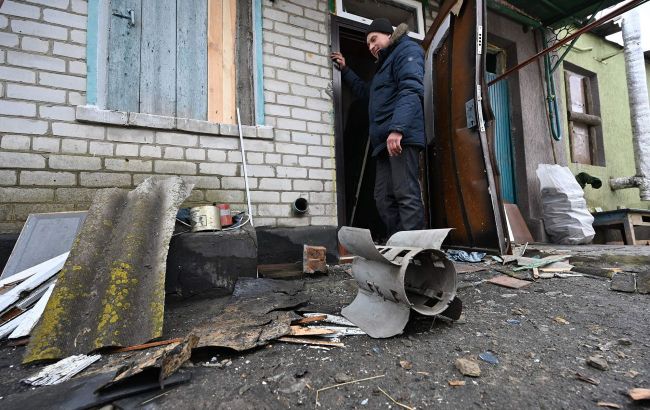 Photo: Debris from a Russian missile in the Kharkiv region (Getty Images)
Four leading US technology companies are seeking to have lawsuits filed by five Ukrainian citizens dismissed. The plaintiffs allege that Russia is using these companies' microchips and processors to target civilian facilities, according to The Dallas Morning News.
The case is currently being heard by the US District Court in Dallas, Texas, and the defendants are four large and well-known companies: Texas Instruments (TI), Intel, Advanced Micro Devices (AMD), and Mouser Electronics, which are among the key players in the semiconductor market.
Ukrainians have filed lawsuits in US courts over the loss of loved ones or injuries sustained during Russian attacks on playgrounds and hospitals. Among the plaintiffs are also residents of a school dormitory who were affected. Lawyers claim that components from these specific brands were found in Russian weapons.
The plaintiffs insist on the manufacturers’ liability and believe that the companies sold the equipment to third parties. These intermediaries, in turn, transferred it to Russia. The firms allegedly knew about such risks or should have foreseen them.
Chips ours, but we didn’t plan attacks
The corporations' lawyers are demanding the case be dismissed, calling the Ukrainians' claims unprecedented. In their view, American factories cannot be held liable for foreign wars, and the court has already dismissed some of the lawsuits, including due to the statute of limitations.
"These lawsuits ask the court to do something essentially unprecedented in American tort law: hold American manufacturers liable — under Texas state law — for foreign military operations they had no role in planning or executing. American semiconductor companies are not liable for the Russian military’s attacks, and plaintiffs cannot use Texas law to privately enforce federal export-control laws and foreign policy. As a result — for multiple overlapping reasons — plaintiffs’ claims fail," the defendants' statement reads.
The companies expressed deep sympathy for the victims, but they emphasized that Ukrainian citizens do not have the right to seek justice in US courts, specifically regarding the airstrikes. This is a matter of foreign policy, not private lawsuits.
Chips were purchased before sanctions
Overall, the tech giants have hired an entire army of well-known lawyers in Texas and the US to defend their interests and avoid being found guilty of supplying chips and microchips to Russia, and, as a result, avoid paying compensation to victims from Ukraine.
The defense argues that Russia had legal access to many of the components. This occurred before the imposition of strict sanctions in 2022. The lawyers also emphasized that semiconductors are manufactured by hundreds of companies around the world.
In addition, the tech giants’ lawyers argue that the Ukrainian plaintiffs have not provided specific facts: they did not specify exactly which parts were in the particular missile.
Another argument concerns the statute of limitations. The tech giants believe that the Ukrainians filed their claim too late.
What Ukrainians' lawyers say
The Ukrainians' lawyers compared the case to other instances of harm. In their view, tort law applies the same way. This applies to the opioid crisis and even a dog bite. If the manufacturer ignored warning signs, it must be held accountable.
Representatives of the plaintiffs stated the following:
"Nothing about Plaintiffs’ allegations is unprecedented: tort law routinely holds defendants liable for foreseeable harm to foreseeable plaintiffs, whether the misconduct is as simple as a dog bite or as complex as fueling opioid addiction by ignoring red flags about end users."
The Ukrainian side also has an explanation regarding the statute of limitations. They only learned of the chips’ origin in September 2024. Before that, the companies allegedly made false statements. Fraudulent concealment of information deprives the defense of the right to invoke the statute of limitations.
How Russia uses Western technology in its weapons
New models of Russian drones have been found to contain components manufactured in 2025 in Germany, Japan, Switzerland, the United States, Taiwan, and the United Kingdom. The Russians continue to gain access to Western technology despite restrictions.
However, there is some good news: these Western components are becoming increasingly scarce, judging by the downed drones. Russians are having to switch to Chinese chips and microcircuits.
Recently, the Defense Intelligence of Ukraine (HUR) specialists dismantled a new Russian Klin drone and found foreign-made components inside. Among them were parts from China, the US, Australia, Switzerland, Taiwan, and South Korea.