Russian Shahed drones increasingly rely on Chinese parts - Ukraine's official


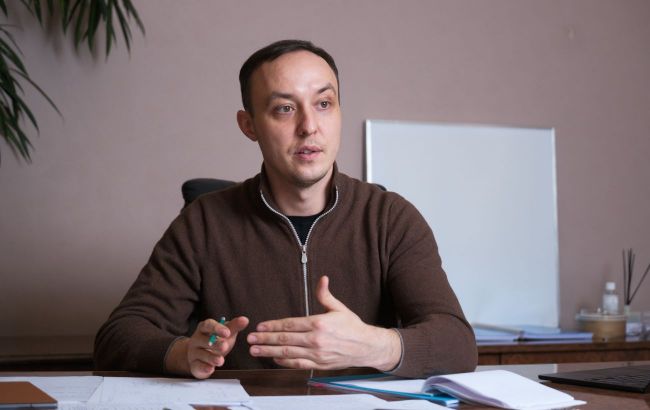 The President of Ukraine’s Commissioner for Sanctions Policy (Photo: Vitalii Nosach, RBC-Ukraine)
The share of Chinese components in Russian Shahed drones is increasing, while the number of Western components is decreasing. This indicates that sanctions pressure on suppliers is yielding results, according to a comment from Vladyslav Vlasiuk, the President of Ukraine’s Commissioner for Sanctions Policy.
Chinese components are replacing Western ones
In Shahed‑type drones, the share of Chinese components is growing, while the number of Western parts is declining.
In particular, the presence of Dutch components has noticeably decreased – the result of targeted work with the manufacturer NXP and regulators. When it comes to missiles, it is still too early to speak of noticeable changes – the technical cycles for updates are more complex.
Western components despite sanctions
Fresh batches of missiles contain a significant share of Western components – and, according to Vlasiuk’s forecasts, among them will be parts manufactured in late 2025 and even 2026. This indicates that efforts to block supplies are still insufficient.
A separate issue remains STMicroelectronics' stance: after transferring around 50 serial numbers of detected components, the company dismissed them as small parts that supposedly do not pose a significant problem. Vlasiuk considers this approach unacceptable; work on this track is ongoing separately and more intensively.
What is known about the missiles
One Kh‑101 struck a residential building in Kyiv’s Darnytskyi district, killing 25 people; another hit a gas station near the DVRZ neighbourhood; a third struck Bila Tserkva. All three are from the same batch, manufactured roughly in the second quarter of 2026. This confirms the trend: Russia is using missiles straight off the assembly line.
Positive results
Over the past year, US agencies have uncovered more than a dozen supply schemes funnelling millions of dollars’ worth of components to Russia and shut them down. Components from struck targets are regularly handed over to partners in Ireland, Germany, the UK, and the US for technical examination.
Sanctions loopholes in Ukraine
Vlasiuk highlighted a serious problem: Ukraine still lacks a law criminalising violations of sanctions. This complicates the prosecution of sanctions evasion schemes that may also have a Ukrainian connection.
A positive example is cooperation with Finland – there, they managed to synchronise criminal proceedings in both countries and bring the case to a conclusion.
On the morning of May 14, Russia carried out one of the largest strikes on Ukraine since the start of the full‑scale invasion. In Kyiv, 24 people were killed, including three children.
Zelenskyy stated that the residential building was hit by a Kh‑101 missile that may have just come off the production line. The president ordered a response to the attack, involving all necessary capabilities of the defense sector.
Zelenskyy also announced new long‑range sanctions against Russia – Ukraine is identifying targets for further pressure over the full‑scale war and enemy strikes on Ukrainian populated areas.