US preparing dramatic drawdown of military footprint in Europe

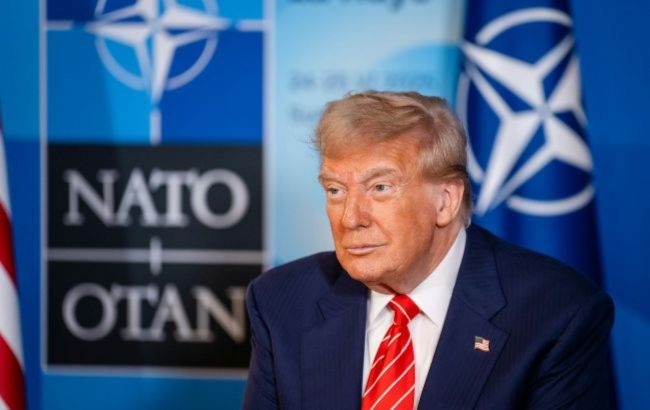 US President Donald Trump (photo: flickr.com)
The United States plans to scale back part of its military presence in Europe sooner than NATO had anticipated and without offering allies any meaningful transition period, according to Welt am Sonntag.
A US Department of Defense official said the planned changes will be included in a force proposal to be presented at the next NATO force-generation conference, scheduled for June.
The official told the media that they wanted to provide allies with the information and clarity they needed to advance as quickly and effectively as possible toward a European defense posture in which allies assume primary responsibility for Europe's conventional defense.
The position aligns with the demands Donald Trump made of European NATO members during his first term. After his return to the White House in January 2025, the approach was formally incorporated into the National Security Strategy and National Defense Strategy.
The underlying logic is that the United States can no longer prepare to fight major conflicts on multiple fronts simultaneously. Washington's strategic focus has shifted toward China and the Indo-Pacific region, meaning Europe should take primary responsibility for deterring Russia.
The war against Iran has only reinforced that course.
No transition period
Berlin and other NATO capitals had expected the United States to withdraw troops gradually and in coordination with allies. Instead, according to Welt am Sonntag, the current proposal offers Europeans no significant grace period.
The Pentagon official added that Trump always reserves the right to act as he deems appropriate in any situation.
What forces expected to scale back?
At a meeting in Brussels last week, Senior Counselor to the Under Secretary of War for Policy Alexander Velez-Green informed allies of Washington's intention to partially step back from one element of NATO's collective deterrence posture.
According to Der Spiegel, the plans include reducing the number of US fighter aircraft assigned to Europe by roughly one-third.
The most significant reductions would affect the NATO Force Model (NFM), the alliance's rapid-response system that determines how many troops can be deployed within 10 to 30 days and how many personnel can be mobilized within six months — up to 800,000 troops in total.
Within the NFM framework, the reductions would involve strategic bombers, long-range precision-strike capabilities, naval forces, and aerial refueling aircraft.
Risks for eastern flank
A partial withdrawal of US forces would weaken the military foundation underpinning NATO's Article 5 collective defense commitment.
The move is causing particular concern in the Baltic states. NATO forces stationed there, including a German brigade in Lithuania, are expected to provide the initial line of resistance and buy time until reinforcements arrive.
The media reports that there are already doubts within the US military in Europe about whether NATO has sufficient forces to fully implement its regional defense plans. Further reductions would only deepen those concerns.
Earlier, in April 2026, the Pentagon announced the withdrawal of about 5,000 troops from Germany.
Pentagon officials later unofficially described the move as punishment for Berlin over comments regarding the US war with Iran. Washington also plans to reduce its military presence in Europe to levels seen in 2022.
Last week, reports emerged that the United States intends to significantly reduce its participation in the NATO Force Model.