Ukraine's southern offensive leaves Russian command stuck — ISW

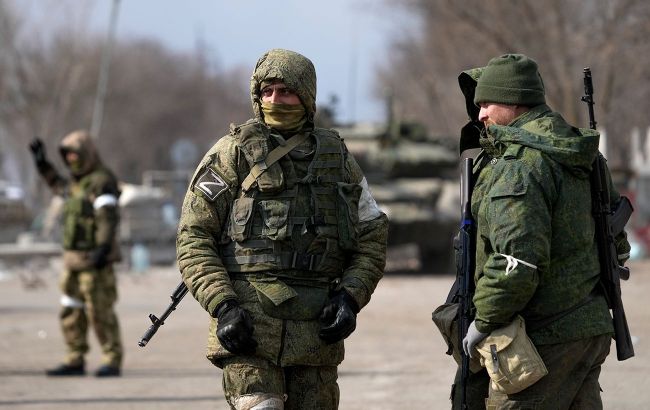 Photo: The Ukrainian Armed Forces' successes in the south have driven the Russian command into a corner (Getty Images)
Recent Ukrainian forces' successes in the Oleksandrivka sector have presented the Russian military command with conflicting tactical and operational dilemmas on the battlefield, according to the Institute for the Study of War (ISW).
On March 19, Ukrainian military analyst Kostiantyn Mashovets reported that Russian forces lacked the capacity to simultaneously capture Orikhiv in the western part of the Zaporizhzhia region and launch an offensive on the city of Zaporizhzhia from the south within a single operation.
The expert explained that Ukrainian defenses along the Kinska River near Orikhiv and the recent successes of Ukrainian forces in the Oleksandrivka direction, which are distracting the Russians from attempts to capture Orikhiv from the east, are preventing the Russians from taking the city.
Mashovets assessed that the Russians would have to pull reinforcements from the Kherson region to carry out such an offensive in the western part of the Zaporizhzhia region.
This is because they are simultaneously conducting offensive operations against Ukraine’s Fortress Belt, Dobropillia and Kupiansk, and attempting to create buffer zones in the north of the Kharkiv and Sumy regions.
The analyst previously noted that to attack Dobropillia, the Russians would be forced to divert forces currently operating against Ukraine’s Fortress Belt. After all, Russia does not have time to throw new forces into the Dobropillia direction.
"The competing dilemmas that Ukraine has imposed on the Russian military command have likely disrupted Russian preparations for their Spring-Summer 2026 offensive," notes the ISW.
Mashovets emphasized that he had not yet seen reports of significant units being redeployed west and south of Orikhiv, which would be necessary to conduct a major operation against Zaporizhzhia in the spring or summer of 2026.
He also reported that Russian troops were massing infantry southwest of Orikhiv for offensive operations against the city and against Novopavlivka (northwest of Orikhiv); however, this buildup is insufficient, given the lack of Russian advances to the west and northwest.
A spokesperson for the Ukrainian brigade in the Kostiantynivka sector reported on March 19 that the intensity of Russian attacks in this sector was relatively low.
The Russians failed to achieve even tactical successes northeast of Kostiantynivka by the purported deadline of March 10, when they were supposed to squeeze between Maiske and Markove, as well as by a similar purported deadline of March 15 to capture the Siverskyi Donets-Donbas Canal in this area.
The spokesperson noted that there has been no significant buildup of Russian heavy equipment in the Kramatorsk direction, which could indicate preparations for a Russian offensive.
"The Russian failure to make even tactical advances to seize favorable starting positions in the Kostyantynivka-Druzhkivka tactical area for the anticipated Spring-Summer 2026 offensive against Ukraine’s Fortress Belt directly undermines Russia’s ability to achieve significant gains in the anticipated offensive," the ISW asserts.
Russia's spring offensive
Russian forces have intensified offensive operations in certain sectors of the front in recent weeks.
There has been a particularly noticeable increase in attacks along the Zaporizhzhia front, where the intensity of assaults has in some places exceeded that of one of the most intense sections of the front, the Pokrovsk area.
According to DeepState, the Russian command is also regrouping its forces and replenishing reserves. Analysts believe that these actions may be linked to changing weather conditions and the emergence of dense vegetation, which could influence combat tactics on the front lines.
Meanwhile, Ukrainian President Volodymyr Zelenskyy recently stated that the Russians’ spring offensive had already failed.
According to him, Russian troops are currently unable to advance with heavy equipment and are only attempting infiltration in small groups. At the same time, Russia has no intention of ending the war.
Commander-in-Chief of the Armed Forces of Ukraine Oleksandr Syrskyi reported that the highest intensity of Russian offensive operations is being recorded in the Zaporizhzhia direction, in the Huliaipole area.
Meanwhile, the Ukrainian Defense Forces in the southern sector continue to gradually advance, fighting to liberate Ukrainian settlements.