Ukraine's MFA calls for prudence amid Poland's push for Volhynia tragedy legislation

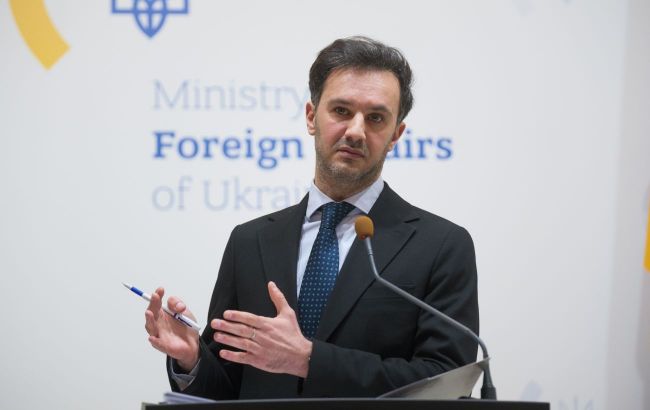 Photo: Heorhii Tykhyi, spokesperson for Ukraine's Foreign Ministry (Vitalii Nosach, RBC-Ukraine)
Ukraine is closely monitoring the Polish Sejm's consideration of a bill that would amend the laws on the Institute of National Remembrance and the Criminal Code. Kyiv has urged Warsaw to refrain from further escalation, states Foreign Ministry spokesperson Heorhii Tykhyi in comments to journalists.
Against this backdrop, the Foreign Ministry spokesperson recalled that sensitive historical issues require a professional dialogue based on mutual respect.
He urged Warsaw not to use such topics in political rhetoric.
Tykhyi also added that Kyiv does not want a further deterioration of Ukrainian-Polish relations and expects a similar approach from its ally.
According to the Foreign Ministry spokesperson, all decisions should be based on the strategic importance of the Ukrainian-Polish partnership rather than short-term electoral gains.
"We warn the Polish side against unilateral escalatory steps," Tykhyi emphasized.
Kyiv proposes that Warsaw focus on concrete efforts to reduce tensions, including those discussed during a recent ministerial-level meeting.
The two sides should also focus on making full use of existing bilateral mechanisms and instruments, maximizing diplomatic engagement, and intensifying professional historical dialogue within the framework of the Polish-Ukrainian Congress of Historians.
"We are convinced that Ukraine and Poland are destined to be good neighbors in order to protect our independence, freedom, and security from our common enemy in Moscow," the Foreign Ministry spokesperson concluded.
Polish Sejm debates bill on the Institute of National Remembrance: Why it matters
The Polish Sejm has held the first reading of a presidential bill proposing amendments to the law on the Institute of National Remembrance (IPN) and the Criminal Code.
The bill envisages, among other things, criminal liability for the public promotion of the ideology of the OUN and UPA, as well as tougher penalties for the illegal crossing of the state border.
During the debate, lawmakers from different political parties expressed conflicting views on the proposed legislation. Representatives of right-wing parties argued that Poland's historical memory must be protected and that a tougher response is needed to the promotion of the ideology of the OUN (Organisation of Ukrainian Nationalists) and UPA (Ukrainian Insurgent Army).
In their speeches, they repeatedly referred to the Volhynia tragedy and used the term "Banderism."
Meanwhile, some lawmakers stressed that historical issues should not undermine contemporary Polish-Ukrainian relations. In their view, Poland should continue supporting Ukraine in the face of Russian aggression while maintaining historical dialogue between the two countries.
The presidential bill proposes adding a provision to the Criminal Code that would place the public promotion of the ideology of the OUN and UPA on the same footing as the promotion of Nazi, communist, and fascist ideologies. Such actions would be punishable by up to three years in prison.
In addition, the document clarifies provisions of the law on the Institute of National Remembrance concerning crimes committed by members and affiliates of the Organization of Ukrainian Nationalists (Bandera faction), the Ukrainian Insurgent Army, and other Ukrainian formations that, according to the bill, collaborated with the Third Reich.
According to the authors, the changes are intended to prevent the spread of what they describe as false claims about those events.
Following the first reading, the bill will be referred to parliamentary committees for further consideration. The Sejm will make a final decision on its adoption after the legislative process is completed.
Earlier, Head of the Presidential Office Kyrylo Budanov warned in an interview with RBC-Ukraine that Poland was preparing a number of "immature escalatory steps."
RBC-Ukraine also previously reported that Poland's Ministry of National Defense had issued a new statement regarding the possible transfer of MiG-29 fighter jets to Ukraine.
Notably, on July 6, Warsaw published lists of military assistance provided to Ukraine in 2022–2023.