Ukraine's EU bid faces pushback from key members — Politico

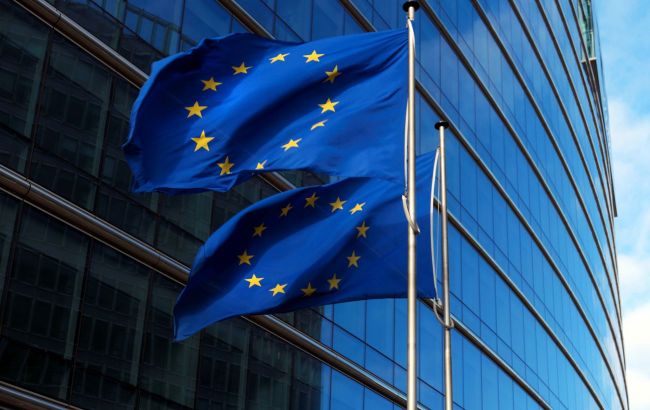 Photo: Politico names the main opponents of Ukraine's EU membership (Getty Images)
The governments of some EU countries do not support active discussions or the acceleration of new members' accession, particularly Ukraine's. Among these countries are France, Germany, the Netherlands, and Italy, according to Politico.
European Commission President Ursula von der Leyen’s vision of an expanded EU that could include Ukraine faces resistance from some current member states that do not want to discuss the matter.
According to nine EU diplomats and officials interviewed by Politico, fears of providing ammunition to populists, the prospect of grueling national referendums on each new member country, and the trauma caused by Hungary’s actions since its accession to the EU in 2004 — all of this contributes to the reluctance of many EU capitals to accept new members.
"Bringing in new members, or "enlargement" as it’s known — a push spearheaded by European Commission President von der Leyen — was scheduled to be on the agenda of an EU summit in Nicosia, Cyprus, later this month," says one of the EU officials.
Reasons for concerns
Among the reasons for caution cited are fears of a repeat of the so-called Polish plumber debates that swept through many EU countries before Warsaw’s accession in 2004.
At that time, some politicians claimed that cheap Polish labor would replace high-paying jobs in Western Europe.
"The same semi-populist, semi-xenophobic arguments we heard about the Poles, we are likely to hear with the Ukrainians and any other candidate. Who are these people? What are they going to be doing in our club? Will they be coming to take our jobs?" says a diplomat from one of the EU countries.
This concern is particularly strong in France. The vote on Ukraine, in particular, could play into the hands of the campaign of Jordan Bardella, leader of the populist right-wing party National Rally.
But France is not alone. EU diplomats said that Germany, the Netherlands, and Italy maintain that the EU’s complex merit-based process must be followed without exception for geopolitical reasons.
"Of course we do not want to weaken [Ukrainian President Volodymyr] Zelenskyy … but the very large majority of member states have no appetite for this debate right now," says a diplomat from a major European country.
Another issue frequently cited is the EU’s experience with Hungary, which has been accused of curtailing democracy, having ties to Russia, and blocking European support for Ukraine.
Even Montenegro, which has completed nearly all the necessary steps for EU accession, has found that EU countries cannot agree on the next stage: a mandate to begin drafting the accession treaty.
Challenge for Ukraine
This impasse is also problematic for Ukraine, which views EU membership as a security guarantee against future Russian aggression.
A potential peace deal with Russia could include the prospect of EU membership as early as 2027 as a carrot for Ukrainian voters.
But EU countries are shying away from accepting Ukraine next year, and ambassadors strongly opposed a radical approach to accession during a dinner in early March that would have accelerated the timeline for membership.
Ukraine’s strongest supporters, including Sweden and Denmark, are now pushing for negotiations to be concluded by the end of next year.
But the start of accession treaty negotiations will require the green light from major EU members, and that is a tall order.
"We’re not there yet," says a senior EU official.
Ukraine's EU accession
Earlier, Ukrainian President Volodymyr Zelenskyy stated that the country would do everything to prepare for EU accession by 2027 and emphasized that he wanted a specific date.
In response, Ursula von der Leyen said that it is currently impossible to set specific dates for Ukraine’s accession. At the same time, she emphasized that Ukraine was on the right track toward membership.
EU Enlargement Commissioner Marta Kos also outlined two conditions for Ukraine’s accession.
Yesterday, Hungary’s future Prime Minister Péter Magyar spoke out against Ukraine’s accelerated accession to the EU, arguing that the country is at war.