Trump's push to end Iran war fast is reshaping Israel's moves, expert says


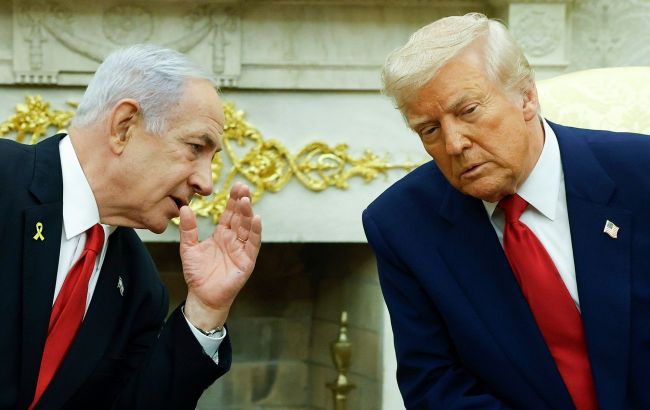 Photo: Benjamin Netanyahu and Donald Trump (Getty Images)
US President Donald Trump’s push to end the war against Iran as quickly as possible is shaping new conditions for Israel’s actions and influencing its military planning, according to an RBC-Ukraine article Noose tightens on Trump: How Iran war became sudden disaster for US.
Three of Trump’s advisers told Axios that they believe he will want to end the operation earlier than Israeli Prime Minister Benjamin Netanyahu.
According to Ynet, Washington has set April 9 as the desired date. Ending the war by then could allow Trump to visit Israel on Independence Day to receive the Israel Prize. All of this implies direct risks for the future.
As diplomat Arkady Mil-Man, former Israeli ambassador to Russia, told RBC-Ukraine, this scenario is 100% being considered by the Israeli General Staff, and they understand that there is a window of opportunity that could close at any moment.
“Therefore, they are adapting their military plans in terms of targets and objectives,” the diplomat said.
According to him, the objective is to inflict maximum damage on Iran so that it will “lick its wounds” for a long time. This is meant to give Israel time to prepare for the next round.
“If this regime is not finished off, there will still be a next round. Because the psychological barrier of war has already been overcome,” Mil-Man added.
On the eve, US President Donald Trump said that Washington and Tehran are holding talks on ending the war and have already reached important points of agreement.
According to him, the Iranian side is interested in quickly concluding agreements, and this could happen within five days or even earlier.
Israeli Prime Minister Benjamin Netanyahu and Trump discussed a possible deal with Iran.
Also, The New York Times learned about a secret plan of Israel’s Mossad intelligence agency regarding Iran.
According to the NYT, during preparations for the conflict, the US and Israel had hoped that the war would trigger mass unrest inside Iran and lead to a rapid change of power. However, this scenario did not materialize.