Ukraine's Air Force explains why air defense cannot guarantee 100% interception of targets

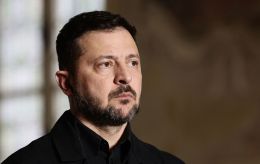
 Photo: Yurii Ihnat (Getty Images)
He explained that severe weather conditions are a major obstacle to repelling enemy air attacks.
"By using such a large number of means with different flight parameters, the enemy also takes weather conditions into account. Because weather conditions are a key factor," Ihnat said.
According to him, targeting systems require a visual lock on the target — this applies to mobile fire groups armed with machine guns or man-portable air-defense systems (MANPADS).
Visual targeting is also required for interceptor drones and aviation. Thus, he explained, everything becomes more difficult when there are clouds and thunderstorms.
"Therefore, today it is impossible to guarantee that everything will be shot down. Neither in the Middle East nor here. The maximum possible number is intercepted if there are available air defense assets," Ihnat noted.
He also said that protecting Kyiv is extremely difficult due to the technical characteristics of Western air defense systems.
"You can’t cover Kyiv with a single battery, because it is a huge city. A Patriot system looks only in one direction where its radar is pointed, and something else can come from another angle. That’s why all assets are working together," the Air Force spokesperson said.
On the night of May 24, Russia carried out a massive combined attack across Ukraine using strike drones as well as air-, sea-, and ground-launched missiles. The main target of the attack was the capital.
According to the Ukrainian Air Force, 690 aerial attack assets were detected, including 90 missiles and 600 drones of various types. A total of 604 aerial targets were destroyed or suppressed — 55 missiles and 549 drones of various types.