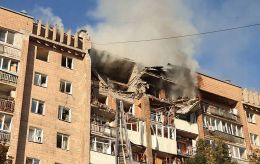
Kyiv under jet-powered terror: How Russia is changing its tactics for the fall


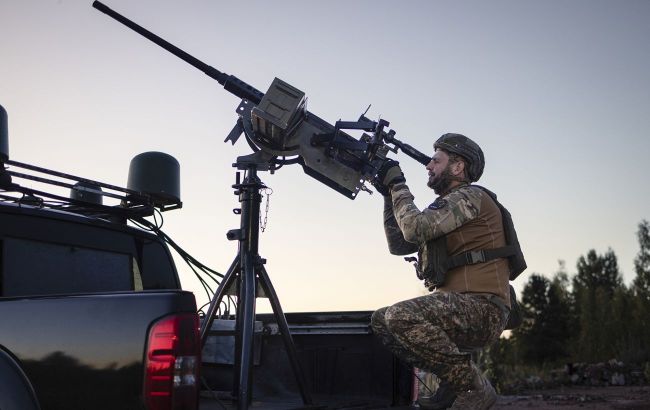 Photo: How Russia is changing its attack tactics for the fall (Getty Images)
Russia has sharply increased the number of jet-powered Shahed drones used in attacks on Ukraine. Moscow reportedly plans to further increase their share of drone strikes while preparing new large-scale combined attacks.
How Russia's airstrike campaign is changing, why jet-powered Geran drones are harder to shoot down, and what Ukraine should expect this fall — in an RBC-Ukraine report.
Key points:
-
Jet-powered drones are becoming far more common. Since August 27, Russia has carried out an almost continuous series of attacks, many of them targeting Kyiv and the surrounding region. In some waves, jet-powered UAVs accounted for more than two-thirds of all attack drones.
- Russia is increasing the share of jet-powered drones. According to RBC-Ukraine sources, the Geran-4 and Geran-5 currently make up the bulk of these drones. By November, Moscow reportedly plans to increase the share of all jet-powered UAVs to around 80% of its drone attacks.
- They are harder and more expensive to intercept. Because of their higher speed and altitude, jet-powered drones are more difficult to stop with inexpensive systems used against conventional Shaheds. This forces Ukraine to rely more heavily on aircraft, electronic warfare systems and surface-to-air missile systems.
- Russia is ramping up production. According to the media outlet's sources, Moscow plans to produce 1,200 Geran-4 drones, 800 Geran-5s, 2,700 Geran-2s and 5,000 Gerbera drones in September. Russia has stopped serial production of the Geran-3. Current production capacity allows Russian forces to continue carrying out attacks similar to those seen over the past eight days.
- Threats for the fall. According to RBC-Ukraine sources, Moscow plans to carry out four large-scale combined attacks against Ukraine in September in addition to continued drone raids. There is also a risk that strikes on warehouses could expand to other regions, alongside mass attacks on Ukraine's energy infrastructure.
For eight days in a row, Russia has been carrying out almost continuous attacks on Kyiv and the surrounding region using jet-powered Shaheds. The Russian military launches them in waves, combining them with conventional gasoline-powered Geran-2 drones.
Warehouses and distribution centers belonging to retail chains, manufacturers and logistics companies have already come under attack. At the same time, Russian forces have also been attempting to strike companies involved in Ukraine's defense industry.
Kremlin spokesman Dmitry Peskov previously said that Kyiv would "get the response" every day and every night over strikes against Ozon. However, that appears to have been more of a pretext: Moscow had been preparing for an escalation and increasing production of these jet-powered drones long before making those threats.
From isolated drones to mass raids
The first of Russia's current line of jet-powered UAVs was the Geran-3. Its combat use against Ukraine was recorded as early as 2025. At the beginning of 2026, Russian forces first used the Geran-5 during combined attacks. In May, another model — the Geran-4 — became known.
Their use increased sharply over the summer. According to Yurii Ihnat, head of the Communications Department of Ukraine's Air Force Command, Russia used five times more jet-powered UAVs in July than in June. In August, Russia used more than 2,800 such drones against Ukraine.
Since August 27, Russia has launched an effectively continuous series of attacks involving jet-powered UAVs combined with traditional gasoline-powered Shaheds. Kyiv and the surrounding region have been among the main targets of many of these attacks. According to the media outlet's sources, Russia is currently relying primarily on the Geran-4 and Geran-5 among its jet-powered UAVs.
On the night of August 27, Russia launched 258 attack UAVs, about one-third of which the Air Force identified as jet-powered. During the day on August 27, more than 100 of roughly 140 attack UAVs were jet-powered, with most of the drones directed toward the capital.
The trend continued in the following days. During the day on September 1, 72 of the 99 launched attack UAVs were jet-powered, while from September 2 through 4, the Air Force estimated that they accounted for roughly half of the Shaheds used.
The ratio of jet-powered drones varies from attack to attack: they account for about one-third in some strikes, half in others, and more than two-thirds during certain daytime waves.
Russia is ramping up production
People familiar with the situation in different military circles believe Russia's current attack pattern is not a short-term experiment. Russian production plans also suggest that the strategy is designed to continue for more than just a few days.
According to RBC-Ukraine, the Russian group directly responsible for attacks on Ukraine receives around 160 attack drones every day, including both jet-powered and gasoline-powered Shaheds.
In addition, according to the media outlet's sources, Moscow plans to produce the following in September:
- 2,700 Geran-2 drones
- 1,200 Geran-4 drones
- 800 Geran-5 drones
- 5,000 Gerbera drones
In other words, Russia's current production capacity allows it to sustain almost daily drone raids at roughly the level Ukraine has experienced over the past week.
At the same time, according to RBC-Ukraine sources, Russia plans to increase the share of jet-powered drones in its attacks to around 80% by November, leaving roughly 20% for traditional gasoline-powered Shaheds.
One of the main bottlenecks for this expansion is components, particularly engines. Ukraine's military intelligence agency reported in August that Russia had stopped producing the Geran-3. Sources cited by the media outlet link the decision to Moscow's desire to redirect components toward production of the more effective, in its assessment, Geran-4 and Geran-5.
According to Ukraine's military intelligence War&Sanctions portal, Russia uses turbojet engines made by Chinese manufacturer Telefly in its jet-powered Gerans. However, according to RBC-Ukraine, China has supplied only 3,000 of these engines — one-sixth of Moscow's needs. The Kremlin is therefore looking for ways to establish domestic production.
Why jet-powered drones are harder to shoot down
The key difference between jet-powered UAVs and conventional Shaheds is their speed and altitude. The Geran-4 has a cruising speed of around 320 km/h and can climb to 4 kilometers. The significantly larger Geran-5 flies at approximately 450–600 km/h and can reach altitudes of up to 6 kilometers.
These characteristics significantly reduce the range of systems that can be used against them. Many of the cheaper weapons that have become the backbone of Ukraine's defense against conventional Shaheds either do not work against jet-powered models or are considerably less effective.
A conventional Geran-2, for example, can be intercepted by machine guns operated by mobile fire teams or by interceptor drones. Overall, according to the Air Force, the interception rate for traditional gasoline-powered Shaheds has exceeded 90%.
A typical interceptor drone may simply lack the speed needed to catch a jet-powered target. Machine-gun teams, meanwhile, have much less time to open fire, while targets flying at high altitude can be completely beyond their capabilities. Therefore, unlike conventional gasoline-powered Shaheds, jet-powered drones cannot generally be shot down using machine guns or standard interceptor drones, Ihnat said.
He noted that if a jet-powered UAV flies low and slowly enough, it can be intercepted with a man-portable air-defense system, and such cases have already occurred. However, Russian forces generally try to fly these drones higher and faster.
"For example, a MANPADS can engage targets up to 4.5 kilometers high. If a jet-powered drone is flying at an altitude of 5 kilometers or higher, such a system can no longer reach it. Therefore, the chances of intercepting jet-powered drones with MANPADS are lower," Ihnat told RBC-Ukraine.
According to him, Ukrainian forces are currently relying primarily on electronic warfare systems, aircraft, and surface-to-air missile systems to counter jet-powered Shaheds. Ukrainian pilots are attempting to intercept the drones not only with missiles but also with aircraft cannons.
"At the same time, aircraft cannot operate simultaneously in the same area where ground-based air defense systems are operating. Therefore, depending on weather conditions and other factors and circumstances, the command makes operational decisions about which systems should be used and where," the head of the Air Force Command's Communications Department explained.
In effect, the mass use of jet-powered drones is shifting Ukraine's fight against Shaheds from a relatively inexpensive layer of air defense to a much more expensive and increasingly scarce one. Ukraine faces shortages not only of missiles for Patriot systems, but also of missiles for NASAMS and IRIS-T systems, as well as RIM-7 missiles for FrankenSAM systems.
"That is why the military and political leadership is doing everything possible to ensure that our partners provide us with more defensive capabilities — surface-to-air guided missiles for short- and medium-range systems, as well as various types of air-to-air missiles, especially ahead of winter," Ihnat said.
According to him, the overall interception rate for jet-powered UAVs is currently just over 60%. However, the results have been higher in some attacks. On September 1, the Air Force reported that 57 of the 72 jet-powered drones launched during the day were shot down or suppressed — nearly 80%.
The task for the fall is to further improve the effectiveness of counter-drone defenses. On August 30, President Volodymyr Zelenskyy said the interception rate for Russian UAVs of all types needs to be raised above 90%, specifically identifying jet-powered drones as the most difficult targets.
Recently, Defense Minister Yevhenii Khmara said Ukraine already has four types of potential interceptors capable of shooting down jet-powered Shaheds, all of which have undergone field testing. Work is now underway to bring these systems to the required level as quickly as possible.
What comes next
The growing share of jet-powered drones is only one part of Russia's plans for the coming months. According to RBC-Ukraine sources, in September Moscow plans to carry out four large-scale combined attacks against Ukraine in addition to drone raids, simultaneously using different types of missiles and attack UAVs.
Sources cited by the media outlet fear that after a series of strikes on warehouse and logistics infrastructure in Kyiv and the surrounding region, Russia could shift its focus to similar facilities in western Ukraine.
Energy infrastructure could become another target. According to RBC-Ukraine sources, Russia could begin large-scale attacks on Ukraine's energy system as early as September–October, alongside strikes on warehouses.
Putin publicly announced plans for such attacks on September 1. In recent days, Russian forces have attacked power generation facilities and electricity infrastructure in several regions, including the Odesa region. However, these strikes have not yet developed into a separate large-scale campaign against Ukraine's energy system.
Ukraine, for its part, is also preparing to intensify its long-range pressure on Russia. On September 1, Zelenskyy said Russian airspace would "de facto be closing" as it increasingly becomes an operating environment for Ukrainian long-range drones and missiles.
According to Zelenskyy, Ukraine will continue striking military targets and Russian economic facilities that support the war. The president specifically emphasized that civilian aviation is not a Ukrainian target.
This fall and winter, the main challenge for Ukrainian air defenses may not be any single type of Russian weapon, but an increasingly complex combination of attack systems. Mass waves of Shaheds, cruise missiles and ballistic missiles require different interception capabilities and force Ukraine to simultaneously distribute limited stocks of ammunition among them.
Since the summer, ballistic missiles have become an even more serious problem for Ukraine, with Moscow attacking Kyiv and the surrounding region during a period when interceptors for Patriot systems were almost completely unavailable.
Jet-powered Gerans add another layer of pressure to this system. The share of drones that are harder to destroy with machine-gun teams and conventional interceptor drones is growing, forcing Ukraine to rely more often on aircraft and surface-to-air missile systems.
If Russia carries out its plans to expand production of these drones, Ukraine's air defenses will have to deal not only with a larger number of different types of targets, but also spend more expensive and increasingly scarce resources to destroy some of them.