Trump's crushing midterm defeat: Why Republicans lost and what it means for Ukraine


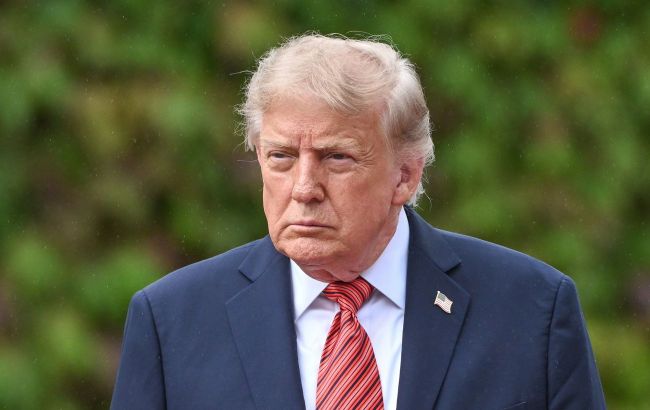 Donald Trump (Photo: Getty Images)
The US congressional elections ended in a crushing defeat for the Republican Party. Donald Trump has gone from being a "president who wins" to a "lame duck."
Why did his party suffer such a major defeat, how will this change the balance of power in Washington, and what will it mean for Ukraine – read the article by RBC-Ukraine.
Key points:
-
Midterm rout: In the November 3, 2026, elections, Republicans suffered a sweeping defeat in Congress, while the Democrats' victory far exceeded all expectations, turning into a "blue tsunami."
-
The cost of war: The fatal decision for the Trump administration was launching the war in Iran, which fueled inflation at home and undermined his key campaign promises.
-
Mr. Veto: Trump will retain some leverage through his presidential veto power, but the new Congress will launch sweeping investigations into his administration.
-
A challenge for Kyiv: Ukraine must be prepared for Trump's next moves over the coming two months. After that, it will have to navigate between a Democratic Congress and the White House.
"Are you tired of winning yet?!" Donald Trump constantly asked Americans two years ago. On November 3, 2026, Americans gave their answer: they really were tired – both of Trump and his endless "victories."
And many of those who had grown tired of him were his former supporters. In several states, Republicans used a tactic well known in Ukraine: artificially redrawing electoral districts based on the results of the 2024 election. It did not help. Many people who voted for Trump for president two years ago cast their ballots for Democrats this time.
For example, Republicans lost much of their support among African American and Latino voters, whose votes had been an important part of Trump's decisive victory in 2024.
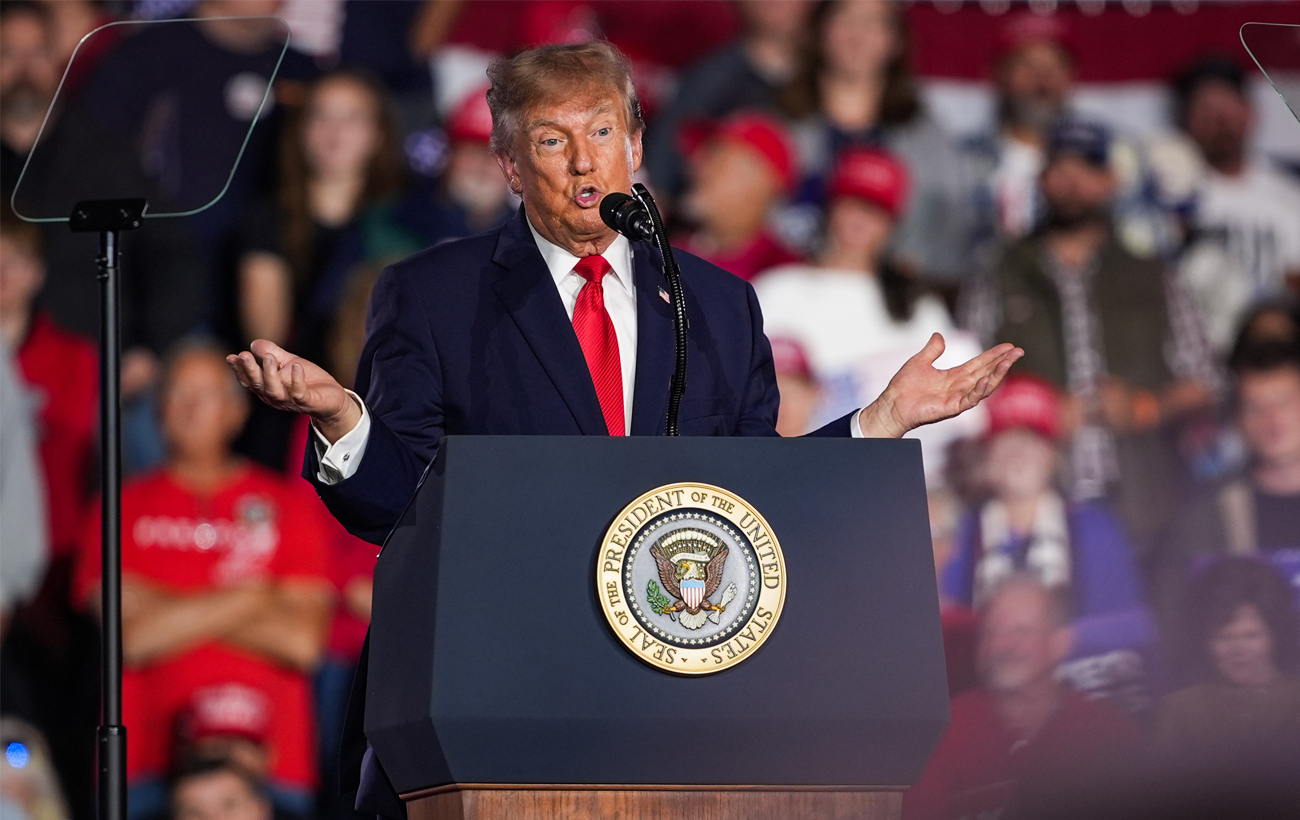
Donald Trump (Photo: Getty Images)
Read also: New Congress may pressure Russia and limit Trump's ties with Moscow, expert says
Attempts by the White House to somehow challenge the election results were quickly dismissed as the votes were counted. The margin was too large to mount any serious resistance. Eventually, even Trump himself acknowledged the opposition's victory.
Soon, both Trump and everyone around the world who does business with the United States will face an entirely different political landscape. The "blue wave" – blue being the Democrats' color – that pollsters had predicted ahead of the election effectively turned into a "blue tsunami."
Why Republicans lost
-
The war in Iran
At the beginning of this year, nobody expected anything like these results in the fall elections – neither Democrats, demoralized by their 2024 defeat, nor Trump and his fellow Republicans.
In the Senate, Republicans only needed to defend a few seats in traditionally "red" states (red being the Republicans' color). The House of Representatives was a tougher challenge, but Republicans hoped that redistricting would help them maintain their narrow majority there as well.
One decision proved fatal: launching the war in Iran. After some initial apparent successes, such as the killing of Supreme Leader Ali Khamenei, it soon became clear that the regime had survived.
The war itself, with its unclear objectives and enormous costs, produced very tangible consequences: rising global oil prices, which in turn drove up prices in American stores.
With one shot, Trump shot himself in both feet, breaking his main campaign promises: not to start wars around the world and to improve Americans' standard of living.
From there, things went downhill. Polls showed that the more Trump boasted about having nearly defeated Iran and downplayed the impact of inflation, the more frustrated voters became.
-
Weak candidates
But even this might not have led to such an electoral disaster if the US president had not been so confident in his own political instincts.
In several races, he effectively handpicked notably weak candidates to run against Democrats. One example was Ken Paxton in Texas. In the end, Democrat James Talarico won a landslide victory in the deeply "red" state. Another was Darlene Graham, the sister of the late Senator Lindsey Graham, who had no political experience. She lost to Democrat Annie Andrews in South Carolina.

James Talarico and Gina Hinojosa (instagram.com/jamestalarico)
In Kansas, Trump did not interfere in the candidate selection process, but that did not help either. For the first time since 1932, the state will be represented by a Democratic senator.
In the final couple of months before the vote, Trump decided to personally try to save the situation by embarking on an extensive tour of the states. However, it is far from certain that this helped his party, given the US president's record-low approval ratings.
According to US media reports, party strategists even tried to dissuade Trump from attending some rallies or at least encouraged him to hold them away from competitive districts. They understood that the president's involvement could tip the balance in favor of their opponents. In other cases, they simply avoided mentioning the president in their campaign materials – something that would have been almost unimaginable just a few years ago.
"Imagine if I were on the ballot!" Trump repeatedly urged voters during his tour. Voters did imagine it. Ultimately, the midterm elections became a referendum on Trump's performance. And he lost.
How the election results will change the balance of power in the US
Immediately after the election, Trump acknowledged his party's defeat and said he would "work with Democrats in Congress."
But another scenario seems more plausible – one he outlined just days before the vote: becoming "Mr. Veto."
Indeed, even without Congress, the US president retains a wide range of powers. One of the most important is the right to veto any legislation passed by Congress. Overriding a presidential veto requires a two-thirds majority in both chambers – a threshold Democrats will not reach, even after such a strong election performance.
Instead, Democrats will now have the opportunity to launch extensive investigations into everything Trump and his team have done over the past two years. And members of the administration cannot simply ignore subpoenas to testify before the Senate or the House.
As a result, American politics will largely turn inward in the near future. Trump, his allies, and his opponents will be occupied around the clock with investigations, hearings, accusations, and responses to accusations. There will simply be little time left for anything else.
In an extreme scenario, this could even lead to impeachment – though not necessarily of Trump himself. Democrats have already impeached him twice in the House of Representatives. However, removing a president from office requires the Senate to convict him, which takes 67 votes out of 100. Even under the best-case scenario for Democrats, they will have only 56 seats.
The prospects of impeachment are much more realistic for individual members of Trump's team. One example is Secretary of War Pete Hegseth, who has provoked open irritation not only among Democrats but also among many Republicans.

Pete Hegseth (Photo: Getty Images)
Still, the election results also give Trump some room to maneuver. He is no longer the only person held responsible for the state of affairs in the country. The US president is certainly no stranger to shifting blame for failures onto others, although that tactic did not help him in these elections.
But if Americans do not see a real improvement in their standard of living, there may be nothing left of the "blue tsunami" by the time of the 2028 presidential election – not even a splash.
Key questions after the election
The future course of events depends on the answers to several key questions.
- Will Trump keep the Republican Party under his control?
Over the past decade, Trump has done everything possible to bring the Republican Party firmly under his control. Almost all Republicans, including veteran and influential members of the party establishment, have accepted his rules of the game.
But those rules work only as long as Trump remains politically dominant and an alliance with him benefits the personal careers of individual members of Congress and senators.
The year 2020 was telling: after Trump lost the presidential election, almost everyone turned away from him, with the exception of his inner circle.
The situation now looks less dramatic, since he still has two full years left in office. He also retains a large, though diminished, army of devoted personal supporters.
But from the morning of November 4, Republican politicians were already turning their attention to 2028, when the next presidential election will take place without Trump on the ballot, as well as to the next congressional elections.
Should they remain loyal to Trump, or is it better to distance themselves from him now? The answer will determine whether enough votes can be found to override presidential vetoes or even pursue impeachment.
Read also: Democrats win control of both chambers of Congress - CNN
Although Trump has already said that the election results should not be expected to lead to changes in his Cabinet, it would hardly be surprising if many members of his team chose to leave now rather than wait for congressional subpoenas – or even criminal investigations.
Of course, the US president has the power to issue even preemptive pardons, protecting people from future prosecution for federal crimes they have already committed. But given the way Trump's team operates, he would have to keep issuing them, repeatedly pardoning the same people. That, too, may not sit well with everyone.
- Where will Trump direct his energy during the second half of his presidency?
A significant part of Trump's time will undoubtedly be spent fending off attacks from the Democratic-controlled Congress.
His powers in areas that could be considered "constructive" will be significantly limited. Trump will certainly try to govern the country as he did before, issuing executive orders and pushing beyond the limits of his authority. But even over the past two years, courts have repeatedly blocked such moves, so the outlook for the future is hardly better. In foreign policy, however, Trump will inherently have more room to maneuver.
Ultimately, Trump needs to ask himself one key question: what is his own goal for the two presidential years he has left? Is it to protect himself and his inner circle from prosecution? To keep making money from everything, from Bible sales to energy projects in the Middle East? To secure a Republican victory in the 2028 election? Or to leave behind a lasting legacy?
If it is the latter, that does not necessarily mean achieving major global breakthroughs such as peace in Ukraine or the Middle East. Trump is genuinely most interested in physical projects, such as renovating the White House and its surrounding grounds.
Even in his final speech before the congressional elections, which was supposed to motivate Republicans to turn out in force, he spent considerable time talking about renovating the pool near the Lincoln Memorial and fixing rusty pipes.
- How will Trump use the two months before the new Congress is sworn in?
The newly elected members of the House and Senate will not take office until January 3 of next year. This means Trump has exactly two months of absolute power left, at least nominally.
It is entirely possible that during this period he will make one last-ditch effort to bring his major initiatives to completion: eliminating Iran's nuclear program or ending the Russian-Ukrainian war.
Theoretically, this means the risk of various forms of escalation, military or diplomatic, could increase. On the other hand, although the new Congress will not convene for another couple of months, Trump has already become a "lame duck" in the eyes of Washington's political establishment. And not just in Washington.
What Ukraine should expect after the election
"Good Democrats have defeated bad Trump. Hooray!" Such an assessment of events in Kyiv would be an enormous oversimplification.
On the one hand, after all the ups and downs Trump has put Ukraine through over the past two years, and particularly in recent weeks, it is entirely understandable that many would welcome his defeat – especially such a resounding one.
On the other hand, Ukraine will still have to deal with Trump and his all-purpose associates, such as Steve Witkoff and Jared Kushner. This includes the talks in Abu Dhabi scheduled for next week.
However, these negotiations now look even less promising than before. That is because Trump has become a "lame duck" not only in Washington but also in Moscow.
According to Bloomberg, Russia is now focused solely on finding ways to further ease US sanctions and continue the war.
Read also: Russia no longer believes in Trump's peace plan and is ready to step up strikes
In the Kremlin's geopolitical vocabulary, Trump is now most likely seen as someone who failed to deliver on the election front. And rather than negotiating with such a figure over a new world order, Moscow is more likely to take advantage of him to secure sanctions relief.
At the very least, the Kremlin may continue trying to tempt Trump with supposedly "mutually beneficial deals." However, if such attempts faced serious resistance even under a "red" Congress, Trump's room to maneuver will be severely restricted under a "blue" one.
At the same time, it would be wrong to assume that all Democrats are firmly on Ukraine's side. Just as within the Republican Party, there is a radical wing among Democrats, including various "democratic socialists" and other left-wing or even far-left politicians.
They are often almost more critical of aid to Ukraine than their fiercest opponents, the far-right MAGA Republicans. And the position of the Democrats' left wing will become significantly stronger in the new Congress.
Therefore, Kyiv will find both pro-Ukrainian and anti-Ukrainian figures in both parties in Congress. Unfortunately, however, some of the politicians it could count on will no longer be there.
The "blue wave" swept out of Congress not only Victoria Spartz, a Ukrainian-born politician who has taken positions hostile to Ukraine, but also, for example, staunchly pro-Ukrainian Republican Brian Fitzpatrick. He had visited Kyiv many times and actively tried to derail the "diesel deal."

Brian Fitzpatrick and Volodymyr Zelenskyy (Photo: president.gov.ua)
Still, the presence of an opposition between the US president and Congress creates considerable room for maneuver. Members of Congress will have to negotiate with the White House regardless of who occupies it – even if that person is Donald Trump.
Such arrangements are usually reached through mutual concessions and the drafting of so-called Frankenstein bills, which combine the demands of both the congressional majority and the White House. Aid to Ukraine or the continuation of anti-Russian sanctions could well become part of such package deals.
"We had only just learned to speak the Democrats' language – about values, mission, defending freedom and so on. And now we have to forget all that and start speaking the Republicans' language, about mutual interests: 'We'll give you this, and you give us that,'" one member of Ukraine's government team told RBC-Ukraine shortly after the 2024 election.
Now Ukraine will have to relearn that approach.