Russia's missile plan is on track — pause in strikes isn't coming, Ukraine's deputy intel chief warns


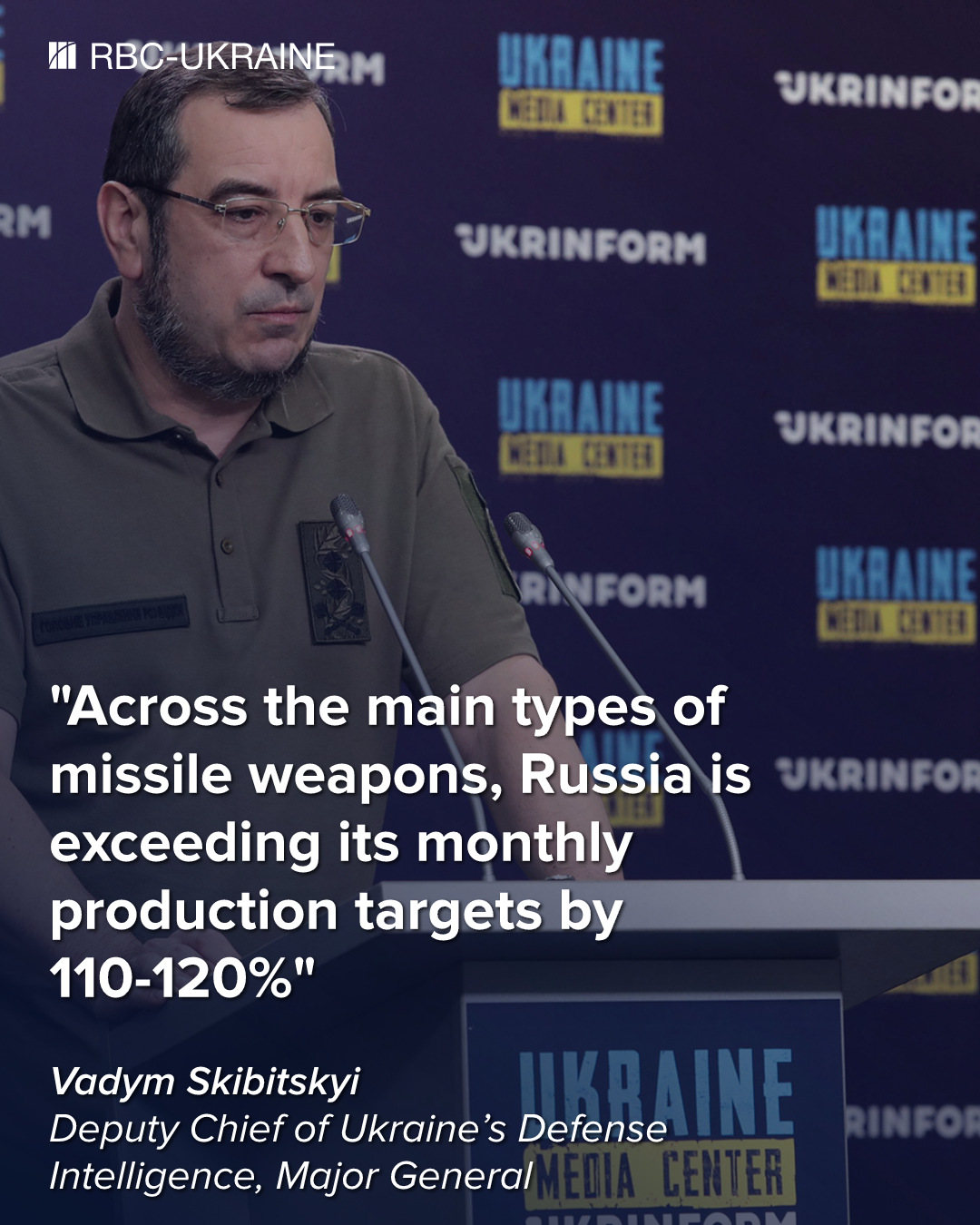
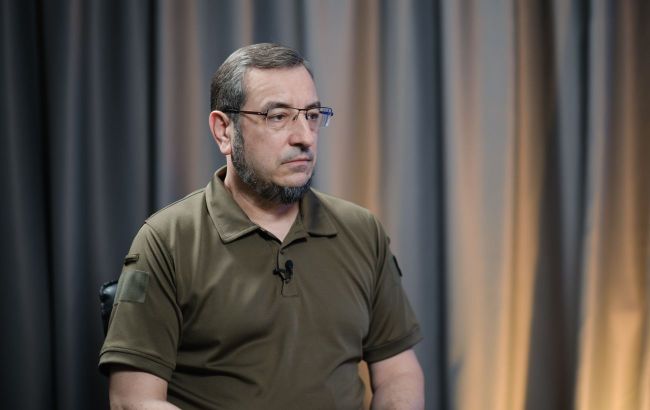 Deputy Chief of Ukraine’s Defense Intelligence Major General Vadym Skibitskyi (photo: RBC-Ukraine, Vitalii Nosach)
In the first part of his interview with RBC-Ukraine, Deputy Chief of Ukraine’s Defense Intelligence Major General Vadym Skibitskyi spoke about the motives and goals behind Russia's record strikes, the suspension of Kinzhal and Kh-32 missiles production, Moscow's focus on new Shahed drones and the development of a Russian Starlink equivalent.
Key points:
- Russia is ramping up missile strikes. In July, it launched 153 cruise missiles and 198 ballistic and hypersonic missiles. In the future, Russia may reduce the number of missiles it targets at a single site, but it is unlikely to pause its strikes. This will depend on its production capacity.
- Production targets exceeded. Russia is currently meeting production targets for its main missile types at 110-120% per month. Its annual production target for Zircon and upgraded Onyx missiles was met in seven months.
- Focus on new Shaheds. Moscow plans to produce 11,000 strike UAVs of various types in August. It is now reconfiguring production with a focus on turbojet-powered Geran-4 and Geran-5 drones.
- Targets of the attacks. Russia is concentrating its strikes on Ukraine’s defense industry, logistics, and energy facilities that support logistics and port infrastructure. The aggressor is also targeting civilian infrastructure in an attempt to spread panic and destabilize the country.
- Kinzhal production on hold. The increase in ballistic missile production was partly enabled by the suspension of Kinzhal and Kh-32 production in April. Funds and components were redirected to other missile types considered more accurate.
- A Starlink equivalent. Moscow is developing its own equivalent of the system, called Rassvet, and is deploying it much faster than originally planned. For now, it can operate only intermittently, when a satellite passes over Ukrainian territory.
July was one of the most difficult months for Ukraine's air defenses. Russian forces reached record levels in the number of ballistic and hypersonic missiles used.
It is not just the scale of the attacks that is changing, but also their frequency, targets and structure. Previously, Moscow organized combined strikes involving dozens of missiles of different types and hundreds of drones in an attempt to overwhelm the capital’s air defenses. It is now relying more heavily on ballistic missiles amid a shortage of Patriot interceptors. At the same time, instead of relying exclusively on massive waves of conventional Shahed drones, Russia is increasingly using new jet-powered Geran drones.
How much does Russia's missile and drone production allow it to sustain the intensity of these attacks, and what goals is Moscow seeking to achieve by stepping up strikes on Ukraine? RBC-Ukraine discussed these issues in the first part of its interview with Major General Vadym Skibitskyi, Deputy Chief of Ukraine's Defense Intelligence.
— In July, according to estimates by several media outlets and OSINT analysts, Russia launched nearly 380 missiles at Ukraine. That is the highest monthly figure since the start of the full-scale invasion, or at least since fall 2022, when the Ukrainian Air Force began publishing regular reports. What is behind this surge?
— According to estimates by Ukraine's Defense Intelligence, July ranked second after February in the number of Kh-101, Kalibr and Kh-32 cruise missiles launched. In February, the Russians launched 157 such missiles at us, while in July they launched 153.
As for ballistic and hypersonic missiles – the 9M723 missiles used by the Iskander-M system, the RM-48U missiles launched from S-400 systems, and Zircon missiles – the enemy launched 198 of them in July. That is the highest figure this year.
What is behind this? First and foremost, they had been preparing for it. According to military intelligence, the number of Russian missile strikes began increasing as early as April. There were 61 ballistic missiles in April, 107 in May, and 134 in June. Remember how they used to launch attacks every 10 days? Then it was once a week. Now they are happening even more frequently. Everything depends on the amount of weapons they produce.
Another important indicator, for which intelligence has documentary evidence, is the enemy's production plans and their actual fulfillment. For example, in the case of the Zircon and Onyx missiles – originally designed as anti-ship weapons but now used against ground targets after modernization – the enemy had already fulfilled its annual production target as of August 3. The target was set under Russia’s state defense procurement program.
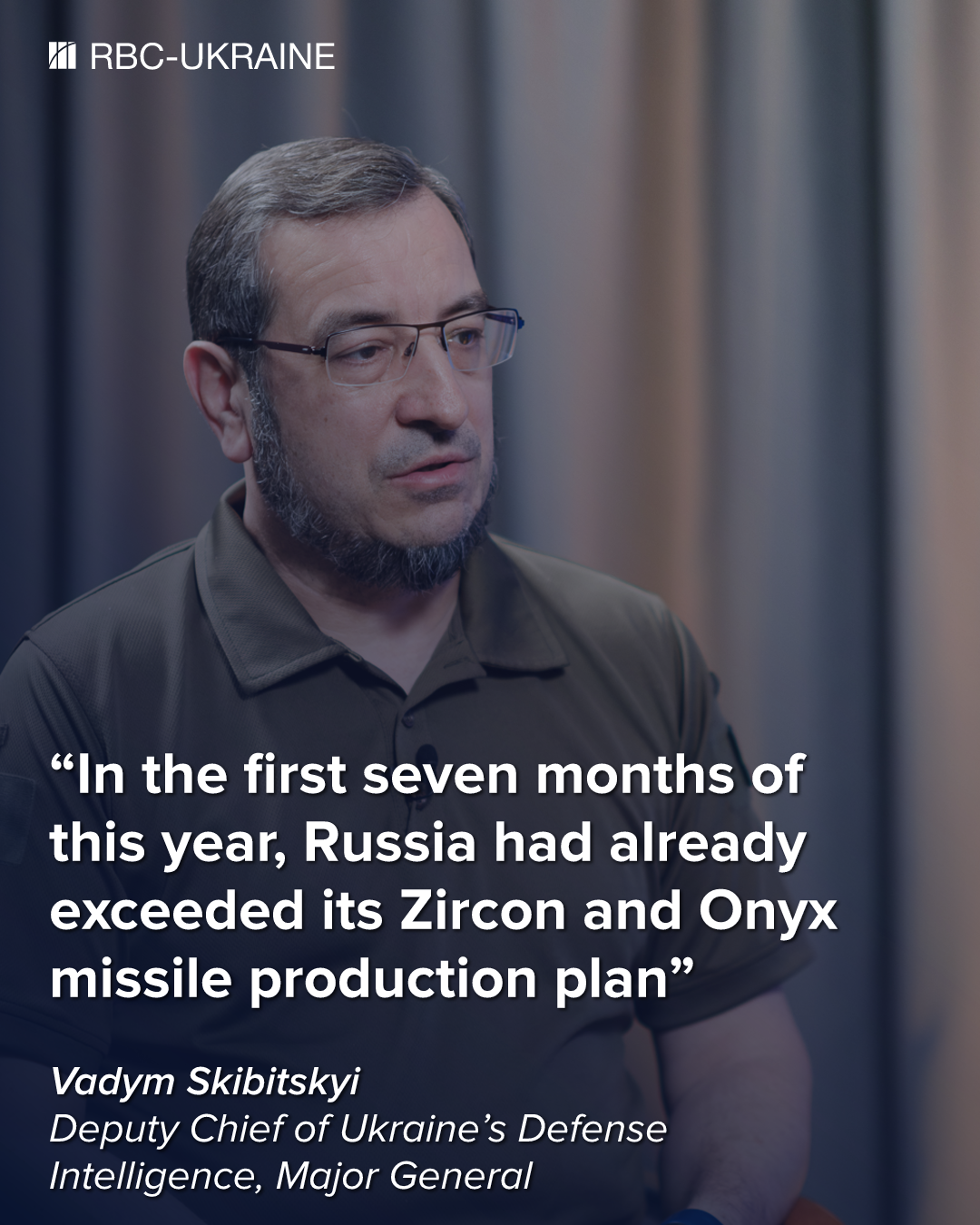
Ukraine’s Defense Intelligence on the production of Russian Zircon and Onyx missiles (RBC-Ukraine collage)
In the first seven months of this year, they had already produced 33 Zircon missiles, according to data as of August 3. The same applies to Onyx missiles: as of August 3, they had produced 60 units.
— Are they seeing the same increase in other types of weapons?
— Overall, across the main types of missile weapons, Russia is currently exceeding its monthly production targets by 110-120%. According to intelligence, Russia’s July production target for Kh-101 missiles was met at 140%, for Kalibr missiles at 111%, and for Kh-35 cruise missiles at 200%.
Russia’s August production target for Kh-101 missiles is 72 units. The target was the same in July, but they produced more – 87 missiles. For the 3M14 Kalibr, the August target is 26 units. The July target was also 26, but they produced 29.
In other words, Moscow is prioritizing the production of certain weapons and reallocating funding toward them. We have been seeing this trend since roughly the second quarter of this year. And it makes sense: if certain types of missiles are reaching their targets, they increase production of those weapons. They are also prioritizing weapons for which they have the necessary components.
However, they are currently using the aviation component of their strikes less. The Russians are experiencing technical problems with cruise missiles and with the aircraft themselves – not all missiles successfully launch. To mitigate the risk, they are bringing reserve aircraft into operation.
Among the new systems that have emerged this year are Bandеrol and Dan-T – loitering munitions launched from helicopters. They are now working to adapt them for launch from aircraft. The Zircon has also appeared, as has the upgraded Onyx, which previously could only strike maritime targets because its seeker could not lock onto targets on land. The upgraded version also has a longer range and a larger warhead.
Another example is Russia’s planned production of strike drones for August this year – Geran-1, Geran-2, Geran-3, Geran-4, Geran-5, Garpiya, Gerbera, Gerbera kamikaze and Gerbera seeker drones – 11,000 units in total.
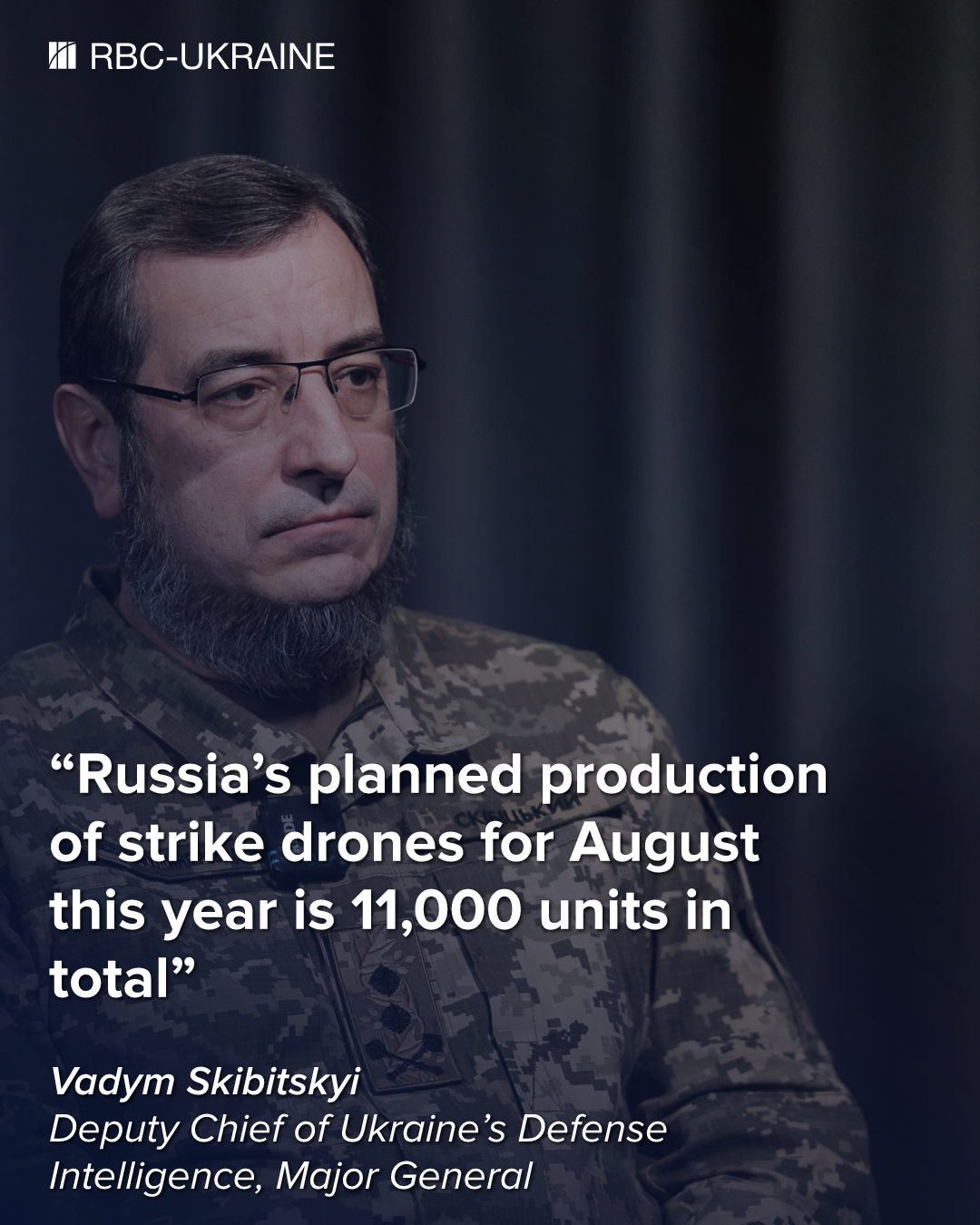
Deputy Chief of Ukraine’s Defense Intelligence on Russian strike drone production (RBC-Ukraine collage)
In July, they slightly reduced the intensity of their drone strikes and cut production as they reconfigure their manufacturing capacity, with a focus on turbojet-powered Geran-4 and Geran-5 drones. In one of their recent attacks, turbojet-powered drones already accounted for 50% of the total. We now need different interceptors capable of matching their speed, or short-range air defense systems.
— What is Russia trying to achieve with these systematic attacks – two or three times a week – on Kyiv and its suburbs?
— The Defense Intelligence Directorate has previously reported that the Russians are capable of carrying out three to four combined attacks every month involving different types of missiles along with unmanned aerial vehicles. Kyiv, like Zaporizhzhia, Dnipro and Kharkiv, is a center of Ukraine's defense industry.
The enemy sees our defense industry as a serious threat and is closely monitoring two key areas. The first is our ballistic missile capabilities: they are trying to prevent us from moving to serial production of these weapons. The second is everything related to UAVs and FPV drones. Our medium- and deep-strike capabilities are producing real results – targeting the enemy’s oil refining industry and Russia’s logistics system, including Wildberries. This, in turn, has a significant impact on their banking system, small and medium-sized businesses, and Moscow’s ability to wage war.
— Could there also be another goal behind the strikes on Kyiv – an attempt to force Ukraine to surrender by betting that the capital will shape the mood across the country?
— How do they see it? The two most heavily protected cities in Russia are Moscow and St. Petersburg – in their view, those cities essentially are Russia. They do everything possible to prevent even the slightest sign of protest activity there, because otherwise it could spread across the entire federation. They apply the same logic to Ukraine: if there is destabilization in Kyiv, they believe it will spread to other regions.
They are also carrying out numerous information campaigns for the same purpose. For example, if they achieve certain results in one of their strike campaigns, they then amplify the issue in Ukraine’s information space, presenting it as grounds to blame the government, the Defense Forces, the Air Force and others.
All of this serves their ultimate goal, which is backed by their internal documents. First, because they have failed to achieve a blitzkrieg and seize all of Ukraine, their goal is now to capture the Donetsk and Luhansk regions. Second, it concerns Ukraine’s future elections: they want to see a leadership in Ukraine that would be at least neutral in its attitude toward Russia.
— If Ukraine's defense industry is one of their priority targets, what else are they focusing on? We also periodically see reports about strikes on gas stations and retail distribution hubs. What does the broader list of targets Russia is focusing on look like?
— More broadly, it is our critical infrastructure. In winter, that means electricity and heating systems. Right now, first and foremost, it is the defense industry. Second is logistics – railways, port infrastructure and shipping. Russia is waging a campaign of terror against ships in the Black Sea. This is an unprecedented situation: they are not simply striking civilian vessels, but systematically targeting and destroying them to prevent us from conducting trade. At the same time, they are trying to strike energy facilities that are critical to the functioning of logistics and port infrastructure.
In addition, the aggressor is trying to hit other infrastructure elements in order to spread panic and destabilize the situation in the country. The Russians claim that companies such as Rozetka (the biggest Ukrainian online marketplace - Ed.) and Nova Poshta (major postal company - Ed.) deliver components for drones, but in reality, they are using these claims to justify their terror against the civilian sector.
This is also happening ahead of elections in Russia. They see how badly their own logistics system has been damaged, and they want to reassure their population with such strikes, essentially sending the message: “Look, Ukraine is being hit too.”
— How and where does Moscow obtain the components and parts needed to ramp up production of missiles and UAVs?
— We regularly provide detailed information about this on our online resources. The most critical components, such as navigation systems, come from US companies. Other components come from China, Japan, Taiwan, South Korea, and Europe. And not all of these components are military or even dual-use items. Today, they are using many purely civilian components in their weapons.
They are now trying to switch entirely to domestically produced components. For example, one of the objectives for the Dan-T is to ensure that its entire component base is Russian-made. As for the Geran-4 and Geran-5, they have a problem with turbojet engines and are trying to develop their own. At present, they are completely dependent on China for supplies of these engines, and they are expensive – about $35,000-$40,000 each.
These are also problematic areas for us that fall under international sanctions. Our intelligence community, the National Security and Defense Council, the Foreign Ministry, and the president’s sanctions adviser have made some progress in this area. We identify the critical foreign components used by the Russians and provide this information to our partners for further action.
— Which types of missiles are they currently using faster than they can produce them? In other words, are there any missiles they are now taking from stockpiles for their ongoing attacks?
— They are not really drawing down their stockpiles. Almost everything being used now is coming straight off the production line. The only exception is the Kalibr missiles - most of them are currently being allocated to other Russian fleets, since all new Russian warships and submarines are equipped with these systems. In effect, those missiles are going into reserve stockpiles. In addition, our interception rate for Kalibr missiles is nearly 100% when air-defense missiles are available.
The Kh-101 missiles that fail during launch are sent back to production facilities so that technical problems can be identified and fixed.
— What stockpiles does Russia have, and what are its approximate production volumes for 9M723 ballistic missiles for the Iskander-M?
— According to military intelligence, as of August 5, the stockpile allocated to the Russian military grouping stood at around 130 9M723 missiles. The planned monthly production rate is 60 units. However, in July, they produced 65 instead of the planned 60.
Military intelligence revealed Russia’s missile production plans and actual output (RBC-Ukraine collage)
Russia currently has a simplified system of technical quality control during missile production, while those who fail to meet production targets face real consequences. But there is another explanation here: the Russians have also been able to increase ballistic missile production by suspending Kinzhal production. As a result, missile fuel is no longer being allocated to Kinzhal missiles but to other ballistic missiles. In addition, they have suspended production and use of Kh-32 missiles (an upgraded version of the Kh-22), so the funding and components previously allocated to them have been redirected to other missile types considered more effective.
— Has the suspension of production of these missile types been observed only this month, or has it been a trend over the past several months?
— Since April.
They had been working to improve the accuracy of the Kh-32. However, the results of several combat tests showed that they were unable to do so, so the Russians sent the missiles back for further development and suspended their serial production.
They have similar issues with Kinzhal missiles. We can hardly recall a case when this missile hit its target accurately. For an effective missile, the deviation from the target should not exceed 5-7 meters, while theirs is 30 meters or more.
— We have also seen them increasingly use missiles from S-400 systems. Do they really have so many of these missiles that they can use them against ground targets rather than for air defense?
— The missile the enemy uses in these attacks, the RM-48U, was specifically designed and is launched against ground targets. It is not a conventional surface-to-air missile that can be used for air defense; the S-400 system is used as its launch platform. It is a surface-to-surface missile. It follows a ballistic trajectory and has a speed of Mach 6. And importantly, the enemy has established production of this missile: the August target is about 40 units, while its estimated stockpile is 400 units.
— Is Iran still helping Russia with any technologies and components?
— Partially, but it is no longer the level of cooperation we saw in 2022-2023. Today, Russia is already capable of producing FPV drones and strike UAVs on its own. Moreover, they have moved ahead: they have different warheads and use 12- and 16-channel Kometa systems and CRP antennas.
— If we turn to another Russian ally, North Korea: according to Defense Intelligence, the Russians are deploying a North Korean missile unit near our border. Military intelligence also says North Korea has transferred another 40 KN-23 and KN-24 missiles to Russia. How many of these missiles does Russia have in total now? And what does North Korea get out of all this?
— North Korea receives benefits in return, which were already agreed upon when the first batch of KN-23 missiles – around 100 missiles – was supplied. North Korea gets the opportunity to use its weapons in real combat conditions and, as a result, obtain data for further modernization and improvement of these missiles.
However, one of the latest strikes, in which a North Korean missile effectively killed an entire family, confirmed that it deviated from its target by around 15 kilometers.
— If Russia is ramping up production of jet-powered Geran drones while continuing to produce conventional ones, how will it use them when planning strikes – will some be assigned to certain targets and others to different ones?
— They can use them together, including as part of combined strikes. Strike planning is no longer as simple as it was in 2023-2024. It is not only becoming more complex; the technologies used in these attacks are also evolving.
The enemy is moving toward Geran-4 and Geran-5 because we are successfully intercepting Geran-2 drones with our interceptors. There are also active efforts to introduce mesh networks for real-time drone control.
In addition, Moscow is deploying Rassvet, effectively a Russian equivalent of the Starlink system. They have already begun launching it much faster than originally planned. In March 2026, Russia had already placed 16 satellites into low Earth orbit. More launches will follow to create a constellation of 292 satellites by 2027 and expand it to 924 satellites by 2035. For now, the system can operate only intermittently, when a satellite passes over our territory. Once Russia deploys a full satellite constellation, the system will operate like Starlink. Discussions are already underway on how to counter it.
— Does Moscow plan to build up a missile reserve for the fall and winter campaign?
— We believe so – they will be building up a stockpile. This can be tracked by calculating how many missiles they planned to produce, how many they actually produced, and how many they launched.
– How long will they be able to maintain the intensity of the July attacks? In other words, will this continue for another month, two or three, after which they will be forced to pause to rebuild their stockpiles?
– They may reduce the number of missiles launched at a single target, but they are unlikely to pause the strikes. Right now, they have certain targets as their priorities, and later they will shift their focus to others. But everything will ultimately depend on their production volumes and whether they can maintain their current pace. Therefore, the task of Ukraine's Defense Intelligence, together with the other components of the Defense Forces, is to disrupt the enemy's plans, act preemptively, and inflict the greatest possible losses on the aggressor.