Scotland open to sending troops to Ukraine after peace deal

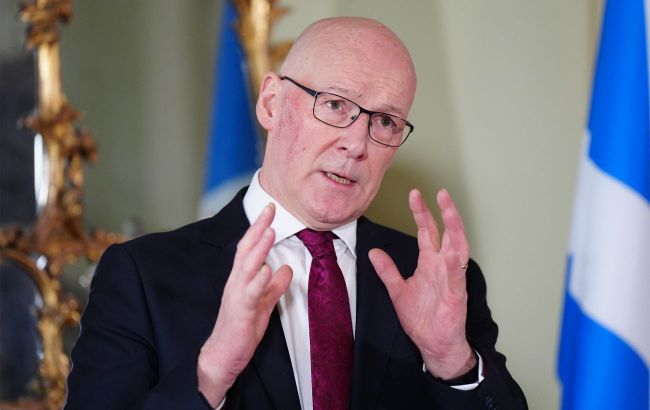 Photo: Scotland's First Minister John Swinney (Getty Images)
Scotland has announced its readiness to send troops to Ukraine as part of a peacekeeping force. The condition is the conclusion of a peace agreement in the interests of Ukraine, according to Scotland's First Minister, John Swinney.
As noted by the leader of the Scottish National Party (SNP), the participation of Scottish troops is possible only if the peace agreement is in the interests of the Ukrainian people and provides for the deployment of forces to support security.
"If there's a peace agreement that is acceptable to the people of Ukraine, that they find is in their interests, and part of that involves the deployment of troops from this country in that situation to be part of assuring that peace, then I would support that," he says.
He also stresses that Russian aggression must be repelled and Ukraine's independence protected.
At the same time, Swinney warns that the long period of peace in Western Europe is under threat due to Russia's invasion of Ukraine. According to him, the current generation enjoyed a sense of security that his parents' generation did not know, but the war has shown the fragility of these achievements.
"Literally within days of the invasion, we began to feel the effects in our own community. So I worry that the precious inheritance that came to our generation from the suffering of the Second World War, is now in jeopardy for future generations," he stresses.
Deployment of foreign troops to Ukraine
The UK and France are considering sending up to 15,000 troops to Ukraine if a peace agreement is reached.
This is significantly less than the plans previously discussed within the Coalition of the Willing.
Türkiye is ready to join the peacekeeping mission only if a ceasefire is established and the tasks and contributions of each country are clearly defined.
Germany has declared its readiness to support a possible ceasefire, but without committing to sending its own troops to Ukraine.
Canada is open to deploying its troops after a peace agreement is signed. Prime Minister Mark Carney noted that Ottawa's initial contribution to security guarantees could be training Ukrainian military personnel.
Belgium has also confirmed its readiness to help secure peace after the war ends.
Lithuanian Defense Minister Robertas Kaunas said that after peace is established, his country could send several hundred of its troops to Ukraine.
At the same time, Italy ruled out the possibility of sending its troops to Ukraine as part of the security guarantees. Romania said it would not send troops but was ready to increase its contribution by strengthening security in the Black Sea.
Meanwhile, the US did not sign a joint document with Ukraine and the EU on peacekeeping forces.