Sanctions failing? Russia boosts missile strikes with newly produced Western parts

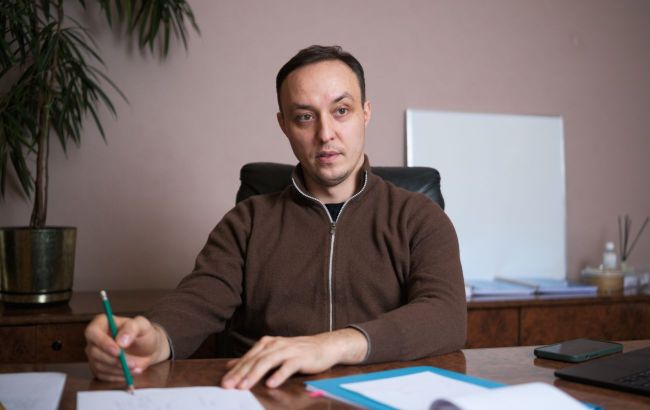 Photo: The Presidential Commissioner for Sanctions Policy, Vladyslav Vlasiuk (Vitalii Nosach, RBC-Ukraine)
The Presidential Commissioner for Sanctions Policy, Vladyslav Vlasiuk, showed journalists the internal components of missiles used by Russia in strikes on May 24. He noted that sanctions are producing results, but the number of strikes is increasing month by month.
Journalists were shown fragments of the Kh-101, Kalibr, Kinzhal missiles, Shahed/Geran-2 drones, as well as an AI-powered kamikaze drone - all recovered from the attack on the night of May 24. They were also shown a computer and processor unit from the Oreshnik system, which crashed in the Lviv region on January 9.
Experts concluded that this is not new-generation weaponry, but rather modernized versions using inertial guidance systems without satellite navigation.
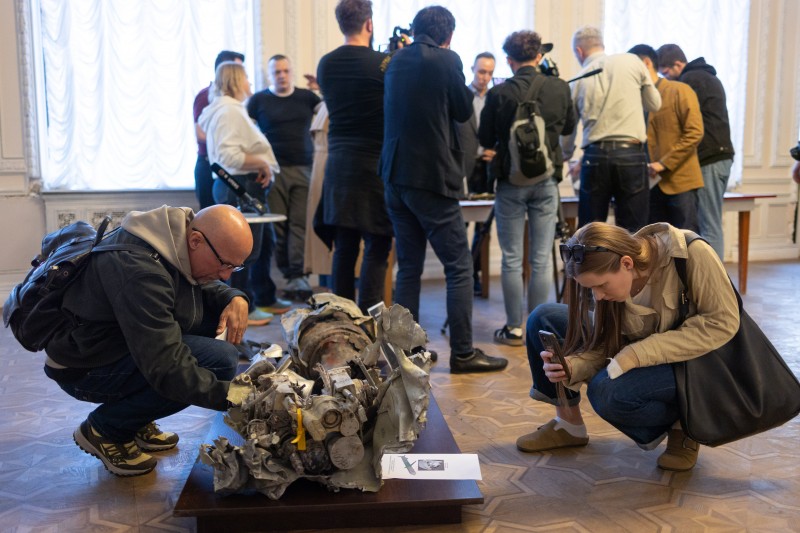
Photo: (president.gov.ua)
Photo: (president.gov.ua)
The bad news
"If we look at the number of missiles and drones used, every month they are increasing compared to the same months of the previous year," Vlasiuk said.
The Kh-101 contains more than 100 foreign components, while the Kalibr missile contains around 30. Parts from Switzerland, Germany, the United States, Japan, and China have been identified in most types of weapons Russia uses against Ukraine.
The good news
Sanctions pressure is having an effect, Vlasiuk said. The share of Chinese components in drones has noticeably increased instead of Western ones, as Russia is being forced to restructure its supply chains.
"We see a forced replacement of certain Western components with Chinese ones, which shows that our sanctions work," he emphasized.
US agencies have conducted more than ten operations since the beginning of the year to shut down supply channels worth millions of dollars. Ukraine has also shared information about identified components with Chinese diplomats.
What to do next
"The available samples of weapons confirm that the work done is still insufficient, because strikes continue again and again," Vlasiuk stressed.
He called on partners and manufacturers to do more to prevent modern components from reaching Russia and being used in missiles and drones, as well as to strengthen support for Ukraine’s air defense.
New models of Russian drones contain recently produced 2025 components from Germany, Japan, the United States, and the United Kingdom.
Vlasiuk also predicted that future missile batches may already include parts manufactured in 2026, indicating that current efforts to block supply chains remain insufficient.
US agencies have identified and disrupted more than ten schemes used to supply components to Russia over the past year.