Russian Banderol loitering munitions used for first time in Kyiv attack: What we know

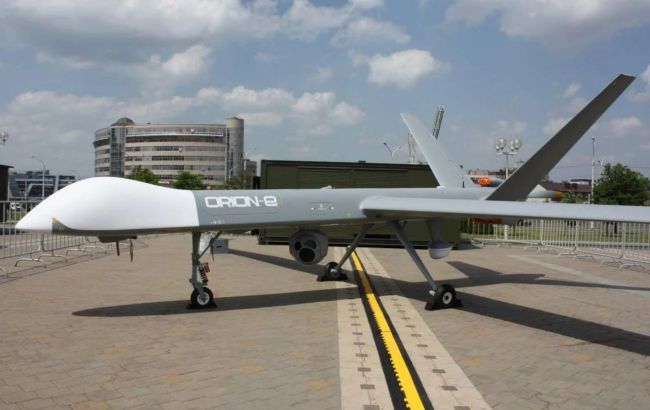 Photo: Orion drone, which is a carrier of Banderol munitions (Russian media)
Russian forces used the new Banderol (parcel) loitering munition during a massive attack on the capital. The weapon can travel up to 500 km and carry up to 150 kg of explosives.
RBC-Ukraine explains why this loitering munition is dangerous and whether it could replace Shahed drones in attacks on the capital.
Where are Banderol munitions produced?
According to Ukraine's Defense Intelligence (HUR), the missile was developed by the sanctioned Russian company Kronstadt. Its primary carrier is the Orion unmanned aerial vehicle, which is also produced by the same company. The weapon is also being adapted for use from Mi-28N attack helicopters.
Specifications
One of the missile's distinguishing features is its ability to make tighter turns than typical Russian-made cruise missiles, such as the Kh-101, 3M-14, 9M727, and Kh-69, while still maintaining the characteristic flight profile of a cruise missile.
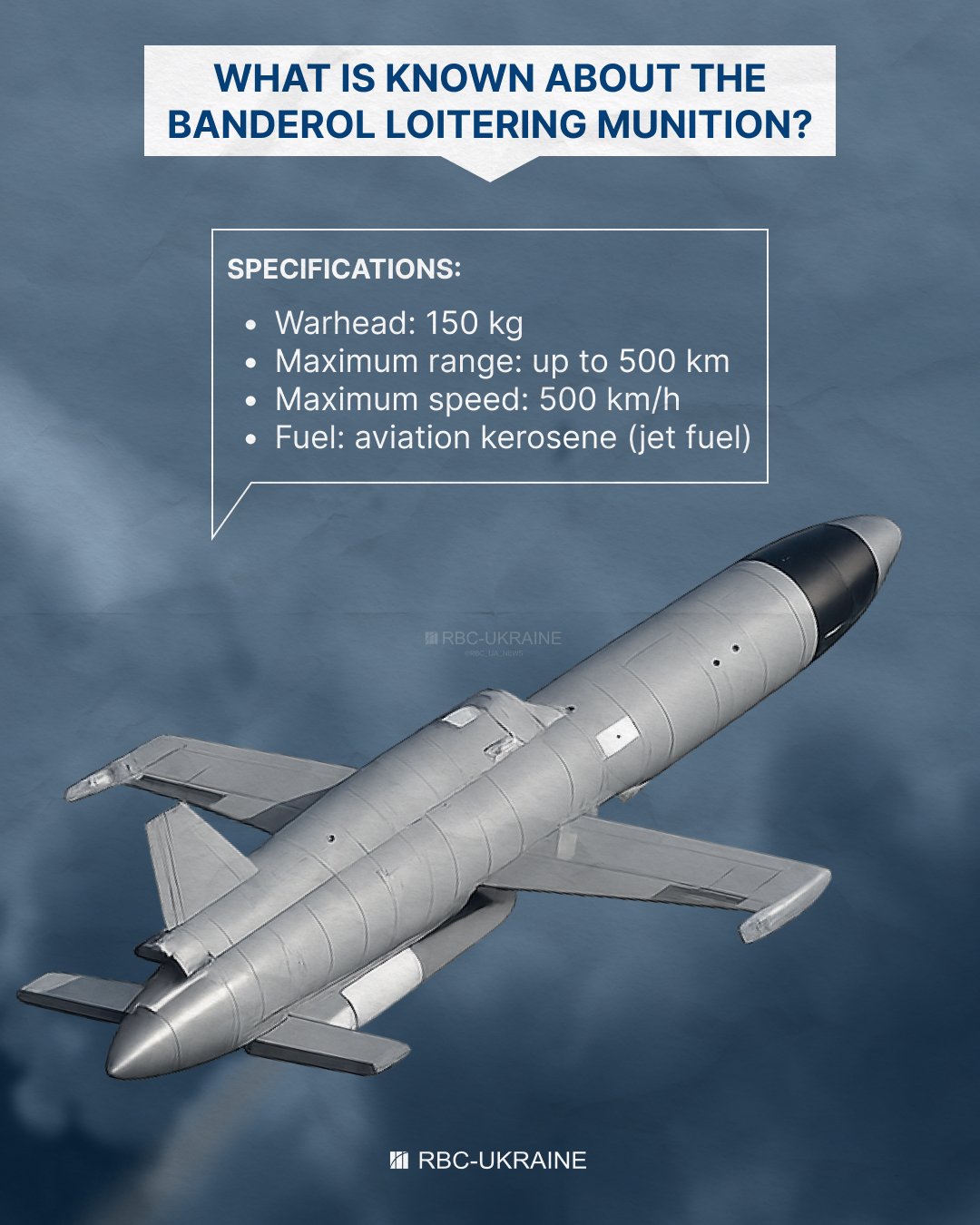
The Banderol is equipped with a warhead weighing up to 150 kg. It can strike targets at ranges of up to 500 km while traveling at speeds of up to 500 km/h. The missile uses aviation kerosene (jet fuel).
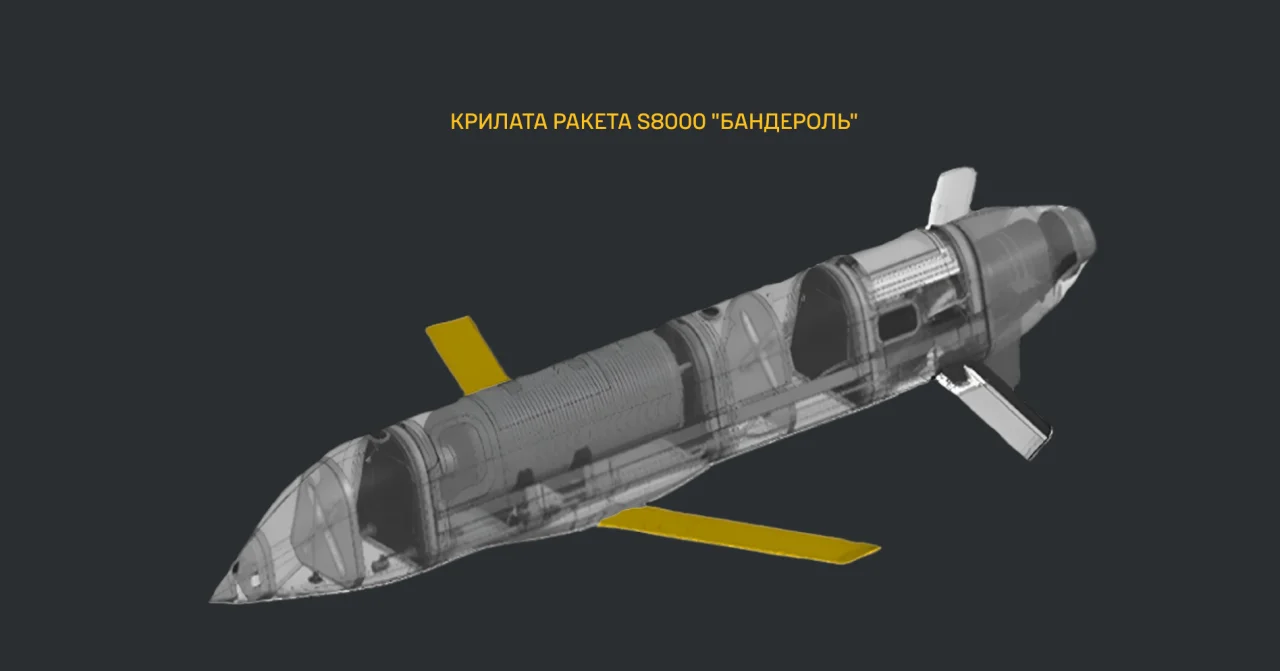
What the drone is made of
Ukraine’s Defense Intelligence (HUR) has recorded the use of foreign components, including a Chinese-made Swiwin SW800Pro jet engine, Murata batteries (Japan), Dynamixel MX-64AR servos from Robotis (South Korea), as well as nearly two dozen microchips from American, Chinese, Swiss, Japanese, and South Korean manufacturers.
What is the key advantage of the Banderol over Shaheds
Aviation expert Kostiantyn Kryvolap told RBC-Ukraine that one of the key advantages of the Banderol is its significantly higher speed compared to drones, which may allow it to more effectively break through Ukrainian air defense systems in targeted strikes.
It can be effective for striking individual targets, but it will not become a mass weapon due to its relatively high cost compared to drones.
Can Banderol pose a serious threat to Kyiv?
"This type of weapon has fairly limited applications. It can be launched either from a helicopter or from UAVs like the Orlan. For this, the helicopter or drone has to be airborne, which makes it not a very convenient system," said Kryvolap.
He also noted that the Banderol is about three times more expensive than a Shahed, so it cannot become a mass-produced weapon, as the current trend is "many and cheap." At the same time, the munition does not even have twice the explosive payload, and due to its large size, it is an easy target for jet aircraft and air defense systems.
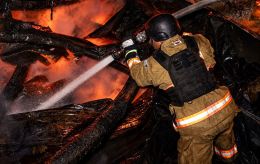
On the night of June 15, Russia carried out a massive combined strike on Kyiv using drones, ballistic and cruise missiles.
As a result of the attack, damage was recorded in 10 districts of the capital, five people were killed, and more than 30 were injured.
According to RBC-Ukraine, Russia used over 680 means of attack against Ukraine, including Zircon missiles, Iskander ballistic missiles, cruise missiles, and hundreds of various types of drones. Air defenses shot down or suppressed 632 aerial targets.