Russia plans to raise taxes for war spending immediately after elections

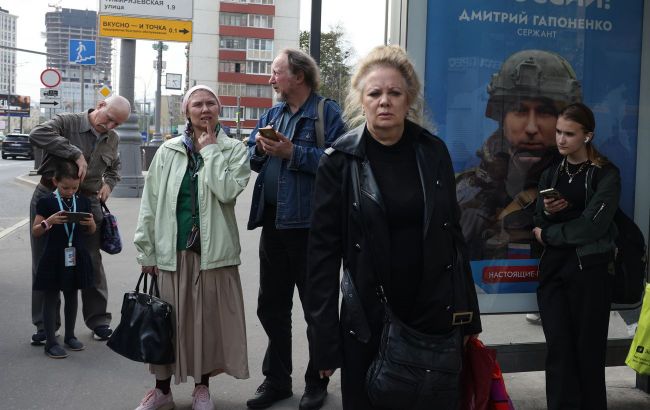 Illustrative photo: Russian authorities prepare tax increases to finance the war (Getty Images)
In the draft of the new budget, defense and security have been identified as the key strategic priority. In 2027, Russia’s budget revenues are planned at 43.3 trillion rubles ($509.4 billion), while expenditures will reach 48.8 trillion rubles ($578.2 billion).
As a result, the budget deficit will rise to 2.2% of GDP, almost twice the previous three-year forecast of 1.2%.
Who will be affected by the new taxes
To cover the financial gap, Russia’s Finance Ministry proposes raising taxes on excess profits of metallurgical and chemical companies, as well as increasing fees on cross-border e-commerce.
In addition, the aggressor country’s authorities plan to increase taxes on citizens’ passive income, including investments in securities, property sales, and interest on deposits. According to estimates by Russian government officials, the decision will affect around 4 million people.
Deteriorating economic forecasts
The increase in the tax burden comes amid worsening forecasts for the Russian economy. Industrial production could decline by 0.2% in 2026, which would be the first drop since the pandemic year of 2020.
At the same time, fixed investment could fall by 5.4%, compared with the previously forecast 1.5%. This would be the largest decline since the economic crisis of 2015.
The inflation forecast for 2026 has also been raised from 5.2% to 6.8%. The adjustment came after strikes on Russian oil refineries caused fuel shortages and rising prices.
Russia’s federal budget allocated a record amount to the war against Ukraine in the first half of 2026. The amount was 10.687 trillion rubles ($125.7 billion).
Compared with the same period last year, spending on the military and weapons production increased by another 30%, or 2.46 trillion rubles ($29.15 billion).