Russia's war machine 'devours' another 10.7 trillion rubles

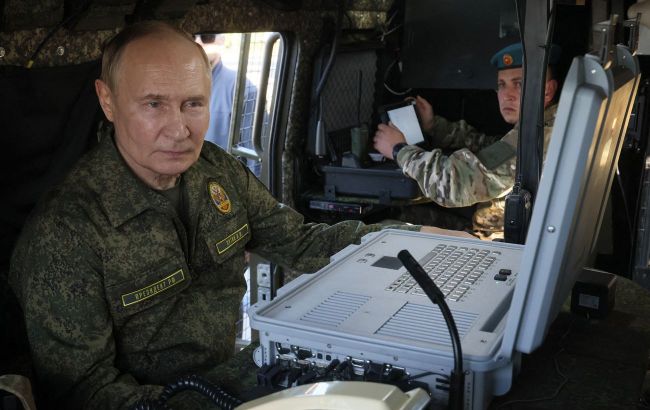 Photo: Russian President Vladimir Putin (Getty Images)
Russia's federal budget allocated a record amount to the war against Ukraine in the first half of 2026. The spending totaled 10.687 trillion rubles, according to calculations by Janis Kluge, a researcher at the German Institute for International and Security Affairs, based on data from Russia's Finance Ministry and The Moscow Times.
Russian war budget has increased
Compared with the same period last year, spending on the military and weapons production increased by another 30%, or 2.46 trillion rubles.
Compared with January-June 2024, Russia's military budget was 65% higher (+4.211 trillion rubles). Compared with 2023, it increased by 145%, and compared with the first year of the war, by 285%.
Compared with the pre-war year of 2021, military spending has jumped more than fivefold.
On average, Russia's "war machine" was "eating up":
- 1.78 trillion rubles per month,
- 59 billion rubles per day,
- 2.5 billion rubles per hour.
A total of 43.8% of all federal budget spending went toward the war, a "new all-time high," Kluge wrote.
Overall, 57.3% of all money flowing into Russia's budget went to financing the military and defense industry.
Compared with previous periods:
- A year earlier, 39.2% of budget spending and 46.8% of budget revenues went toward the war;
- Before the war, the figures were 20% and 19.8%, respectively.
Secret spending
Exactly two-thirds of Russia's military budget is classified, according to Kluge's calculations:
- In the first six months, the Kremlin spent only 3.546 trillion rubles under publicly disclosed defense budget items;
- While 7.141 trillion rubles went through classified spending.
The "shadow" spending from Russia's treasury increased by 42%, and compared with the pre-war period, it has risen more than sevenfold.
Total spending on the war
Since the start of 2022, the aggressor state has spent 57.144 trillion rubles, or $660 billion at the current official exchange rate, on the military and weapons purchases.
This amount can be compared with all of the Central Bank's gold and foreign exchange reserves ($720.3 billion as of August 1) and is 2.2 times higher than the value of Russia's gold reserves ($292.8 billion).
In the 2026 budget law, the Russian government initially planned defense spending at 6.7% of GDP. In reality, however, spending is about 1.5 times higher than planned and reached 10.5% of half-year GDP in the first six months, Kluge calculated.
As a result, the budget deficit has continued to grow, reaching 6.45 trillion rubles by early August, twice the level planned for the entire year.
RBC-Ukraine previously reported that Russia's economy has weakened significantly since the full-scale invasion. However, the resources could be enough to continue the war against Ukraine through 2027 and 2028, according to Ukrainian military intelligence chief Oleh Ivashchenko.
It was also reported that analysts at Russia's Sberbank assessed eight possible scenarios for ending the war against Ukraine. The chance of a Russian military victory was estimated at just 7%.