Russia offsets budget shortfalls through massive gold exports to China - Intel

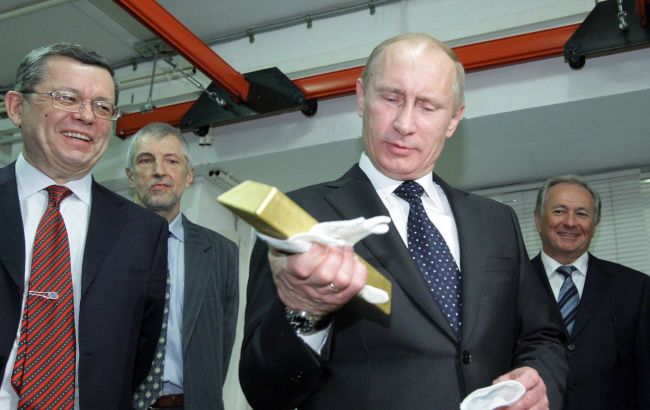 Illustrative photo: Russia increases gold exports to China (Getty Images)
Russia has sharply increased gold exports to China, while the country’s reserves have fallen to a record low in recent years, according to the Foreign Intelligence Service of Ukraine.
The Foreign Intelligence Service reported that in 2025 Russia delivered 25.3 tons of gold to China, nine times more than in 2024. In monetary terms, exports rose to USD 3.29 billion compared to just USD 223 million the previous year.
Shipments were uneven, with peak volumes occurring in February–March and October–December.
In December alone, Russia shipped 10 tons worth USD 1.35 billion — over 40% of the annual volume. The main form of export was gold bars, allowing for rapid monetization of assets.
This sharp increase in exports occurred amid a rapid decline in domestic reserves. As of January 1, 2026, the National Wealth Fund held only 160.2 tons of gold, compared to 554.9 tons in May 2022.
Due to sanctions pressure and the loss of access to Western markets, Russia is forced to redirect its gold exports to Asia, primarily China.
Experts believe this is a temporary financial maneuver to cover budget gaps, carried out at the cost of significantly depleting strategic reserves.
Economic crisis in Russia
Russia’s economy ended 2025 in a deep crisis. Oil prices fell to a five-year low, and the development of the space industry regressed to levels last seen in 1961.
At the same time, the US increased sanctions pressure, and President Donald Trump signed a bipartisan law significantly expanding the scope of restrictions.
Revenue from oil exports fell by approximately 20% compared to 2024 due to lower global energy prices.
On January 19, the International Monetary Fund lowered its forecast for Russia’s economic growth by 0.2 percentage points, to 0.8% in 2026.
New Ukrainian intelligence data also indicates a critical condition of regional budgets, forcing local authorities to reduce administrative staff.