Remembering was a crime: How the Soviet Union punished Holocaust memory


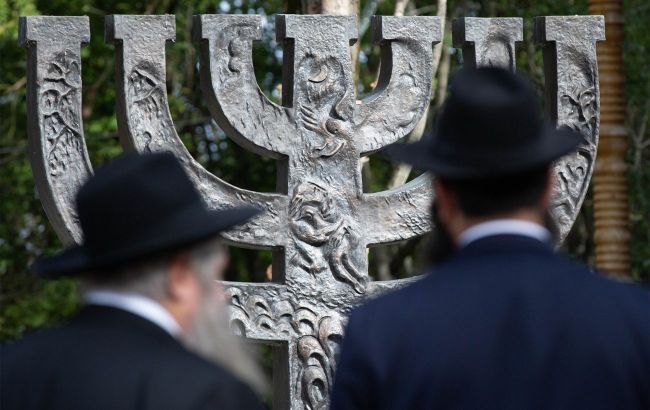 In Soviet Times, the memory of the Holocaust was erased (Illustrative photo: Getty Images)
Every year on January 27, the world commemorates the victims of the Holocaust. In the Soviet Union, the tragedy of the Jews was not officially recognized, even though people were aware of it. For a long time, the totalitarian state promoted the cult of the "Soviet victim" exclusively, according to Ukrainian historian Vitalii Nakhmanovych.
Memory under control
According to the historian, Jews in the USSR knew about the Holocaust because almost every family lost someone close. People who lived in cities, towns, and villages where the Holocaust occurred were also aware of the tragedy.
"There were spontaneous actions in the second half of the 1940s, even before the war ended. Then came a period of state antisemitism, which made such actions dangerous," Nakhmanovych explains.
In the early 1960s, during the Khrushchev Thaw, people began erecting monuments again, and the state started to organize these initiatives. But after the Thaw ended, commemorative events were once again banned, and participants were persecuted.
For example, in September 1966, a rally took place at Babyn Yar. It was the first large-scale unofficial commemoration of Holocaust victims in the USSR and marked the beginning of a long struggle for the right to memory.
"An event later officially called an unauthorized rally took place at Babyn Yar; those who went there did not consider it a protest action," Nakhmanovych says.
In 1965, an official competition was held for the best monument at Babyn Yar, and in 1966, Anatoly Kuznetsov's book Babyn Yar was published. Later, on official remembrance days, people could visit Babyn Yar and even hold official ceremonies honoring the memory of civilian and prisoner-of-war victims, but they could not highlight the tragedy specifically of the Jews.
"Laying wreaths with ribbons in memory of murdered Jews was already considered minor hooliganism and punished with 15 days of detention. Such actions were carried out only by consciously committed individuals, most of whom soon emigrated to Israel," the historian notes.
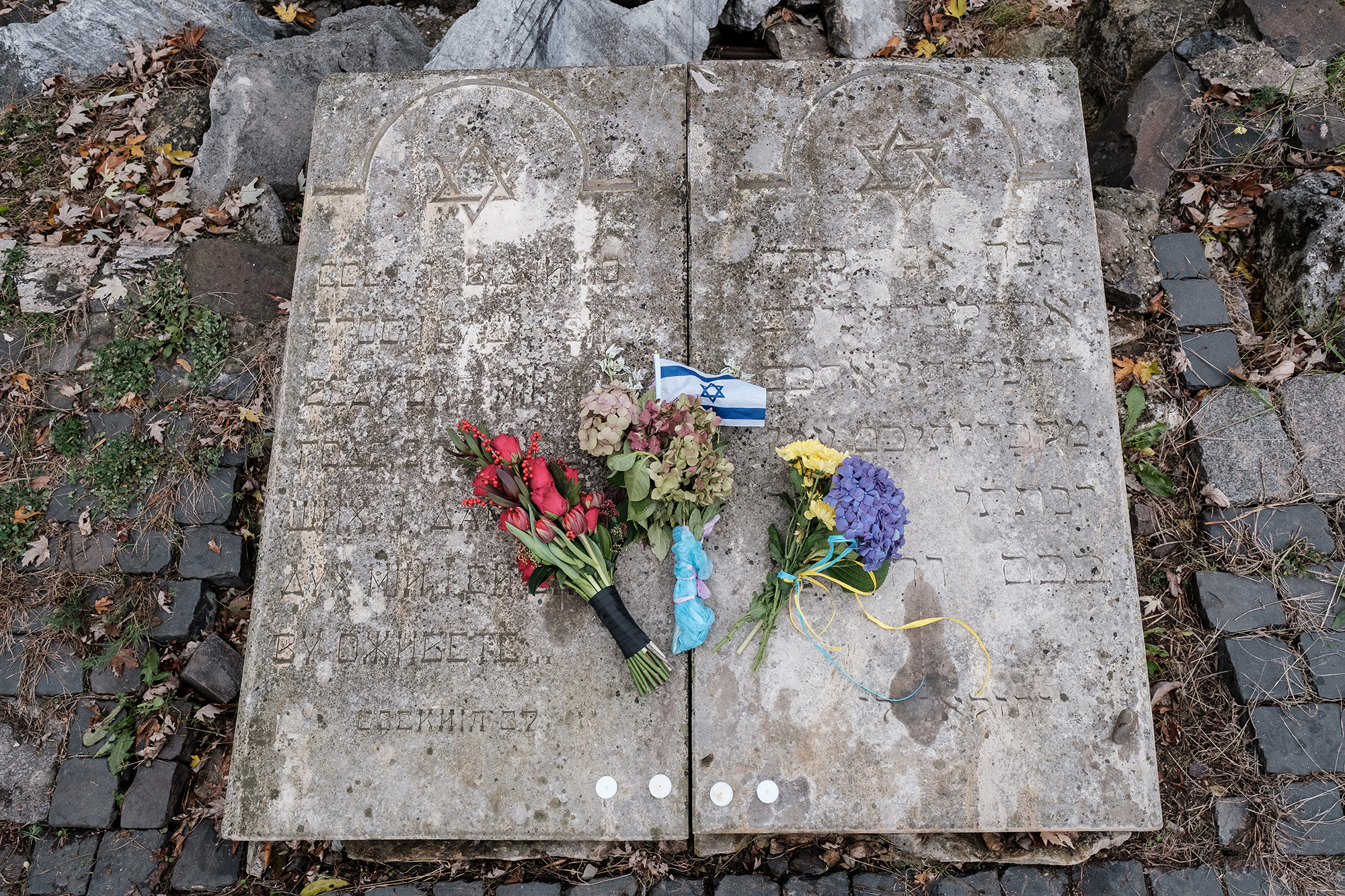
Holocaust Memorial in Lviv (Photo: Getty Images)
War victims had to be 'Soviet'
According to Nakhmanovych, the Soviet state was aware of the Holocaust. However, the memory of the tragedy was not commemorated due to antisemitic policies. This followed broader campaigns against certain peoples, which the USSR had initiated in the 1930s. Ukrainians were among the first targeted.
"Before that, in the 1920s, the Soviet authorities attempted to pursue the so-called korenizatsiya policy (a Soviet policy promoting national cultures in socialist form), encouraging the development of national cultures, of course, Soviet culture in national form. But it quickly became clear that this still contributed to the formation and growth of national movements. When the OUN (Organization of Ukrainian Nationalists) was being formed in 1927, serious consideration was given to cooperation between Ukrainian nationalists and the Soviet Union. This policy produced effects the Bolsheviks had not anticipated, and these processes were soon rolled back," explains the historian.
From the 1930s, mass repression on national grounds began in the USSR. Initially, Ukrainians were targeted, followed by Poles, Germans, Greeks, and, at the end of the war, Crimean Tatars, Chechens, and Ingush were deported.
"At first, these were class enemies. But at a certain point, all class enemies of Soviet power were exhausted. Capitalists were killed, peasants were dekulakized (stripped of property, deported, or killed), deported, and starved. Two classes remained: the proletariat and collective farm peasants, along with a layer of working (later called people's) intelligentsia. Class enemies existed only abroad, yet the regime still needed enemies inside the country. So entire peoples were targeted, allegedly infected with bourgeois nationalism," Nakhmanovych adds.
The communist authorities aimed to create a single "Soviet people." Accordingly, war victims had to be collective, "Soviet."
"But until the Soviet people fully emerged, a certain hierarchy was required. In this hierarchy, there was a big brother — Russians — and younger brothers — the peoples of the union republics, and so on down the ladder. Victims and heroes were expected to be proportional to one's place on this ladder. And here were the Jews, who did not fit this scheme at all," the historian emphasizes.
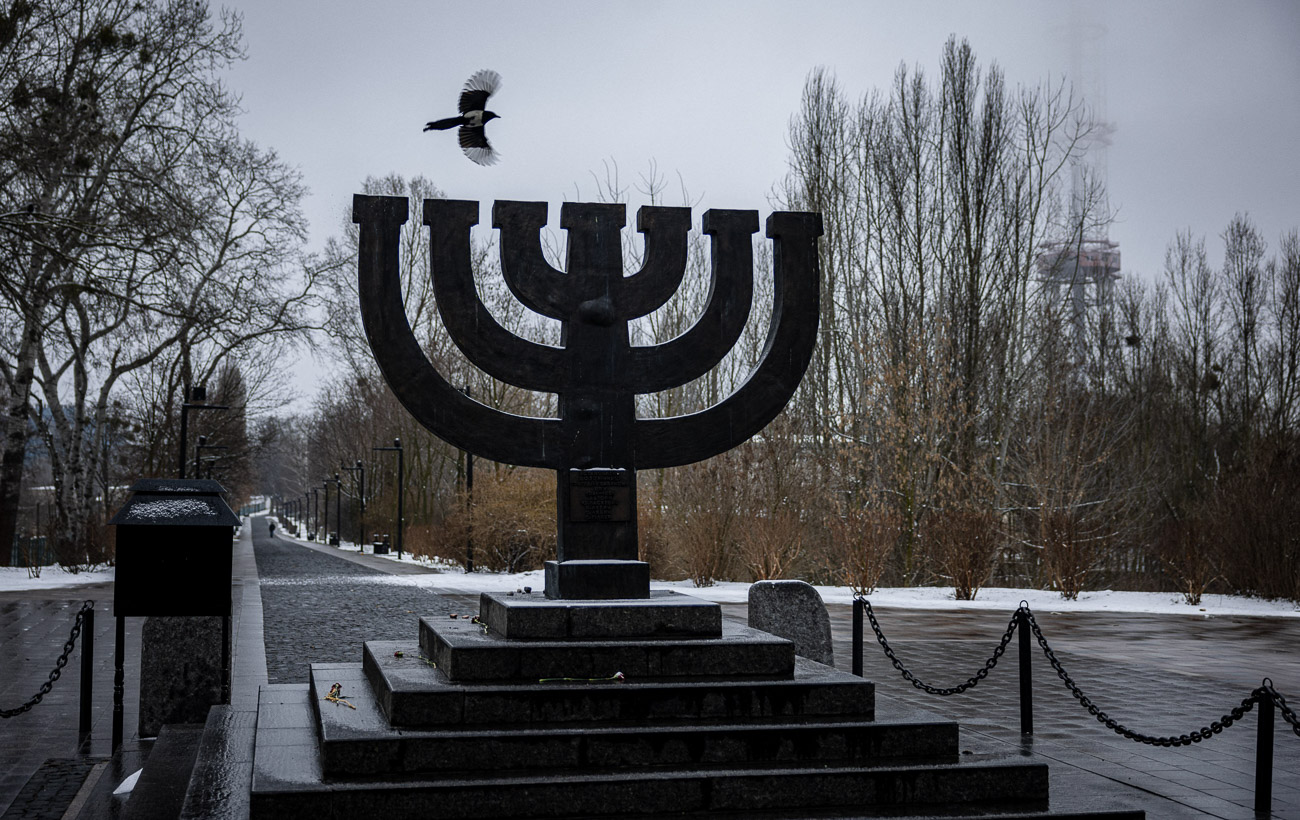
In Kyiv, Holocaust victims are honored at Babyn Yar (Photo: Getty Images)
Previously, we shared stories of Ukrainians who saved Jews during the Holocaust. Such individuals are known as Righteous Among the Nations. Israel has officially recognized 2,707 Ukrainians with this status, the fourth highest in the world. Their memory is commemorated annually in Ukraine on May 14.