Why the Holocaust is still not seen as part of Ukraine's history? Interview with historian Vitalii Nakhmanovych


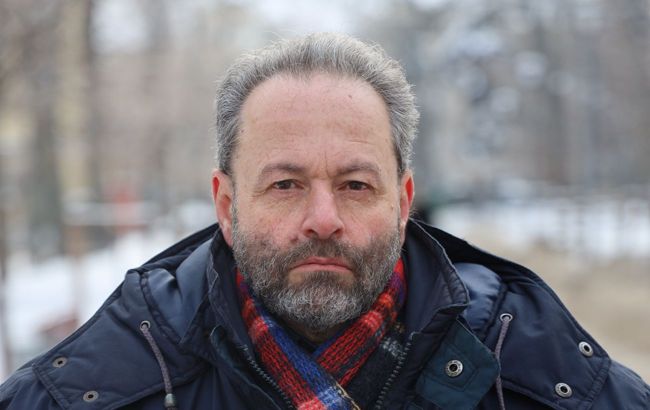 Ukrainian Historian Vitalii Nakhmanovych (photo: RBC-Ukraine)
In the Soviet Union, the truth about the Holocaust was deliberately erased and dissolved into the impersonal tragedy of the Soviet people, while in Ukraine, the majority still view it as a Jewish matter. Why the Soviet authorities concealed a tragedy in which millions of people were killed is explained by historian Vitalii Nakhmanovych in an interview with RBC-Ukraine.
Key points:
-
In the USSR, the Holocaust was concealed behind the phrase "peaceful Soviet citizens" to erase the identity of the victims, while Jews were portrayed as both internal and external enemies.
-
The Holocaust is not a foreign story but part of Ukrainian history. When victims are not divided into ours and others, and all are remembered, society itself becomes stronger.
-
The present resembles the period before World War II: rules no longer work, and leaders are obsessed with the past because they are incapable of creating the future.
-
Genocides begin with the idea of excess people who supposedly must be destroyed.
-
Memory remains alive as long as it is needed. To preserve it, people must unite and speak about the causes of the tragedy, resistance to the enemy, and those who took responsibility and saved people who were being killed.
The Holocaust claimed the lives of more than six million Jews in Europe, including at least one and a half million in Ukraine. At Babyn Yar (a ravine in Kyiv, site of a Nazi mass shooting), more than 33,000 people were killed in just two days in September 1941. The Soviet Union tried to appropriate and erase the memory of the tragedy, but failed. Today, remembrance of the past serves as a warning: forgetting the lessons of history is dangerous for all generations.
"War victims had to be 'Soviet'". On silencing Holocaust tragedy in the Soviet Union
— Today, January 27, marks Holocaust Remembrance Day, when the world remembers millions of innocent people killed due to hatred and racism, and is reminded of where dehumanization and silent consent to evil can lead. Why was the Holocaust silenced in the Soviet Union, despite its fight against Nazism?
— As for society, Jews certainly knew about the Holocaust. In every family in the Soviet Union, there were people who at least went through the war; millions never returned. Likewise, in every Jewish family, some people were killed during the Holocaust.
How much did everyone else know? Those who lived in cities, towns, and villages where the Holocaust took place knew. The intelligentsia clearly knew as well. Did this knowledge turn into commemorative actions? There were spontaneous actions in the second half of the 1940s, even before the war ended.
Then came a period of state antisemitism, which made such actions dangerous. In the early 1960s, during the Khrushchev Thaw (a brief period of political liberalization in the USSR), people began installing monuments again, and the state started thinking about organizing and, most importantly, subordinating these initiatives. But the Thaw ended, and such actions were banned, while participants were persecuted.
For example, when in September 1966 an event later officially called an unauthorized rally took place at Babyn Yar, those who went there did not consider it a protest action (the rally on September 29, 1966, became the first mass unofficial commemoration of Holocaust victims in the USSR and the beginning of a long struggle for the right to memory).
In 1965, an official competition for the best monument at Babyn Yar was held, and in 1966, the book Babyn Yar by Anatoly Kuznetsov (Soviet writer and eyewitness) was published in the magazine Yunost (Russian language literary magazine).
Later, visiting Babyn Yar was indeed like visiting the Shevchenko monument (a symbolic site of Ukrainian national memory) on commemorative days. One could come quietly, and even official events were held to honor the memory of murdered peaceful civilians and prisoners of war. But laying wreaths with ribbons in memory of murdered Jews was already considered minor hooliganism and punished with 15 days of detention. Such actions were carried out only by consciously committed individuals, most of whom soon emigrated to Israel.
As for the state, information about the Holocaust certainly existed. But why was there no desire to commemorate it? State antisemitism? Yes. But this must be traced back to the prewar period. The struggle against various peoples in the Soviet Union began in the early 1930s, and Ukrainians were likely the first to be targeted.
Before that, in the 1920s, the Soviet authorities attempted to pursue the so-called korenizatsiya policy (a Soviet policy promoting national cultures in socialist form), encouraging the development of national cultures, of course, Soviet culture in national form. But it quickly became clear that this still contributed to the formation and growth of national movements.
It is no coincidence that when the OUN (Organization of Ukrainian Nationalists) was being formed in 1927, serious consideration was given to cooperation between Ukrainian nationalists and the Soviet Union, which appeared to allow the development of Ukrainian culture, in the struggle against Poland (which controlled western Ukrainian territories at the time) and suppressed Ukrainians. In other words, this policy produced effects the Bolsheviks had not anticipated, and these processes were soon rolled back.
From the 1930s onward, various forms of repression on national grounds began. The struggle against different people continued for a long time. After Ukrainians, Poles, Germans, and Greeks were targeted. Toward the end of the war, Crimean Tatars, Chechens, and Ingush (ethnic groups of the USSR) were deported. And when, in the late 1940s, the regime moved to the so-called fight against cosmopolitanism (a Soviet campaign targeting Jews), it was essentially the Jews' turn. Against the backdrop of what the Germans had done to Jews, this looked particularly strange, since the USSR had only recently fought against Nazism, yet was now following a similar path.
The issue is that a communist regime cannot exist without fighting an enemy. At first, these were class enemies. But at a certain point, all class enemies of Soviet power were exhausted. Capitalists were killed, peasants were dekulakized (stripped of property, deported, or killed), deported, and starved.
Two classes remained: the proletariat and collective farm peasants, along with a layer of working (later called people's) intelligentsia. Class enemies existed only abroad, yet the regime still needed enemies inside the country. So entire peoples were targeted, allegedly infected with bourgeois nationalism.
On the other hand, everyone was meant to be transformed into a single Soviet people (an ideological concept of a unified Soviet nation). Accordingly, Soviet historical memory was constructed. And if the people were one, then the victims of the war also had to be shared and Soviet.
But until the Soviet people fully emerged, a certain hierarchy was required. In this hierarchy, there was a big brother — Russians — and younger brothers — the peoples of the union republics, and so on down the ladder. Victims and heroes were expected to be proportional to one's place on this ladder. And here were the Jews, who did not fit this scheme at all. In the hierarchy, they ranked very low, yet they suffered disproportionately large losses and had more war heroes than they were supposed to have. Once again, this did not fit.
"Do they only admit Jews to this institute?" — "No, it is simply the only institute where Jews are admitted at all."
— And what about such manifestations of antisemitism, when, for example, people of this nationality found it difficult to move up in certain fields?
— Officially, though not publicly declared, there existed national percentage quotas (informal ethnic limits) for education, hiring, and holding certain positions.
There was a well-known Soviet poet, Rasul Gamzatov (Dagestani poet). In his memoirs, he described how he came to apply to the Literary Institute in Moscow. He submitted his documents and was asked, "What is your nationality?" He replied, "I am an Avar." "Is an Avar an Abkhaz?" "No, an Avar is an Avar." "Sorry," they told him, "but there is no quota for your nationality."
Of course, this also applied to Jews. Jews were the most urbanized nation in the Soviet Union. Their aspiration for higher education, like that of any urban population, was high, but people encountered this problem.
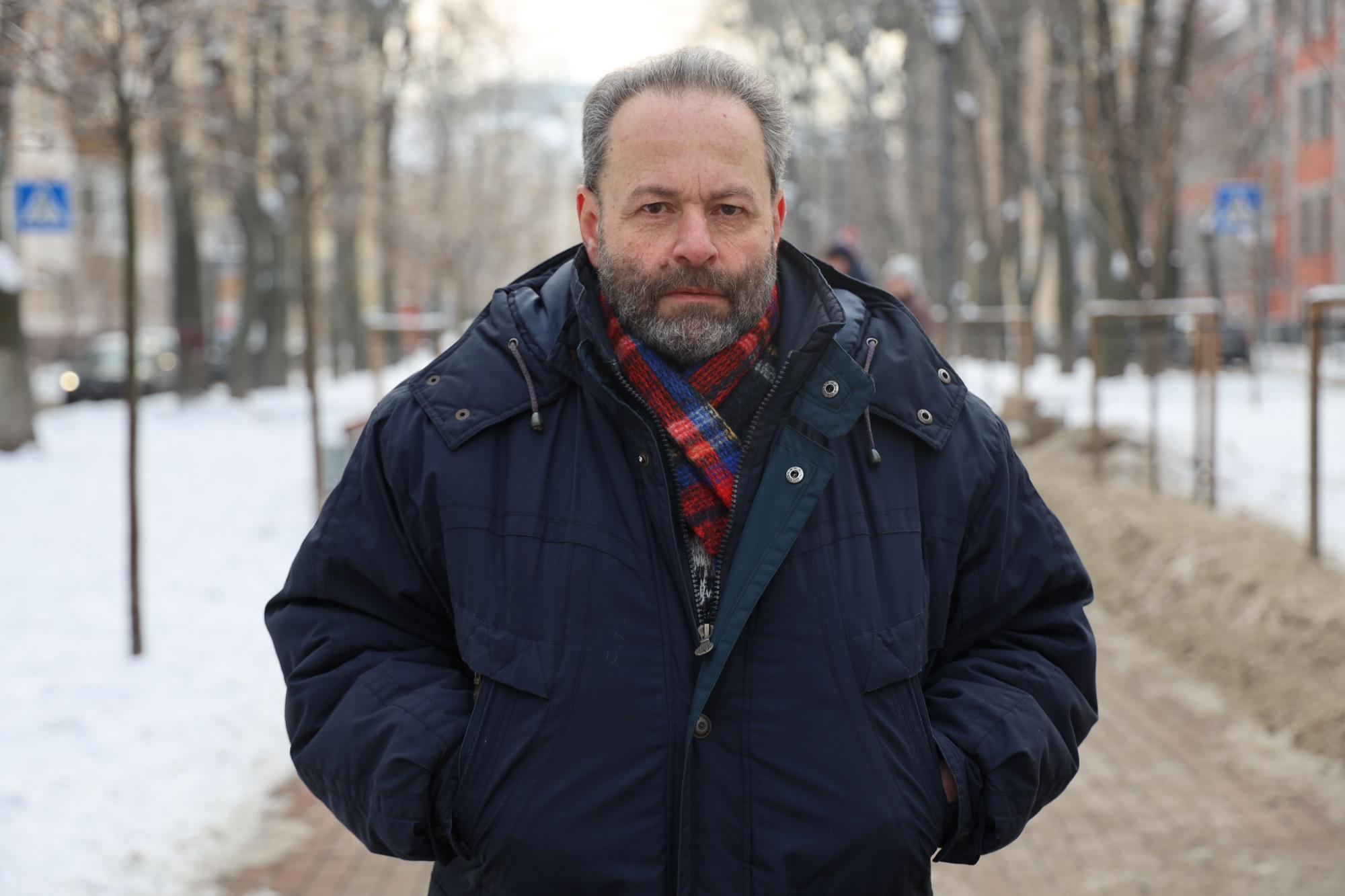
In the Soviet Union, Jews did not fit into the hierarchy: the big brothers were Russians, the younger brothers were the peoples of the union republics, the historian says (photo: RBC-Ukraine)
They were not hired for certain jobs. For example, in Kyiv, there were very few design institutes that were allowed to employ Jews. Most likely, all of them were considered of strategic importance, and the authorities feared agents of world Zionism (a Soviet antisemitic trope).
My mother graduated from evening studies at the National Technical University of Ukraine "Igor Sikorsky Kyiv Polytechnic Institute" — she was not admitted to the full-time program — and worked at a design institute of light industry. Once, a colleague of hers, a Ukrainian woman, asked, "Is it true that only Jews are hired at this institute?" My mother replied, "You're mistaken; it's simply the only institute where Jews are hired at all."
In addition, the Soviet regime needed to cultivate hostility between different peoples. Therefore, tragedies were silenced, while myths were spread — for example, about Jews who fought in Tashkent (a derogatory stereotype implying Jews avoided combat) and Ukrainians as punishers and Nazi collaborators. The main goal was to ensure that Ukrainians and Jews could never unite in opposition to Soviet power.
— How did all this affect the understanding of World War II and the Holocaust later, after the collapse of the Soviet Union? People began to speak about it more openly, but did problems of perception remain?
— Of course, people began to talk more, but many of those who implemented Soviet policy during Soviet times — not only officials, but also journalists, scholars, and writers — did not go anywhere; they remained in their positions. No one changed their mindset overnight with the change of the flag. Recall that the term Great Patriotic War (Soviet name for World War II) was used until quite recently, and May 9 (Victory Day in Soviet tradition) was celebrated until recently as well.
At first, former communists were also in power in independent Ukraine. Yes, they were not ardent antisemites and attended the anniversaries at Babyn Yar (Holocaust massacre site in Kyiv), since in Ukraine this date had always been a day of remembrance for Holocaust victims. In 1991, Leonid Kravchuk (the first President of independent Ukraine) even publicly apologized for all the suffering that had befallen the Jewish people on Ukrainian land.
But the attitude was more like this: "We recognize the Holocaust; you can continue commemorating it. It is your Jewish tragedy." "The Soviet authorities did not allow you to mark this anniversary — now you may do so." It went no further than that.
— So at that time, the Holocaust was not viewed as part of Ukrainian history?
— Yes, absolutely. The overwhelming majority did not consider, and still do not consider, the Holocaust to be part of Ukrainian history. That is the problem. This is why Babyn Yar — one of the most famous Holocaust sites in the world — remains a place of memory wars rather than reconciliation. Yet the tragedy of Babyn Yar requires unity, not division of society. And not only because far more than just Jews were killed there.
I have repeatedly explained to officials and scholars: Babyn Yar is Ukrainian history. After all, everything that happened on Ukrainian land is the history of Ukraine. People open their eyes wide — normal, educated people, not antisemites. Perfectly reasonable people sincerely believe: "This is your Jewish history." "Decide among yourselves what you want there. We support you."
— How should it be ideally?
— Ukraine has the Ukrainian Institute of National Memory (a state body responsible for historical policy), which is supposed to address key moments of national history. The Holocaust is one of the horrific tragedies that occurred on Ukrainian soil. Why does the Institute not address this issue systematically? Obviously, the initiative must come not only from society but also from the state.
Especially since Ukraine's history is so complex. In the 20th century, two regimes committed horrific crimes here. Instead of competing over who suffered more, people should unite. There should be no races like: "More of us were killed during the Holocaust," "No, more of us were killed during the Holodomor (famine of 1932–33 in Soviet Ukraine)." Are these millions not enough for you? Would you feel better if there were more?
Instead, let us study and examine what unites these pages of history. What connects these tragedies? Let us look for common roots, rather than each pulling historical memory toward themselves like an old bedsheet.
"Everything begins with the idea of excess people: On understanding the Holocaust in Europe"
— Let us talk about the European context. How was the Holocaust perceived in Europe after World War II? It was not silenced there as it was in the Soviet Union, was it? How significant was the difference in understanding these events?
— The point is that the Holocaust, in the way it is understood today, began to be comprehended in Europe only after 1990, following the fall of the Berlin Wall (symbol of division between Eastern and Western Europe). This happened after the emergence of a democratic consensus shaped by the idea of the end of history (the belief that liberal democracy had no viable alternatives), and the spread of democracy, liberalism, and tolerance.
The Holocaust organically came to occupy an almost central place in the self-awareness and historical memory of European countries. Yes, the Holocaust had been remembered earlier as well, but there was no such central role. Today, it is an integral part of the liberal world and liberal consciousness.
But since this liberal world is visibly coming to an end before our eyes, a major question arises about what will happen to Holocaust memory in the future. Will there be a place for the Holocaust under new conditions? For me, this remains an open question.
What is happening now closely resembles the period between the world wars: rule of force, right-wing and left-wing radicalization, and the failure of systematic centrist politics. Back then, history was being shaped in Europe; now this is happening globally.
Before the Holocaust, there was no punishment for the Armenian Genocide (mass killings of Armenians in the Ottoman Empire during World War I). At least people knew about it. There was no reaction to the Holodomor, and people did not know about it; moreover, they did not want to know. Almost the only leader of a major power who reacted to the Holodomor and condemned it was Adolf Hitler. He condemned it, but drew his own conclusion: Armenians can be slaughtered, Ukrainians can be starved to death, and nothing will happen to you. So why not shoot all the Jews?
Everything begins at the moment when a thought appears in human consciousness about excess people (or excess classes) — that they can be killed, that they must be exterminated. This is called social engineering (the idea of reshaping society by removing those deemed undesirable). The logic goes: we will build a better society and remove those who do not fit.
The Nazis did not kill Jews simply because they disliked them. They killed them because, as Hitler wrote in Mein Kampf (Hitler's ideological manifesto), "throughout history Aryans, with the help of other peoples, built high culture and civilization, while Jews always stood in their way." Roughly the same idea can be found in Karl Marx's writings (foundational texts of communist ideology): the "working people" build a better world, while all others are exploiters who only hinder them.
This is how it starts — sometimes absurdly and even comically — but it can lead to horrific consequences. The problem today is that we are living in a period of radical change. Two years ago, discussions about World War III began. At the time, Grant Shapps (then UK defense secretary) spoke about a new "axis of evil," consisting of Russia, China, North Korea, Iran, and the Houthis (Iran-aligned militant group in Yemen). But today, everything is far worse. We no longer even know where the axis of evil is and where the axis of good lies. We live in a time when Donald Trump (US president) creates a Peace Board and invites Vladimir Putin (president of Russia) to join it.
By the way, why does Trump like Putin so much? Because they share the same worldview: "the world was better yesterday." Whether it is "we can repeat it" (a Russian militaristic slogan) or "make America great again," the idea is the same — let us return to that yesterday.
Interwar fascist movements were built on this very sentiment — resentment. Benito Mussolini (Italian fascist leader) sought to restore the Roman Empire; Adolf Hitler sought to revive the Holy Roman Empire of the German nation. All of them were building yesterday. Likewise, neither Trump nor Putin has a vision of tomorrow.
When I say that we are returning to the 1930s, I mean, among other things, that people are once again tired of responsibility and want simple solutions.
That is why, when we speak about the Holocaust, we must speak about the Righteous Among the Nations (non-Jews who saved Jews during the Holocaust) and emphasize their moral feat. There were very few of them, but they did what mattered most: they took responsibility. The state did not encourage this responsibility at the time. On the contrary, they went against the system and helped those whom the system was killing. They consciously risked their own lives and the lives of their families.
This is the most important kind of heroism today. This is what is needed now. These people are volunteers at the front, aid volunteers, municipal workers — those who take responsibility. Memory is built on examples. Let us talk about these people. Let us take responsibility.
— If we speak about preserving the memory of the Holocaust, should this be done by highlighting the stories of such people?
— I think so. In today's world, any memory of the tragedies of any people should consist of two things. First, memory of the causes of the tragedy: understanding how and why, at what moment intellectuals, followed by politicians, and then society, begin to think that it is acceptable to kill someone, at what point the decision is made that millions of people must be killed because they get in the way.
Second, we must speak about and remember those who stood against this — not because they were obliged to do so, but because of their conscience, their personal human convictions.
"Memory is alive as long as it is needed." On the collapse of illusions about eternal peace and the lessons of World War II
— Is the memory of the Holocaust at risk? Could it become just a set of facts from books, losing its sacred meaning and becoming diluted?
— You see, that can happen, but it does not have to. From a Jewish perspective, the Holocaust is the murder of Jews, a unique phenomenon. But from a universal human perspective, it is also a generalizing symbol. And if it is a generalizing symbol, it must concern everyone — all genocides, their causes and consequences, and an understanding of how one must not act, which boundaries must not be crossed.
Who should uphold these boundaries? The world is falling apart. The world is being dismantled precisely in our time; everything will be redrawn anew. On November 11, 1918, World War I ended (the Compiègne Armistice, signed between the Entente powers and Germany).
People believed that was it — the last war. The League of Nations (an international organization created after World War I), and the Fourteen Points of Wilson (US President Woodrow Wilson's 1918 peace program). People hoped that from then on, we would live in peace. But what followed was a horror beyond comprehension. Few in the West realized that this horror had already begun — after all, the Bolsheviks (Russian communists) had seized power a year earlier. In the same way, what is happening now is a beginning, not an end. There will be no return to yesterday.
We, too, are playing with our own resentment (longing for an idealized past). Putin and Trump want to revive the 1940s–1950s, but where do we want to go? We Ukrainians also say that yesterday was good — but when exactly? In 2014, after the victory of the Revolution of Dignity (Ukraine's 2013–14 pro-democracy uprising)? But as soon as Yanukovych fled, Russia entered Crimea. Where was that yesterday when we felt good?
In 2004, after the victory of the Orange Revolution (Ukrainian protests against election fraud)? But on January 1, 2006, constitutional reform came into force, Yushchenko lost power, Yanukovych (Ukraine's former president who was ousted during the 2014 Revolution of Dignity) became prime minister again — and we know what followed. So, where is this strange yesterday of ours?
We strive toward Europe, toward someone else's strange today, while Europe itself has already changed. More than that: the Europe we have long aspired to hardly exists anymore.
— Can we then say that the lessons of World War II — about which the Western world spoke for decades — no longer work in today's world?
— Historical lessons work only as long as the people who remember them are alive. Even symbolically, the British queen (Elizabeth II, who served during World War II) recently passed away — the last head of state who personally took part in the war. That generation is gone. And now we have the Trumps and Putins, for whom World War II is just a set of beautiful heroic myths.
They grew up in a world where everything seemed fine, because since 1945, life objectively kept improving. This generation learned about war from movies. While there were still people around who had lived through the war, this memory remained the most vivid. Soviet leaders, too, did not want a repeat of such a war.
I do not believe that Boris Yeltsin (the first president of post-Soviet Russia) would have started a war like Putin did, because he knew what real war was. Similarly, in the United States, the old Republicans — people whose values were shaped during the Reagan era (1980s US presidency) — are almost gone.
— How, then, can the memory of past tragedies, of the Holocaust, be preserved for future generations so that it does not become something abstract?
— The question is whether we will be able to preserve this memory. Memory is alive as long as it is needed. If we try to unite, if we start talking more about the causes of the tragedy and about those who resisted it — rather than recalling long-dead criminals and looking for which neighboring group to blame — then we will be able to preserve it. And then it will remain relevant today.
If we use this memory for selfish purposes, pulling it toward ourselves and arguing over who suffered more and where, it will simply become another tool for tearing apart our memory and our society.