NATO warned over possible threat from Russia's covert operatives

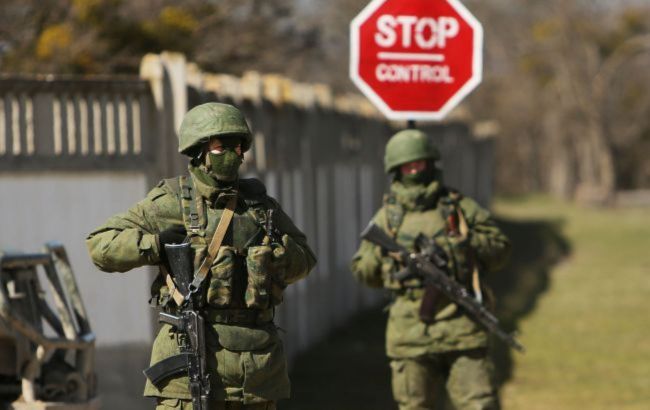 NATO may face Russian soldiers without insignia on its borders (photo: Getty Images)
Russian leader Vladimir Putin has become a prisoner of his own failure in Ukraine and is likely to pursue further escalation, while Russia is capable of continuing the war for several more years, according to the head of Poland's Foreign Intelligence Agency, Paweł Szota.
Threat to NATO eastern flank, Putin's plans
The head of Poland's civilian intelligence service says the real military threat to Warsaw comes primarily from Russia, which views Poland and NATO's eastern flank countries as obstacles to its imperial ambitions.
Moscow is prepared to sacrifice the well-being of its citizens and its economy to achieve victory in the war—for Putin, it has allegedly become a matter of honor.
"Seeing what is happening in Ukraine and how Russia's war is currently not going well, there is an additional cause for concern that Moscow may further escalate the situation," Szota said.
'Little green men' provocations
Polish intelligence services confirm that scenarios involving Russian provocations against the Baltic states or Poland are currently being considered.
In particular, operations involving so-called "little green men"—Russian soldiers without insignia—are not ruled out.
The agency head added that Russia is systematically shifting "red lines" and testing NATO's response. Since the Alliance mostly responds politically, the cost of such provocations remains low for Moscow, thereby encouraging further escalation.
At the same time, Belarus is a growing concern as it increasingly comes under Kremlin control.
Facilities are being built there to deploy nuclear delivery systems, including the Oreshnik complex. However, Warsaw insists it will not remain passive and has tools for offensive operations, including in cyberspace.
Risk of escalation from Russia
Russia may be preparing military and hybrid provocations on NATO's eastern flank in an attempt to test Western unity amid the Ukrainian long-range strikes.
Notably, The Guardian previously reported on Russian plans to stage provocations against NATO in the near future. According to intelligence, the Kremlin aims to test whether the United States would defend smaller members of the Alliance, particularly the Baltic states and Poland.
Polish Prime Minister Donald Tusk also confirmed that the situation is highly unstable and that various forms of escalation are expected in the coming months.
Meanwhile, Polish Foreign Minister Radosław Sikorski assured that as long as Ukraine continues to resist successfully, Russia lacks the capacity for a successful attack.
However, Sikorski warned Putin of consequences in the event of an attack on NATO and suggested that Russia could stage a false-flag operation to justify a strike. According to him, Estonia, Latvia, and Lithuania currently feel the most vulnerable, amid ongoing threats from Moscow.