Mission Artemis II: NASA crew approaches the most dangerous phase of flight

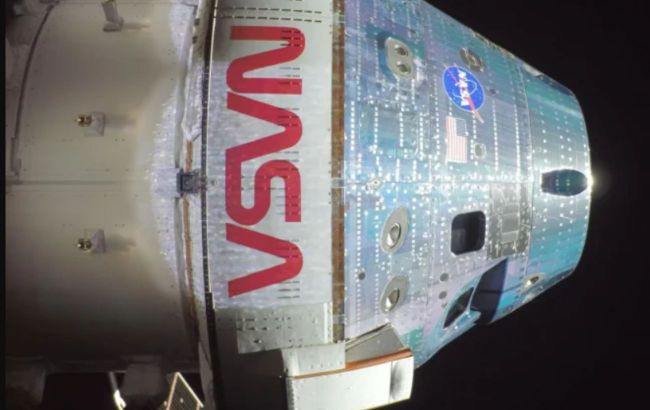 Illustrative photo: spacecraft of the Artemis II mission (NASA)
The crew of the Artemis II mission is preparing for the final and most dangerous stage of their 10-day journey around the Moon — re-entering Earth’s atmosphere at a speed of 40,000 km/h before landing, Mirror reports.
Re-entry is a critical moment due to the immense friction. The spacecraft’s 5-meter-wide heat shield is made of Avcoat (a mixture of epoxy resin and silica). It is designed to gradually ablate, carrying heat away from the crew.
However, there is a concern. During the test mission Artemis I, the heat shield sustained damage — pieces of the material chipped off, which had not been anticipated in the calculations. As a result, engineers adjusted the trajectory for the current mission.
Instead of a "skip" re-entry maneuver, Orion will enter the atmosphere at a steeper angle to reduce the duration of exposure to extreme temperatures. However, this decision has not fully satisfied experts, who have warned about the risks associated with using an older type of heat shield.
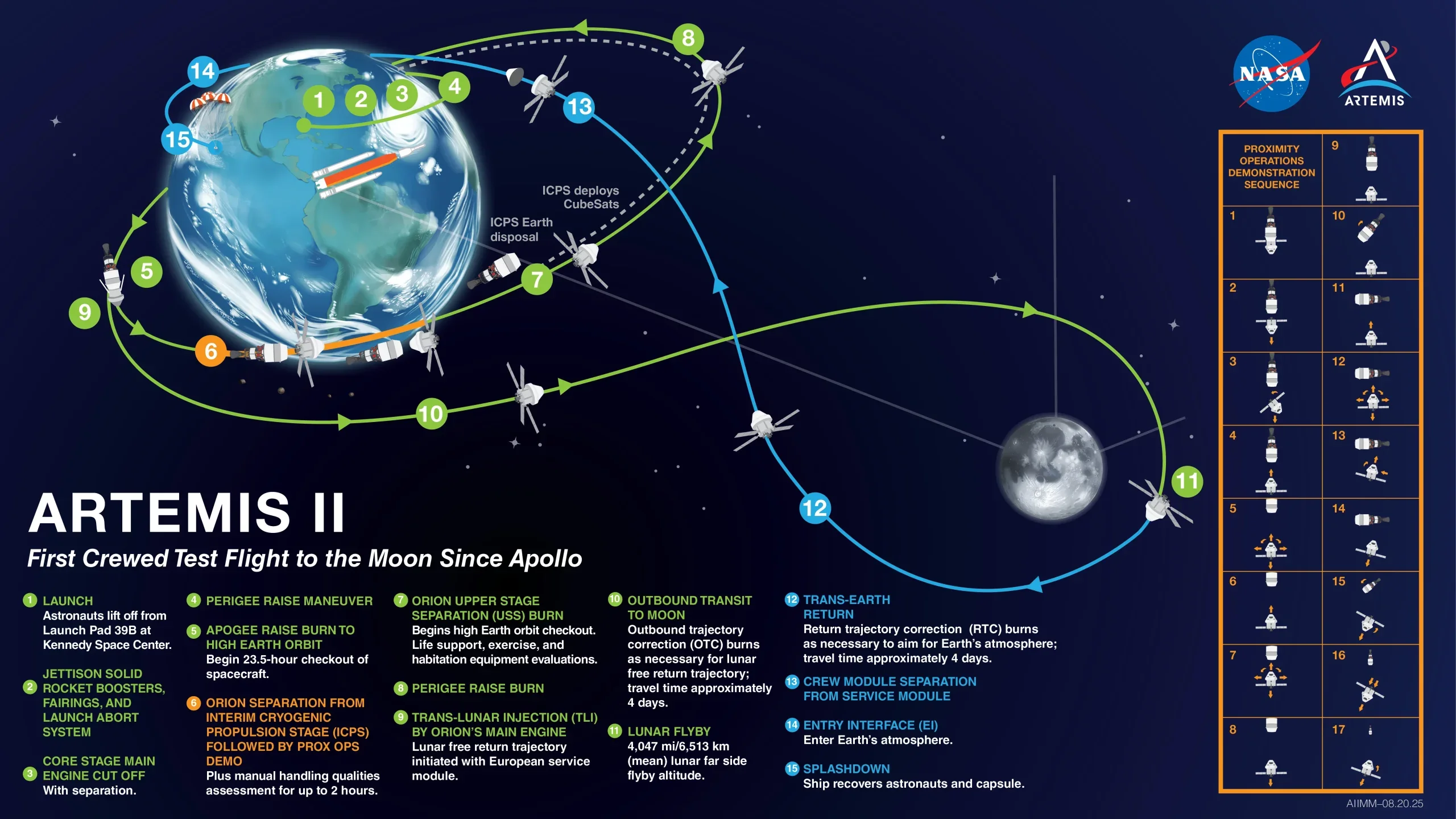
Photo: NASA
On the other hand, the crew stated that they trust the commission’s conclusions. The spacecraft is carrying experienced specialists:
- Reid Wiseman (commander): A US Navy veteran who spent six months aboard the ISS.
- Victor Glover (pilot): The first Black astronaut to conduct a long-duration mission on the ISS.
- Christina Koch (mission specialist): Holder of the record for the longest spaceflight by a woman.
- Jeremy Hansen (mission specialist): The first Canadian astronaut to fly to the Moon.
To withstand the overloads during deceleration, the astronauts use salt tablets and special compression garments that prevent blood from flowing away from the brain toward the legs.
After passing through the fiery phase, during which radio communication will be lost for several minutes due to plasma forming around the capsule, a system of 11 parachutes will deploy. The speed is expected to drop from 40,000 km/h to a safe 27 km/h.
Splashdown is scheduled for April 10 at around 08:07 PM Eastern Time (03:07 AM on April 11 in Kyiv) in the Pacific Ocean near the coast of San Diego.
Return to the Moon: What is known about the Artemis II voyage
The crew of the Orion spacecraft, as part of NASA’s Artemis II mission, has already flown around the Moon and is now returning home. More details about the mission are available in the RBC-Ukraine report.
On April 3, it became known that a NASA astronaut took a unique photo of Earth from the Orion spacecraft during its flight to the Moon. It was the first such image in 54 years.
And on April 7, NASA published a series of unique images taken by the Artemis II astronauts during a seven-hour observation of the Moon’s surface. Some of these photos had never been seen by humanity before.