NASA makes history with first crewed Moon mission in 50 years

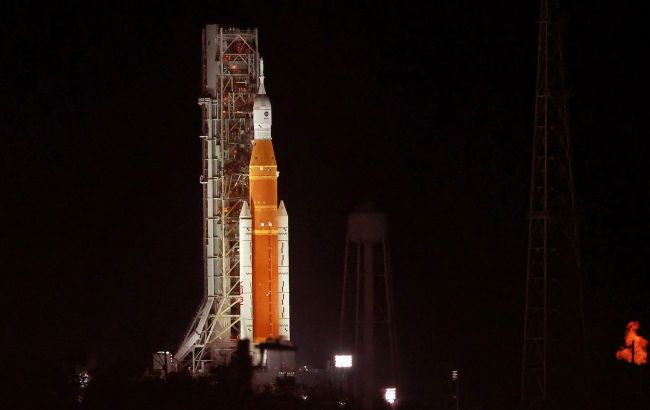 Rocket launch (Illustrative photo: Getty Images)
On Wednesday, April 1, 2026, NASA launched the Artemis II mission - the first crewed flight to the Moon in over 50 years. During the mission, four astronauts will embark on a 10-day journey around Earth's satellite, ushering in a new era of lunar exploration.
The giant Space Launch System (SLS) rocket, as tall as a 30-story building, lifted off from the launch pad at the Kennedy Space Center. The powerful ascent was accompanied by a massive column of white vapor, illuminated by the rays of the evening sun.
Aboard the Orion capsule is an international crew:
- Reid Wiseman (NASA) — commander;
- Victor Glover (NASA) — pilot;
- Christina Koch (NASA) — mission specialist;
- Jeremy Hansen (Canadian Space Agency) — mission specialist.
A few minutes before launch, Canadian astronaut Jeremy Hansen addressed the world: "We're going for all humanity."
High stakes and space records
The Artemis II mission is not just a flight. It is a critical test for the US's multi-billion-dollar program aimed at outpacing China in the new moon race. Beijing plans its landing for 2030, while the US intends to land humans on the surface as early as 2028 (Artemis IV mission).
This expedition will set a new record: astronauts will travel approximately 406,000 km away from Earth. This marks the deepest human penetration into space in history, surpassing even the figures of the legendary Apollo 13.
Mission plan and technical tests
During the 10-day flight, the crew will perform dozens of complex tasks:
- Manual control: 3.5 hours after launch, Orion will separate from the rocket's upper stage, and the astronauts will take over manual control to test the spacecraft's maneuverability.
- Life support systems check: As this is Orion's first crewed flight, specialists will carefully monitor how the equipment withstands the conditions of deep space.
- Gravity assist: The spacecraft will fly around the far side of the Moon, using its gravity to return to Earth.
Future of the Artemis program
The success of this launch is a triumph for the main contractors, Boeing and Northrop Grumman, which have been developing the SLS rocket for over a decade. At the same time, NASA is increasingly relying on the private sector: Elon Musk's SpaceX and Jeff Bezos's Blue Origin are currently competing to build the landing modules that will eventually deliver humans directly to the lunar surface.
NASA Administrator Jared Isaacman previously emphasized that every step of Artemis II has been carefully calculated, as this flight opens the door to a permanent human presence on the Moon and future missions to Mars.