Iran adapts small strike strategy as missile reserves shrink — FT

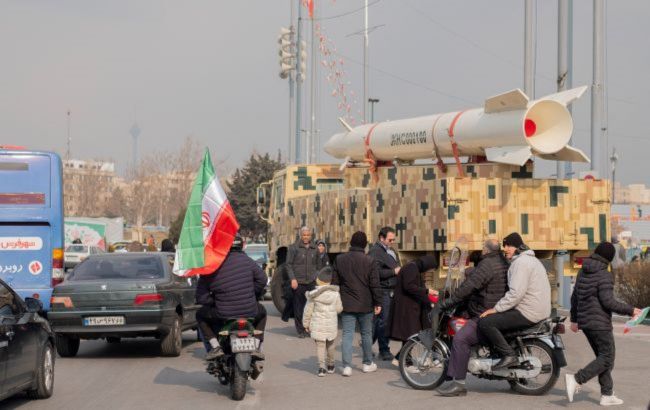 Iranian ballistic missile (illustrative photo: Getty Images)
Despite numerous Israeli and US strikes on Iran's military facilities, the ayatollah regime still retains the ability to launch missile attacks. However, the key question now is not whether Iran can strike, but how long it can sustain such operations, according to the Financial Times.
The intensity of Iranian attacks has significantly decreased compared to the early days of the conflict. In fact, experts say Iran has shifted to a survival strategy. Tehran is deliberately rationing the use of missiles and drones, understanding that its ability to quickly replenish its arsenal under fire is limited.
Instead of large-scale barrages, Iran is now using a tactic of small strikes throughout the day. This allows it to maintain constant pressure on its adversaries while conserving resources and reducing the risk of launch sites being detected.
At the same time, Iran still possesses a significant number of missiles hidden in deep underground facilities that are nearly impossible to destroy from the air. However, the effectiveness of current attacks remains low.
On the other hand, Iran has yet to deploy its most advanced solid-fuel missiles. This may indicate the existence of a last-resort reserve or reflect technical difficulties in deploying them under constant surveillance by Western intelligence.
Overall, experts believe Iran's ability to sustain prolonged attacks remains highly uncertain. As the United States and Israel systematically destroy storage sites and assembly facilities, stockpiles are being depleted faster than they can be replenished.
Finally, while Iran can continue strikes for some time, it is unlikely to return to the level of intensity seen at the start of the war. Experts conclude that degraded military infrastructure and the need to reserve forces for domestic defense are preventing such a comeback.
Iranian strikes on US and its allies: Latest updates
Since February 28, when the US-Israeli operation began, Iran has continued attacking coalition positions with drones and missiles. On March 28, Iran struck Prince Sultan Air Base in Saudi Arabia, injuring 12 US service members, two of them seriously.
In total, more than 300 US troops have been wounded since the start of the war with Iran. However, media reports suggest that Iran's stockpile of missiles and drones is limited.
According to Reuters, citing five sources, the United States can confidently confirm the destruction of about one-third of Iran's missile arsenal. Another third may have been destroyed, damaged, or buried under rubble in underground tunnels and bunkers.
Despite this, Iran still retains a significant запас of weapons and may be able to restore some damaged missiles after the fighting ends.