Expert reveals Russia's new 'smart' drone swarm tactics in attacks


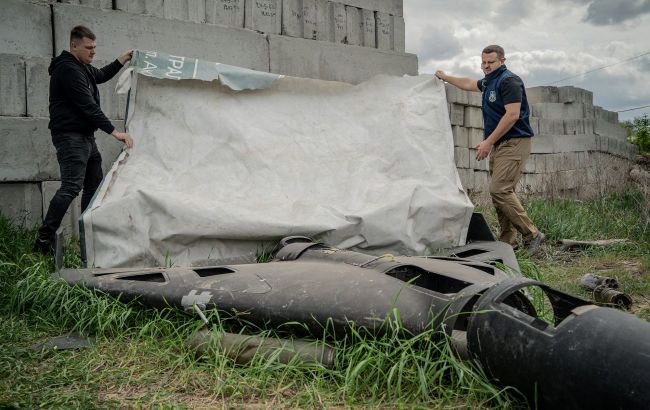 Photo: Russian "smart" drone swarms can bypass air defenses (Getty Images)
Russia is actively upgrading its drones and introducing swarm technology. This allows UAVs to change their routes in real time during aerial attacks.
This was told to RBC-Ukraine in a comment by military expert Anatolii Khrapchynskyi.
Why drone swarms are more dangerous than missiles
Unlike cruise missiles, which follow a pre-programmed route, modern drones are capable of flexibly adapting to conditions in the air. Thanks to the introduction of mesh communication, Russian UAVs can transmit information to each other directly during flight, the expert explained.
How does it work? If the first drones in a group are intercepted by a Ukrainian mobile fire team or an interceptor drone, they notify the operator and the drones behind them. For this, there is even a special chatbot in Telegram.
"Subsequent drones change their trajectory and bypass that exact area because there is a threat there," Khrapchynskyi said.
In addition, some modified Shahed drones are now equipped with electronic intelligence systems. This allows them to independently detect Ukrainian radar stations or electronic warfare systems and home in on their emitted signals.
New approach to air defense
According to Khrapchynskyi, the classic air defense rule of "see and destroy" is no longer effective against drone swarms. In modern Russian attacks, drone groups have a clear division of roles:
- some perform direct reconnaissance
- others work exclusively as communication relays
- part are designed to counter Ukrainian aviation attempting to intercept them
To effectively counter this, Ukraine needs a "smart air defense system" that prioritizes taking out relay drones.
After losing communication, such UAVs lose the ability to maneuver and turn into conventional loitering munitions that are much easier to destroy, the expert explained.
"Drone swarms are currently the most promising direction. The Russians are moving along this path. Will we be able to stop them? I think we will, because we have certain proposals. But our countermeasures will push the enemy toward further modernization. When they will run out of capabilities is hard to say. Probably when they are no longer able to produce anything," he said.
Use of civilian technologies in weapons
Khrapchynskyi emphasized that the main danger today lies in the accessibility of modern technologies, as Russia uses even consumer computer components to upgrade weapons. Based on civilian tech, the occupiers can build artificial intelligence systems for military purposes.
"Some use AI to find cures for cancer, while others like Russia use it to find ways to kill people. So the main problem here is civilian components being used in war," the expert concluded.
Read also:
- SBU blinds FSB unit that guided strikes on Ukraine
- In winter in Ukraine: What is known about Gripen jets Ukraine will receive from Sweden