Inside Russia’s strike planning system: Expert on Kuban FSB center and 'blinding' enemy


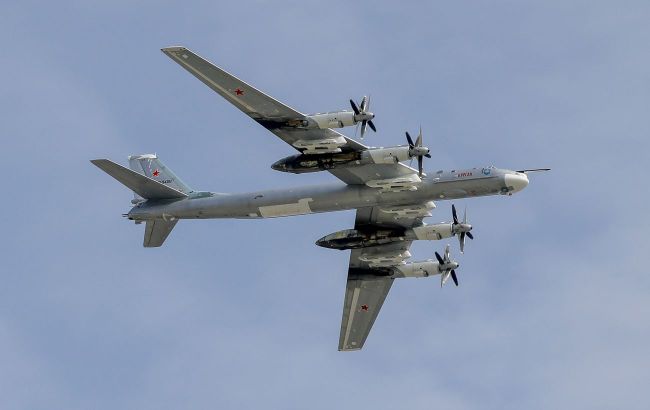 Illustrative photo: how Russia prepares missile strikes against Ukraine (Getty Images)
How this process works and what role the FSB center in Kuban targeted by the Security Service of Ukraine (SBU) plays was explained to RBC-Ukraine by military expert Anatolii Khrapchynskyi.
Main points:
- How Russia searches for air defense systems: The enemy simulates launches from MiG fighter jets to force Ukrainian radar systems such as Patriot and NASAMS to switch on and reveal their positions.
- Is it possible to "blind" Russia: Due to its extensive intelligence network and satellite support from Iran and China, this is impossible on a full scale, but Russia can be "blinded" in specific sectors.
- Consequences for the occupying forces: Destroying such centers eliminates not only unique equipment, but also experienced officers who planned attacks on Ukraine.
- Role of the FSB center in Kuban: The facility collected data from enemy radar systems and mapped out safe routes for Russian missiles and drones.
How Russia plans strikes against Ukraine
According to the expert, the attacked 16th FSB center in Russia’s Krasnodar region collected and processed data from over-the-horizon radar systems and various electronic intelligence systems. This information allowed Russia to build routes for attacks on Ukraine.
"They are not guiding drones or missiles in real time. They are building sophisticated systems that allow them, for example, to penetrate our air defense. They are collecting data," Khrapchynskyi explained.
According to him, the enemy continuously gathers intelligence on the operation of Ukrainian air defense systems, including Patriot, NASAMS, and IRIS-T. Russia does this by provoking their activation through simulated launch maneuvers using MiG fighter jets.
"This creates a picture that later allows the enemy to plan air attack operations," he added.
Thus, the destroyed center in southern Russia not only partially adjusted Shahed drone strikes, but was also a key element in collecting information for planning future mass attacks, the expert noted.
Is it possible to completely 'blind' the enemy?
Khrapchynskyi emphasizes that it is impossible to fully blind Russia with a single strike.
First, the enemy has a powerful intelligence architecture consisting of multiple levels of reconnaissance centers, ranging from strategic to field level.
Second, Russia receives support from its allies. China and Iran are capable of providing the Russians with high-quality intelligence data from their own satellites.
However, the expert notes that it is possible to "blind" the occupying forces in specific sectors: the Moscow region, the Black Sea region, the Baltic region, and areas near Ukraine’s borders.
"We need to selectively destroy elements that lead to the loss of the ability to control or observe Ukrainian territory. Accordingly, such small strikes allow us to significantly affect Russia’s capabilities," he explained.
Consequences of the strike on the Kuban center
Ukraine has been systematically dismantling Russian electronic intelligence systems and command posts both on Russian territory and in temporarily occupied areas, Khrapchynskyi noted.
In particular, Russian Voronezh-M radar stations, various over-the-horizon radar systems, as well as the Space Communications Center in Crimea, have previously been targeted. The degradation of Russian air defense systems has also allowed Ukraine to develop a more effective planning system for its own long-range strikes.
The strike on the FSB facility in the Krasnodar region, according to the expert, is significant not only because of the unique system that tracked mass attacks. Experienced officers who directly processed intelligence data and built routes for each Russian missile or drone may have been affected.
Beyond physical losses, this also creates strong psychological pressure on Russian military personnel, Khrapchynskyi added.