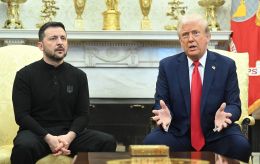
'Hawks' or 'pragmatists': Who could represent EU in negotiations on ending war?


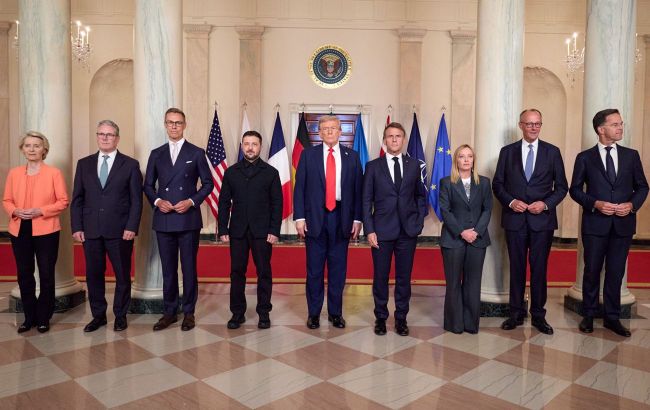 US, Ukraine and Europe summit at the White House, August 2025 (photo: Getty Images)
Europe wants to have its own seat at the negotiating table on ending the Russia–Ukraine war and is searching for a candidate who could represent the entire European Union.
RBC-Ukraine looks at the potential candidates, their chances, and those who have already failed the "selection process."
Key points:
- Main challenge for Brussels: The EU still lacks a unified final goal and consensus on its own “red lines” in the negotiations.
- Protocol factor: Draghi’s chances are higher, as Stubb’s status as a sitting president does not align with the level of the US negotiating team (Jared Kushner, Steve Witkoff).
- Shortlist candidates: The main contenders are Finnish President Alexander Stubb and former ECB President Mario Draghi — the architect of freezing €200 billion in Russian assets.
- Excluded candidates: Gerhard Schröder was ruled out due to pro-Russian views, while Angela Merkel has officially declined the role of mediator.
- New EU initiative: Brussels is planning to appoint a special representative to take part in future peace talks between Ukraine and Russia.
Negotiations on ending the Russia–Ukraine war have been put on pause due to a number of factors, the main ones being the lack of compromise on Donbas and the US focus on Iranian affairs.
However, a new US attempt to revive the peace process may soon follow, potentially involving pressure on Ukraine, as Donald Trump needs to demonstrate results from his peacemaking efforts ahead of elections.
Against this backdrop, Europe is seeking to increase its role in the talks. To this end, it is planning to appoint a special representative who could take part in the next rounds of negotiations.
Did not make the cut
The problem of identifying a single EU negotiator lies in the fact that they must be acceptable both to the European Union itself and to Russia — and especially to Ukraine, since the talks concern the end of aggression against it.
For this reason, former German Chancellor Gerhard Schröder, proposed by Russia, was ruled out. He has not hidden his pro-Kremlin sympathies and, after leaving politics, openly lobbied Russian interests in Europe while serving on the board of the company operating Nord Stream 2.
As Ukrainian Ambassador to Germany Oleksii Makeiev explained, Schröder has "neither the moral nor political legitimacy to act as a mediator today."
According to Politico, another German leader, Angela Merkel, was also considered. She led the country for over 16 years. On one hand, Merkel knows Putin very well.
Thanks to her background in East Germany, both leaders could understand each other’s languages without interpreters. Merkel already has mediation experience between Ukraine and Russia: in 2015, she took part in the Normandy Format summit (Germany, France, Ukraine, Russia), where agreements on Donbas were reached, known as Minsk II.
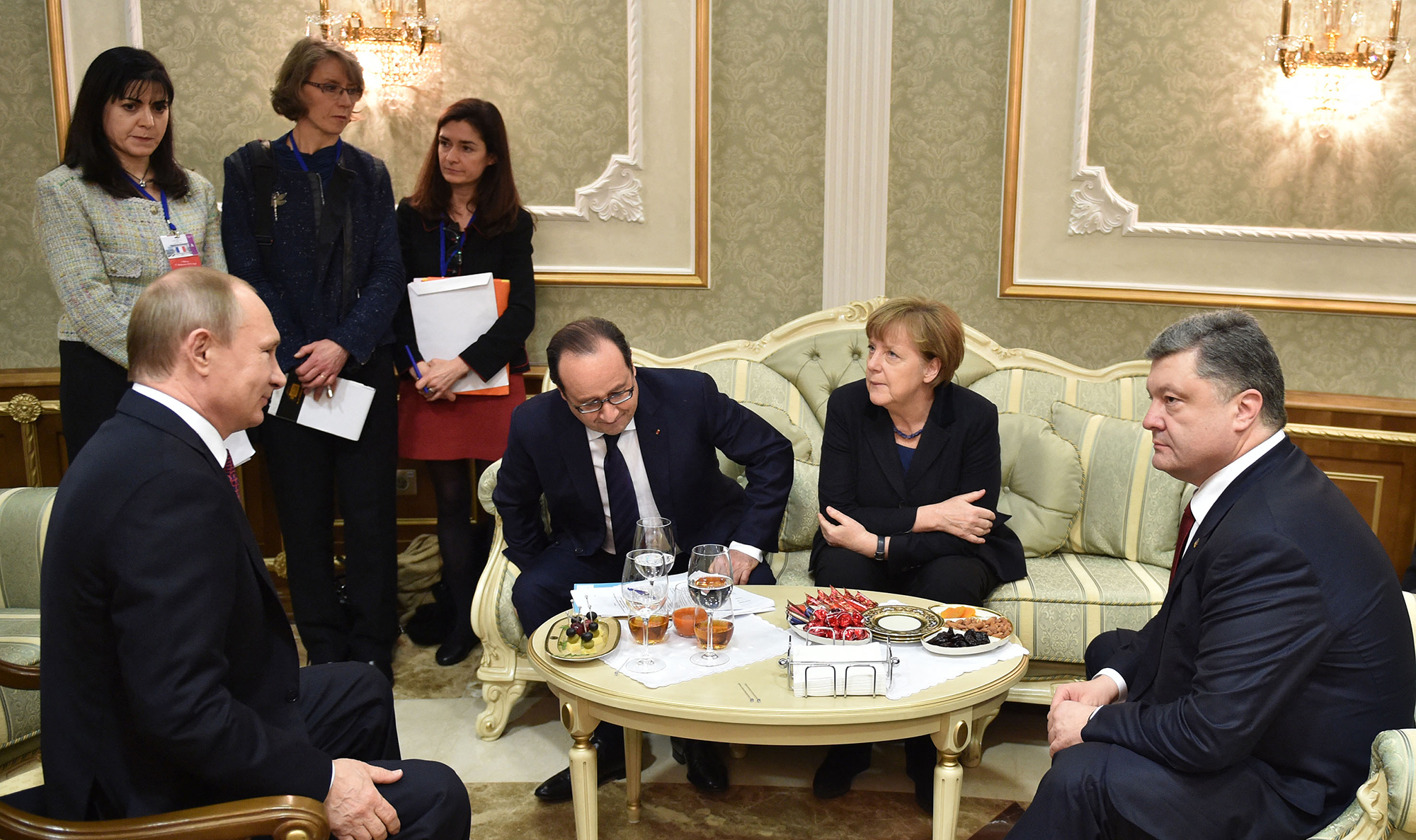
Angela Merkel (centre) during the Minsk talks, 2015 (photo: Getty Images)
At the same time, Putin repeatedly manipulated Merkel in pursuit of his own interests. It was during her tenure that the Nord Stream 1 pipelines were launched and Nord Stream 2 was planned, making the German economy dependent on Russian energy resources.
Even after Russia’s full-scale invasion of Ukraine, Merkel did not acknowledge her mistakes. In her memoir Freedom, the only thing the former chancellor expresses regret about is the failure to build an effective European security system that would have accounted for the threat from Russia.
It is therefore not surprising that Merkel herself declined to act as a mediator. But even if she had been willing, such a role would clearly be unacceptable for Ukraine.
European 'hawks'
The list of potential candidates is not limited to German representatives. According to Politico, Brussels is also considering two additional figures whose approach to Russia is fundamentally different.
The first is Finnish President Alexander Stubb. Even compared to other European leaders, he stands out for his hardline rhetoric toward Russia and strong support for Kyiv. Despite his image as a smiling European liberal, on security issues, the Finnish president holds a clearly "hawkish" stance, shaped by Finland’s historical experience of bordering Russia.
Stubb is a master of personal diplomacy and informal connections. Thanks to his long education in the United States and his passion for golf (he even played for the national team in his youth), he has developed personal ties with US President Donald Trump. This makes him a potential "bridge" between Brussels and Washington.
In addition, the Finnish leader has real experience in crisis diplomacy with the Kremlin. In August 2008, during Russia’s attack on Georgia, Stubb served as Finland’s Foreign Minister and, as OSCE Chair, was directly involved in preparing a peace settlement plan.
On one hand, Stubb’s candidacy is ideal for Ukraine, as Finland views Kyiv’s security as its own. On the other hand, his views and Finland’s NATO membership make him completely unacceptable to the Kremlin.
There is also the issue of diplomatic protocol. If an EU representative is to be integrated into an already forming negotiating team, a sitting head of state would find it difficult to adapt to such a format.
The second candidate is Mario Draghi, former Prime Minister of Italy and ex-President of the European Central Bank. Unlike Schröder and Merkel, he represents a strict financial and economic pragmatism.
Draghi is first and foremost an economist. On the one hand, this means he may have somewhat less direct experience in security matters. On the other hand, the economic track is where the EU’s role in a peace plan is strongest — primarily regarding Ukraine’s post-war reconstruction, sanctions on Russia, and frozen Russian assets.
Within the European establishment, he carries the telling nickname "Super Mario." He earned it in 2012, at the height of the eurozone debt crisis, when a single phrase helped save the common European currency from collapse. At the time, Draghi said the ECB would do "whatever it takes" to preserve the euro, adding, "And believe me, it will be enough."
As Italian Prime Minister in 2021, Draghi reversed Italy’s traditionally pro-Moscow foreign policy. After Russia’s full-scale invasion of Ukraine, he also became the architect of freezing more than €200 billion in Russian assets in Europe.
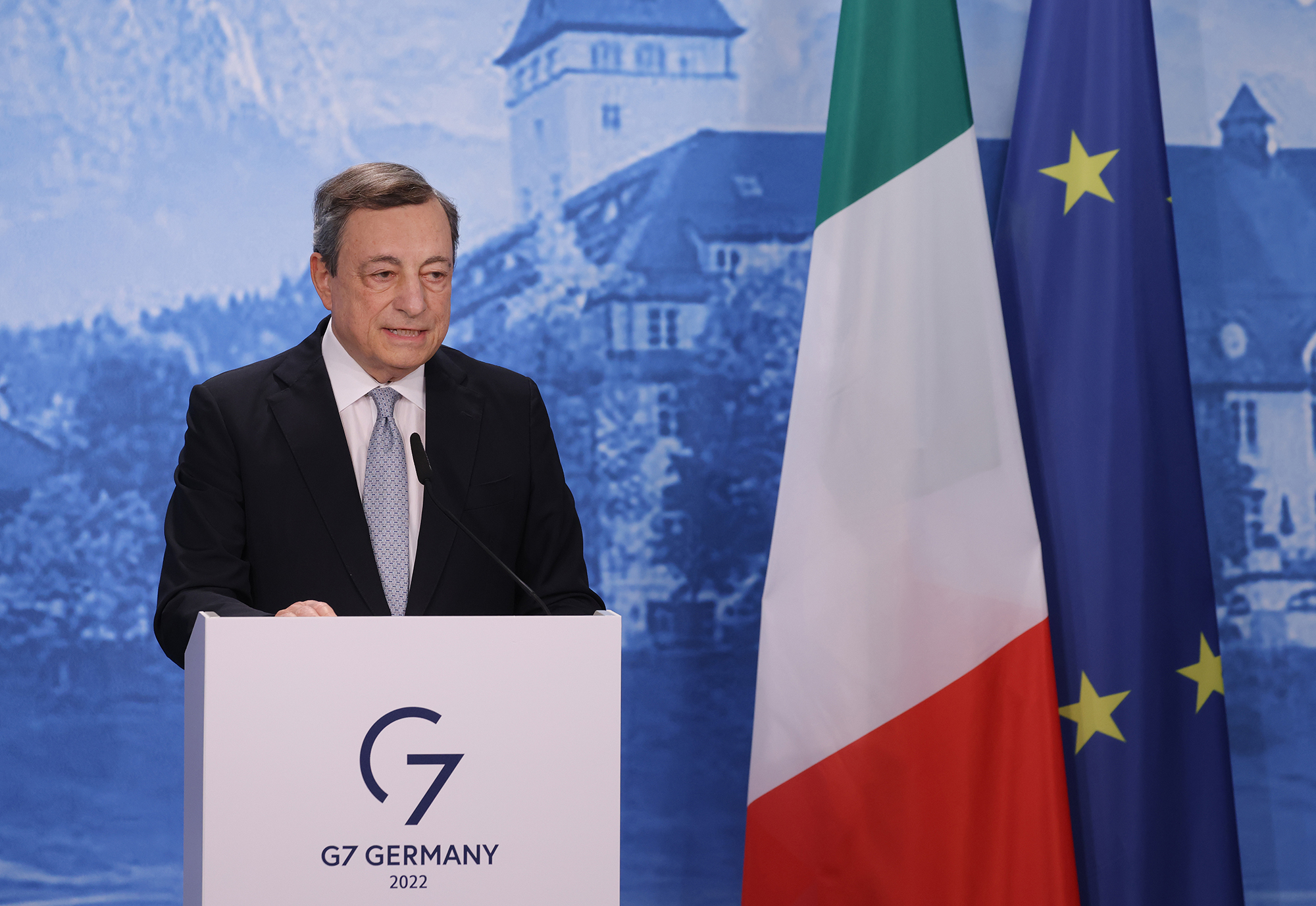
Mario Draghi at the G7 summit in Germany, 2022 (photo: Getty Images)
In addition, "Super Mario" took several other steps that were crucial for Ukraine. Within months, Draghi managed to reduce Italy’s dependence on Russian gas from a critical 40% to nearly zero. Moreover, during his historic visit to Kyiv in the summer of 2022 (together with Macron and Scholz), he became a key driving force behind granting Ukraine EU candidate status.
Tasks and formats
However, the circle of potential candidates is not limited to Stubb and Draghi. In principle, negotiators could include those whose positions already make them suitable for such a role — European Commission President Ursula von der Leyen, European Council President António Costa, or High Representative for Foreign Affairs Kaja Kallas.
But the first two deal with a much broader range of issues, from the economy to humanitarian matters and environmental policy. They may simply lack the time and focus required for such negotiations.
As for Kaja Kallas, diplomacy is her core responsibility. However, her candidacy may not be welcomed by some EU member states due to the Estonian politician’s strongly anti-Russian stance.
Some participants would likely prefer to appoint a separate individual for the role of negotiator, one who would perform this function "not by virtue of office." There are arguments for this — from Kallas’ workload to her complicated relations with Ursula von der Leyen.
In addition, reaching a compromise within the EU itself will be essential. France and Germany would likely prefer that the EU be represented by someone from Paris or Berlin.
According to Der Spiegel, within Germany’s governing coalition, there have been discussions about nominating the current President of Germany, Frank-Walter Steinmeier (whose role is currently largely ceremonial), as a potential negotiator with Russia.
This somewhat reduces the chances of Finnish President Alexander Stubb. On the other hand, he is one of the few European leaders who has good relations with Donald Trump — an extremely important quality for a potential negotiator. Another key factor will be the rank of the European representative relative to their counterparts at the table.
"Stubb cannot, by status, lead negotiations within the current group. From the US side, there are Witkoff and Kushner. From Ukraine, also figures of lower rank. In that sense, Draghi looks more realistic. He is a retired figure who could dedicate more time to the negotiation process," said Oleksandr Leonov, executive director of the Center for Applied Political Studies Penta, in comments to RBC-Ukraine.
Finally, the expert does not rule out that EU representation could be "split" between a technical envoy and higher political leadership.
"The problem is that Kaja Kallas, António Costa and Ursula von der Leyen are very high-ranking officials, and they would need to join at the final stage, when some agreed document is already on the table. Their positions are simply too senior for technical negotiations," Leonov concluded.
To this must also be added the lack of clarity regarding objectives: what exactly the EU representative is supposed to achieve in the first place. Perhaps once Europe defines its own goals in the negotiations, the process of selecting a representative will become easier. But for now, the search for a single candidate still looks like a difficult task.
Quick Q&A
– Who could become Europe’s negotiator?
The main candidates on Brussels’ shortlist are former Italian Prime Minister Mario Draghi and current Finnish President Alexander Stubb. Senior EU officials are also being considered, including Kaja Kallas, Ursula von der Leyen, and António Costa.
– Why will Angela Merkel not take part in the new negotiations?
The former German chancellor personally declined the role of mediator. In addition, her candidacy is considered unacceptable for Kyiv due to past policy decisions — including the launch of Nord Stream 1 and the construction of Nord Stream 2, which increased Europe’s dependence on the Kremlin.
– What are Alexander Stubb’s chances of becoming the EU representative?
Stubb’s chances are reduced by his status as a sitting head of state, which does not fit the diplomatic protocol of the emerging negotiating group. At the same time, his firm "hawkish" stance on Russia and Finland’s NATO membership makes him unacceptable to Moscow.
– Why is Mario Draghi considered the most realistic candidate?
The former President of the European Central Bank is a retired politician, which gives him time for a lengthy technical process. His main advantage is his experience in strict economic pragmatism — Draghi reduced Italy’s dependence on Russian gas within months and helped freeze €200 billion in Russian reserves.