Negotiator for Putin? Who Gerhard Schröder is and why Russia needs him in talks with Europe


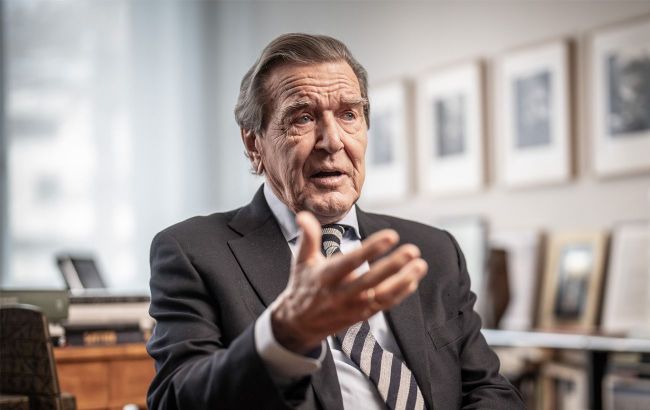 Photo: Gerhard Schröder, former Chancellor of Germany (Getty Images)
The European Union is preparing for its own negotiations with Russia on peace in Ukraine, while US efforts have reportedly reached a dead end. The Kremlin would like to see its longtime ally Gerhard Schröder as a mediator with Europe, but will the EU agree to this?
Why is the EU once again talking about negotiations with Russia? Who is Schröder, and why has the Kremlin chosen him – read more in the RBC-Ukraine material.
Key points:
- Real candidate: A potential mediator could be the current President of Germany, but this would require the agreement of all EU leaders.
- Schröder’s candidacy: Putin has proposed the former German chancellor as a negotiator. Kyiv and Brussels are firmly opposed, as he is a long-time Russia lobbyist.
- EU position: Europe wants to take part in peace talks with Russia, but not as a neutral mediator — rather as a party that supports Ukraine.
The European Union has "potential" for talks with Russian President Vladimir Putin, European Council President António Costa said at the end of last week in an interview with the Financial Times. According to him, Ukrainian President Volodymyr Zelenskyy had suggested that EU leaders should be "ready to make a positive contribution to negotiations."
"I am speaking with the 27 national leaders (of the EU) to find the best way to organize ourselves and determine what we need to discuss effectively with Russia when the time is right," Costa said.
These statements were immediately reacted to in Russia. Kremlin spokesperson Dmitry Peskov said that Moscow is "open to dialogue" with Europe, but will not initiate it. Later, President Vladimir Putin also made a statement.
"For me personally, former German Chancellor Mr Schröder would be preferable," Putin said, adding that he is ready to speak with any politician who has not "said all kinds of things" about Russia.
Who Gerhard Schröder is
Schröder is a former Chancellor of Germany who, after leaving politics, became one of the most influential European lobbyists for Vladimir Putin’s regime and Russian energy business.
Path to power and politics in Germany
Schröder built his career in the Social Democratic Party of Germany, gradually shifting his views from radical left-wing positions to more moderate and business-friendly policies.
In 1998, he won a historic election, becoming Chancellor and ending Helmut Kohl’s 16-year era in power. During his time in office, Schröder became known for unpopular decisions: he launched tough economic reforms that included cuts to social benefits and pensions.
This caused public dissatisfaction in Germany and a split within his own party. However, in 2002, he managed to stay in power thanks to his firm refusal to support the US invasion of Iraq.
In 2005, with declining public support, Schröder called early elections. His party narrowly lost to Angela Merkel’s political force, after which he announced the end of his political career.
Work for Gazprom and friendship with Putin
Immediately after resigning as Chancellor, Schröder began openly lobbying for Russian interests for significant financial compensation.
He chaired the consortium building the first Nord Stream gas pipeline (where his salary reached €250,000 per month), and in 2016 became head of the board of directors of the company operating Nord Stream 2.

Photo: Gerhard Schröder and Vladimir Putin (Getty Images)
The former chancellor has consistently promoted Russian narratives regarding Ukraine. He has publicly stated that Crimea will remain Russian forever, called for lifting sanctions on Russia, and advocated for the "federalization" of Ukraine.
Due to his openly pro-Putin stance even after Russia’s full-scale invasion in 2022, the German parliament took action against its former leader. The Bundestag closed Schröder’s office and stripped him of part of his state privileges, leaving only his pension and personal security.
Why Putin chose Schröder and how Ukraine and the EU view it
Both Ukraine and the EU have reacted negatively to Schröder’s potential role as a negotiator with Russia.
"We definitely do not support such a candidate," Ukrainian Foreign Minister Andrii Sybiha said today, adding that Europe has many other "worthy leaders" who could fulfill this role.
EU foreign policy chief Kaja Kallas also considers Schröder a poor choice. According to her, he would effectively be a person sitting on both sides of the negotiation table.
"I think Gerhard Schröder has been the high-level lobbyist for Russian state-owned companies so it’s clear why Putin wants him to be the person," she stressed.
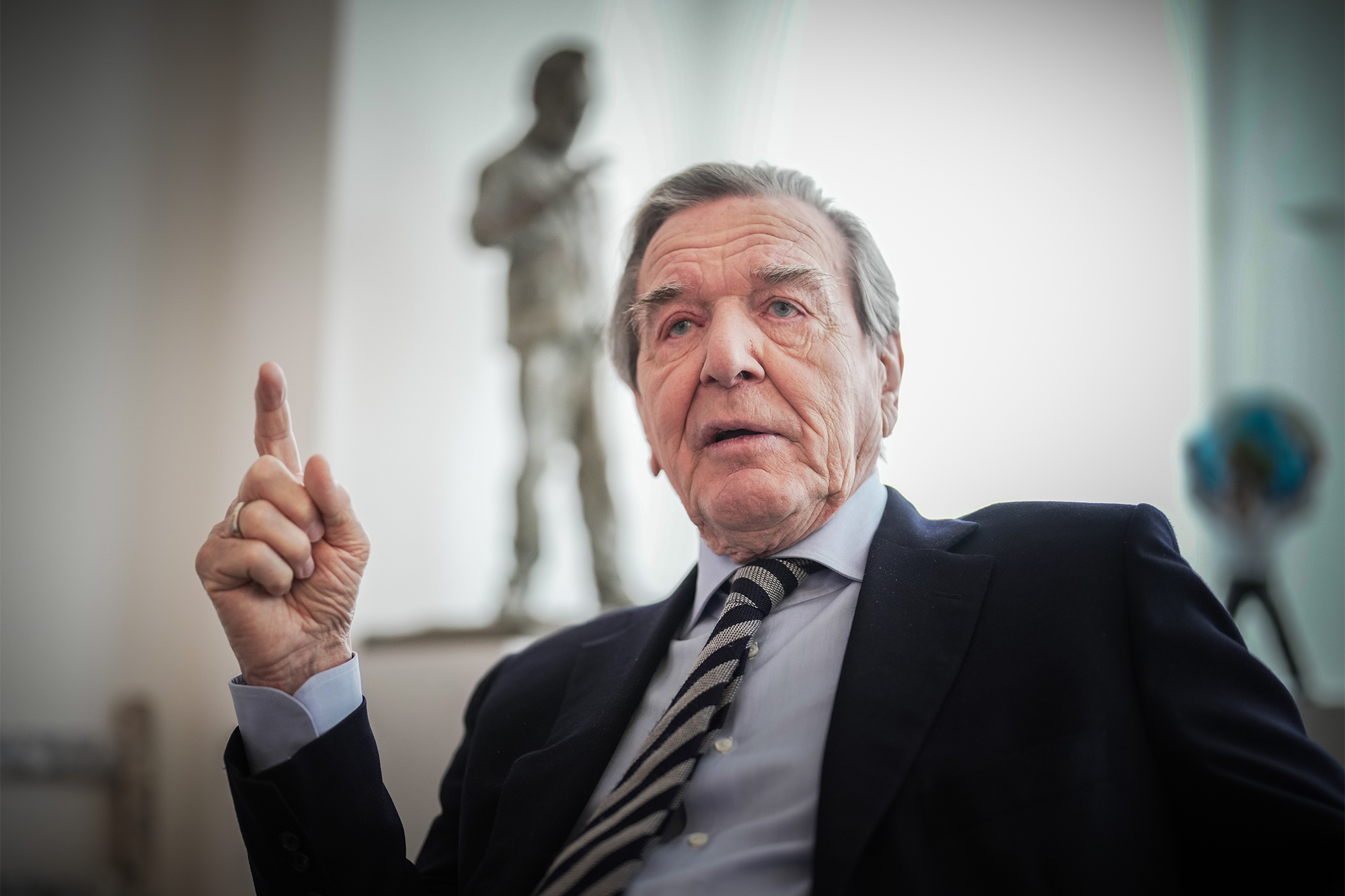
Photo: European Union and Ukraine do not want Gerhard Schröder in the role of negotiator (Getty Images)
The proposal by Putin to appoint Schröder as a negotiator was rather a form of trolling, political analyst Volodymyr Fesenko believes. According to him, it was likely an attempt to impose Russia’s own rules on Europeans, he said in a comment to RBC-Ukraine.
"Do you want to negotiate with me? Then let there be a negotiator like Schröder. And if not, then there may be no negotiations at all. In other words, either talks on my terms or no talks. I currently see this more as trolling," Fesenko said.
However, the political analyst noted that with this statement, Putin has given Europeans a formal pretext to engage with the issue and potentially agree on participation in peace talks. But the format of these negotiations remains an open question.
"Is this the accession of Europeans to a trilateral format? That is one, more serious option. Or is it separate negotiations between Europeans and Russia? Parallel talks. That is a different matter, and in my view, not the correct option. But Putin may push exactly for this. It is more beneficial for him to negotiate separately with the Americans and us, and separately with the Europeans," he explained to RBC-Ukraine.
Europe’s participation in negotiations with Russia
Europe does not want to replace the United States in peace efforts regarding Ukraine and Russia, political analyst Volodymyr Fesenko told RBC-Ukraine. According to him, Europeans do not aim to act as mediators in the same way as the US administration under Donald Trump.
"Europeans have never hidden the fact that they are on Ukraine’s side. Under Trump, the Americans changed their position and chose the role of mediator. Europeans did not. They want to take part in negotiations as a party to the confrontation with Russia, not as a mediator," the political analyst said.
According to him, Europe’s desire to become part of the negotiation process is not new. Europeans have long been accompanying these discussions and indirectly participating in US-led initiatives. Kyiv also regularly coordinates a common position with European partners ahead of diplomatic talks with Washington.
"In this sense, Europeans are always close to the negotiations, but the Russians have been categorically against it. And the Americans also did not really want Europeans at the negotiating table," he added.
However, Fesenko explained that two main factors have so far prevented Europe from joining formal negotiations. First, European countries have not agreed on who should represent them. Second, there is the question of how to convince both Russia and the United States to include Europe in the process.
"Now there is a chance to finally define this and try to enter the negotiation process. Whether this will succeed remains to be seen. I think this issue will be decided in the coming weeks. It will likely be discussed, in particular, at the EU foreign ministers’ meeting in Brussels today," the analyst noted.
Who could actually represent Europe?
Neither Europe nor Ukraine would accept Schröder as a mediator. However, this role could potentially go to another German politician.
One possible figure is Frank-Walter Steinmeier, the current President of Germany. According to the German outlet Der Spiegel, his candidacy as a negotiator with Russia is being discussed within Germany’s ruling coalition. The issue is expected to be addressed in internal discussions soon.
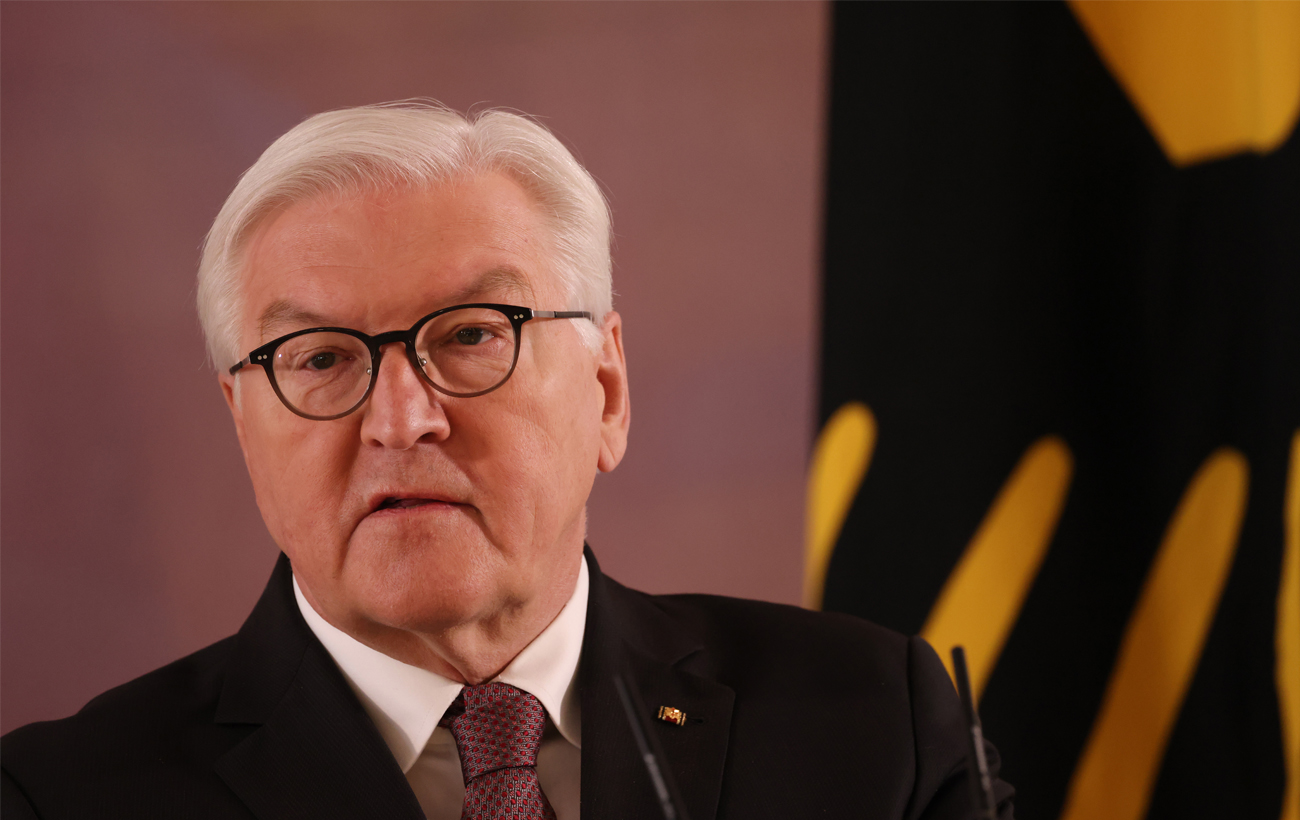
Photo: Frank-Walter Steinmeier, President of Germany (Getty Images)
For Frank-Walter Steinmeier, this would not be his first experience in negotiations between Ukraine and Russia. Back in 2015, while serving as Germany’s Foreign Minister, he proposed a plan for implementing the Minsk agreements. The plan included local elections in occupied Donbas and granting Russia-seized territories a "special status." This proposal became known as the Steinmeier Formula.
A turning point for Steinmeier came during his visit to Ukraine in the autumn of 2022. During a trip to the de-occupied Chernihiv region, the German president had to shelter in a basement due to the threat of Russian strikes. After experiencing the war firsthand, he significantly shifted his rhetoric: he strongly condemned Russia’s aggression and stated that a ceasefire must not serve as justification for the theft of Ukrainian land.
According to Fesenko, Steinmeier’s candidacy as a negotiator appears quite realistic. However, the final decision would not depend on Berlin alone, but on a collective agreement of all European leaders.
Meanwhile, the Kremlin says that Europe has not yet officially responded to Schröder’s candidacy. However, Putin’s circle is reportedly satisfied that the idea has already triggered intense debate.