Germany wants to buy biogas in Ukraine

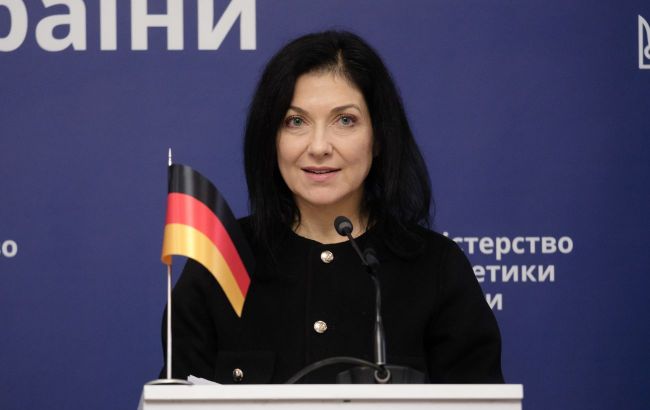 Photo: German Economy Minister Katerina Reiche (Vitalii Nosach, RBC-Ukraine)
Germany wants to increase its own gas production while also exploring the possibility of purchasing biogas from Ukraine, according to Germany's Minister of Economy, Katarina Reiche, reports Spiegel.
Also read: Naftogaz opens new gas supply route - How it works
"In Germany, we have our own reserves. Gas can be extracted here," Reiche said.
She noted that Germany recently allowed the Netherlands to explore a gas field in the North Sea.
"Despite all legitimate concerns about protecting the marine environment, this should also be possible from the German side," the minister added.
Reiche emphasized that simply passing unpopular projects to neighboring countries is not a sustainable long-term solution. The key question is whether gas can be extracted under favorable conditions.
"We need to discuss this, especially in times of resource shortages and such complex geopolitical circumstances. A very careful balance must be found between environmental interests and resource security – both are legitimate concerns," she said.
Biogas imports
According to reports, the German government, a coalition of Christian Democrats and Social Democrats, intends to allow increased use of gas for heating, including biogas.
Parliamentary factions of the ruling coalition have reached an agreement on this as part of the heating law reform. This will significantly ease rules for homeowners replacing their heating systems: the current requirement to use at least 65% renewable energy for heating will be removed.
To meet the planned green gas quota, heating systems will need to operate with an increasing share of biomethane and synthetic fuel.
Reiche suggests importing green gas from Ukraine.
"Biomethane is available, produced domestically, and already sold on the market. Where there is demand, a market will form," she said.
According to the minister, Ukraine offers large volumes of biogas. At the same time, regulatory challenges remain on both the Ukrainian and EU sides.
"But once these are resolved, we can expect significant biomethane imports," Reiche added.
Germany also has abundant natural gas reserves in the North Sea.
However, extraction of these shale gas deposits using the controversial fracking method – which releases natural gas from deep rock layers using chemicals and pressure – has been banned in Germany since 2017, as it is considered a risk, particularly to groundwater.
Gas imports to Ukraine
Earlier in February, the first shipment of US liquefied natural gas (LNG) for this year arrived in Ukraine from Poland, with a supply volume of nearly 100 million cubic meters.
Operators previously agreed on a phased increase in the capacity for importing gas from Poland to Ukraine starting in early February.
By the end of April, the capacity in this direction will increase from 15.3 million cubic meters to 18.4 million cubic meters per day.
Additionally, the government agreed on a 50% discount for transporting gas through Greece for further import to the Ukrainian border.
It was also reported that in 2025, the Naftogaz Group imported 5.7 billion cubic meters of gas to ensure the heating season could be maintained.