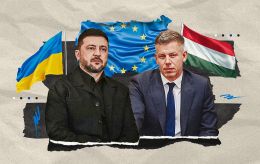
EU unity fractures after Orban's defeat — Politico

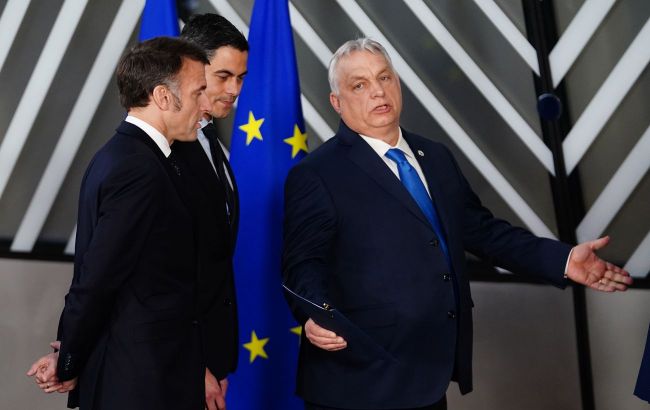 Photo: Viktor Orbán and Emmanuel Macron (Getty Images)
After the final approval of a 90-billion-euro loan to Ukraine, EU leaders were confronted with the scale of other problems that needed to be resolved, according to Politico.
During the meeting at the Cypriot resort of Ayia Napa, the sense of triumph among the leaders quickly faded.
Despite the defeat of Hungarian Prime Minister Viktor Orbán, they faced a multitude of challenges and crises and realized how difficult it is to agree on the next steps.
According to one diplomat, Ukrainian President Volodymyr Zelenskyy, who joined the talks, appeared more cheerful than in previous months.
At the same time, the next item on the EU agenda, Ukraine’s accession, sparked disagreement. Estonian Prime Minister Kristen Michal advocated for accelerating the process, while Croatian Prime Minister Andrej Plenković dismissed the idea of rapid accession.
The article notes that Ukraine’s path to EU membership appears somewhat more realistic following the weakening of Orbán’s position, though it remains difficult.
"For years, if there has been any EU unity at all, it has been in fighting Orbán. With him gone ― and after he skipped what would have been his final summit ― even the illusion of that common front has vanished," notes Politico.
One EU official adds that countries opposed to Ukraine’s accession can no longer hide behind Orbán’s position.
In addition, EU leaders faced other issues. Cypriot President Nikos Christodoulides attempted to raise the topic of security and the application of Article 42.7 on EU collective defense, but the discussion focused primarily on geopolitics and energy prices.
Belgian Prime Minister Bart De Wever stated that even without Orbán, there are still countries in Europe that do not always agree with the general position.
According to him, the expectation that EU summits will proceed much more smoothly without Orbán is somewhat overestimated.
Druzhba pipeline resumption and loan for Ukraine
After a nearly three-month hiatus, the Druzhba oil pipeline resumed operations. This was the key condition for lifting the veto on the loan by Hungary and Slovakia.
In this regard, on April 22, EU ambassadors agreed to allocate a €90 billion preferential loan to Ukraine and approved a new sanctions package.
On April 23, the EU Council unanimously approved the amendments to the multiannual budget necessary to finance this program and adopted the twentieth package of sanctions against Russia. The Cypriot Presidency of the EU Council announced the completion of the procedures.
Funds from the EU’s €90 billion loan program for Ukraine are expected to begin flowing as early as May.