EU finalizes €90B for Ukraine and new sanctions on Russia

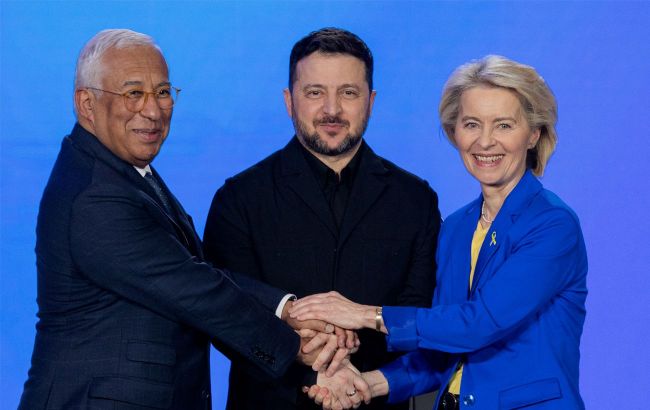 Photo: European Council President António Costa, Ukrainian President Volodymyr Zelenskyy, and European Commission President Ursula von der Leyen (Getty Images)
The European Union has approved a €90 billion loan package for Ukraine, according to Ukrainian President Volodymyr Zelenskyy and European Council President António Costa.
What is this money for, and where will it go
The package amounts to 90 billion euros over two years. According to Zelenskyy, the funds will be directed toward:
- Domestic weapons production
- Purchasing weapons from partners, those that Ukraine does not yet manufacture on its own
- Preparing the energy sector and critical infrastructure for the coming winter
- Fulfilling social obligations to citizens.
"The European support loan for Ukraine has been unblocked – €90 billion over two years. This package will strengthen our army, make Ukraine more resilient, and enable us to fulfill our social obligations to Ukrainians, as set out in law," the President states.
President of the European Council: Promised – Delivered
European Council President António Costa also confirms the decision. According to him, the EU’s strategy toward Ukraine rests on two pillars: strengthening Ukraine itself and increasing pressure on Russia.
"Promised, delivered, implemented," he writes.
Costa notes that progress was made on both issues today: a €90 billion loan was unlocked, which will provide financial and military support for 2026–2027, and the 20th package of sanctions against Russia was adopted to reduce its ability to wage war.
"Europe stands firm, united and unwavering in its support to Ukraine," he adds.
The first tranche could arrive as early as May or June. Zelenskyy notes that Ukraine is doing everything possible to speed up this process.
"We are working to ensure that the first tranche from this support package becomes available as early as May–June," he says.
The day before, EU ambassadors had tentatively agreed on a €90 billion loan and the parameters of the 20th sanctions package. Hungary had blocked the release of funds for months due to the suspension of oil supplies via the Druzhba pipeline and lifted its veto only after transit resumed.
On the night of April 23, Russian oil supplies via Druzhba resumed in Slovakia for the first time in nearly three months.
This was the key condition for Hungary and Slovakia to lift their veto on the loan.
At the same time, Slovakia changed its stance on sanctions against Russia.