EU considers radical move to use frozen Russian assets, FT reports

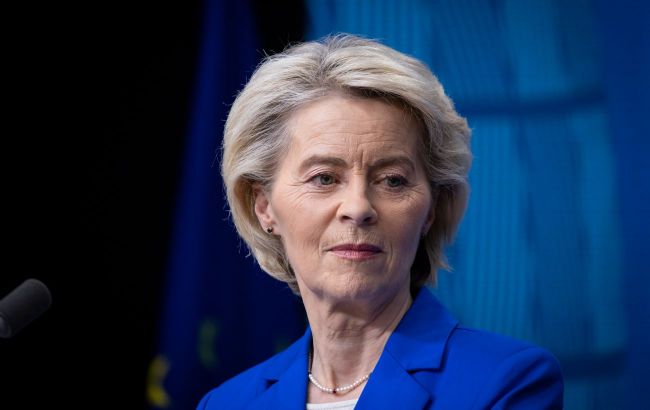 European Commission President Ursula von der Leyen (photo: Getty Images)
European Commission President Ursula von der Leyen is proposing that the decision on using Russia's frozen assets to support Ukraine be made by a simple majority of EU member states, rather than unanimously, the Financial Times reports.
According to the publication, using legal maneuvers, the European Commission is preparing to bypass any veto threats from leaders such as Hungarian Prime Minister Viktor Orbán, as well as the principle of unanimous agreement on foreign policy that has existed since the Treaty of Rome, which founded the European Community in 1957.
Even Ukraine's allies have said that von der Leyen is testing the limits of EU authority by proposing to use emergency measures to provide Ukraine with loans of up to €210 billion. Critics have argued that she is violating the bloc's laws.
It is noted that such boldness is a sign that the willingness of European capitals to continue financing Kyiv from national budgets is decreasing after nearly 4 years of war.
The situation is additionally fueled by US President Donald Trump's sudden interest in using Russia's frozen assets as part of a peace agreement, under which the assets would flow into US-led investment funds.
Von der Leyen's initiative aims to present European leaders, who will gather for a summit in two weeks, with two main options to maintain Ukraine's solvency: to raise funds through the EU's joint budget or to issue a loan backed by Russian assets, which would not be repaid until Moscow pays postwar reparations.
The first option requires unanimous approval, while the second would require only a qualified majority of leaders.
It is noted that the emergency powers would, in practice, deprive countries such as Hungary of the ability to exercise their veto on extending sanctions to release Russian assets and delay the loan to Ukraine.
According to officials familiar with the closed-door discussions, if the proposal is adopted, it will almost certainly trigger legal challenges. Still, the process may take time, which would work in Ukraine's and its allies' favor.
The European Commission justifies the use of emergency measures by citing "the need to preserve the stability of the economy of the union," arguing that Russia's war against Ukraine and its hybrid attacks in Europe pose a threat to prosperity, and that returning the money to Moscow could worsen the situation.
National legal experts will begin examining the text in detail today, December 4, and further discussions will take place among the ambassadors of the member states on December 5.
The European Commission notes that the "urgent nature of the proposal" means that no stakeholder consultations or relevant impact assessments have been conducted.
Reparations loan for Ukraine
The European Commission proposed providing Ukraine with a €140 billion reparations loan.
It is envisioned that Russian assets would back the loan that the EU froze after the start of Russia's full-scale war against Ukraine.
For Ukraine to receive such a reparations loan, the approval of all EU member states is required.
However, the initiative is being blocked by Belgium, the country that holds the largest share of frozen Russian assets.
Belgian Prime Minister Bart De Wever argues that the EU's plan to use Russia's frozen assets to finance Ukraine could have serious economic and geopolitical consequences.
Meanwhile, European countries are developing a plan B in case they are unable to reach an agreement on using Russia's frozen assets to provide the reparations loan to Ukraine.
Belgian Foreign Minister Maxime Prévot stated that the EU proposal for a reparations loan for Ukraine does not meet his country's requirements.
He reminded that the Belgian authorities want other EU countries to cover all legal costs that may arise if the decision on the reparations loan enters into force.
Belgium also expects guarantees that EU countries will quickly allocate the necessary funds if they have to be returned to Russia.
European Commission President Ursula von der Leyen said that the Commission has prepared a proposal for a reparations loan for Ukraine backed by frozen Russian assets. She noted that it takes into account Belgium's previously expressed concerns.