Belgium slams EU's reparations loan plan for Ukraine

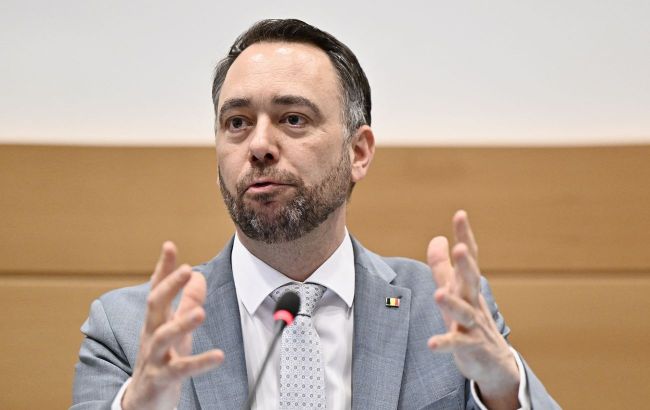 Photo: Belgian Foreign Minister Maxime Prévot (Getty Images)
Belgium has criticized the European Union's proposal to use frozen Russian assets held in a Belgian bank for a €140 billion reparation loan to Ukraine, Reuters reports.
A few hours before the European Commission presented its detailed legal proposals on the use of frozen Russian assets, Belgian Foreign Minister Maxime Prévot said that they did not meet his country's requirements.
"We have the frustrating feeling of not having been heard. Our concerns are being downplayed.The texts the Commission will table today do not address our concerns in a satisfactory manner," Prévot tells reporters at a meeting of NATO foreign ministers in Brussels.
According to him, Belgium is demanding guarantees from other EU countries to cover all legal costs that may arise from Russian lawsuits against this scheme.
Belgium also wants European countries to guarantee that they will help to quickly allocate funds to return the money to Russia if the court ever rules that Moscow must be compensated.
In addition, it is demanding that other countries holding frozen Russian assets also provide these funds to Ukraine.
Prevo said Belgium's demands are not unresolved, but noted that other countries have so far lacked solidarity.
According to Reuters sources, the European Commission is expected to present its legal proposal on the use of frozen assets and also leave open the possibility of borrowing on financial markets to finance Ukraine, or a combination of the two options.
Loans on the markets could allow the EU to obtain emergency financing for Ukraine while it tries to resolve the legal and political complexities associated with the use of frozen Russian assets.
Reparation loan for Ukraine
The European Commission has proposed the idea of granting Ukraine a reparation loan of €140 billion.
It is expected to be secured by Russian assets that the EU froze after the start of the full-scale war in Ukraine.
For Ukraine to receive such a reparation loan, the consent of all EU member states is required.
However, the initiative is being blocked by Belgium, the country where the largest share of Russia's frozen assets is held.
Belgian Prime Minister Bart De Wever argues that the EU's plan to use Russia's frozen assets to finance Ukraine could have serious economic and geopolitical implications.
At the same time, European countries are developing a plan B in case they cannot agree on the use of Russia's frozen assets to provide a reparations loan to Ukraine.
According to Politico sources, one option gaining support is a bridge loan financed by EU borrowing to support Ukraine in the first months of 2026.
European Commission President Ursula von der Leyen said that the EU will present a legislative proposal in the coming days, allowing Russia's frozen assets to be used to provide Ukraine with a reparation loan.
At the same time, the European Central Bank refused to support the idea of a so-called reparation loan for Ukraine.