Cuban president confirms talks with US for first time and complains of pressure

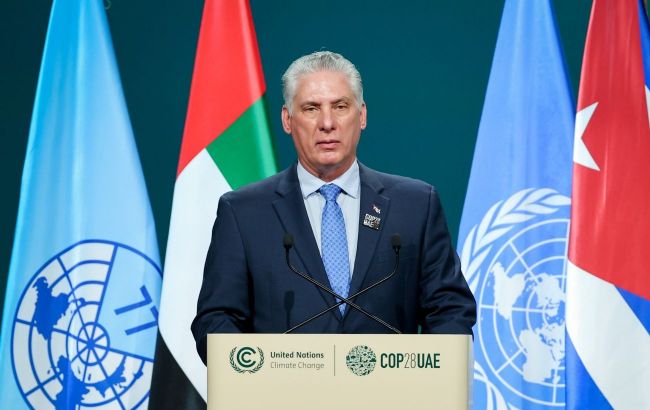 Photo: Cuban President Miguel Díaz-Canel (flickr.com)
Cuban President Miguel Díaz-Canel has for the first time confirmed that the country’s authorities are holding talks with the United States amid an economic crisis and increased political pressure from the administration of Donald Trump, CNN informs.
"There are international factors that have facilitated these talks," Díaz-Canel said in a video address broadcast on national television.
According to him, the goal of the talks was "to identify the bilateral problems that need a solution."
The Cuban president noted that he is personally conducting the negotiations with the American side together with former head of state Raúl Castro and representatives of the Communist Party. At the same time, he did not specify who is participating in the talks on behalf of the United States.
US reaction
The White House confirmed that the talks are taking place.
"As the President (Trump) stated, we are talking to Cuba, whose leaders should make a deal, which he believes 'would be very easily made,'" a White House spokesperson said.
Earlier, Donald Trump had already stated that Washington was in contact with Cuban representatives, but this is the first confirmation of the negotiations from Havana.
Cuba faces an energy crisis
At a briefing held after the video was released, Cuban President Miguel Díaz-Canel said the country is experiencing a severe energy crisis, which he linked to sanctions pressure from the US.
"It is a situation for which we have been preparing in advance," he said, while stressing that "no fuel has entered the country for three months."
The Cuban president emphasized that the impact of the energy blockade on the country is "tremendous."
"This causes anguish among the population," he stressed.
Díaz-Canel acknowledged that the crisis has particularly affected the healthcare system.
"Right now in the country, there are tens of thousands of people waiting for surgery that cannot be performed due to the lack of electricity," he concluded.
After the operation in Venezuela, US President Donald Trump began speaking about expanding American influence, including toward Cuba.
On March 6, Trump said that Havana was allegedly interested in reaching a deal with the US and suggested that Cuba "will fall soon." He also stressed that the island faces a choice between a "friendly takeover" or a tougher scenario.