AI drones behind severing of key Crimea supply routes, says Defense Ministry

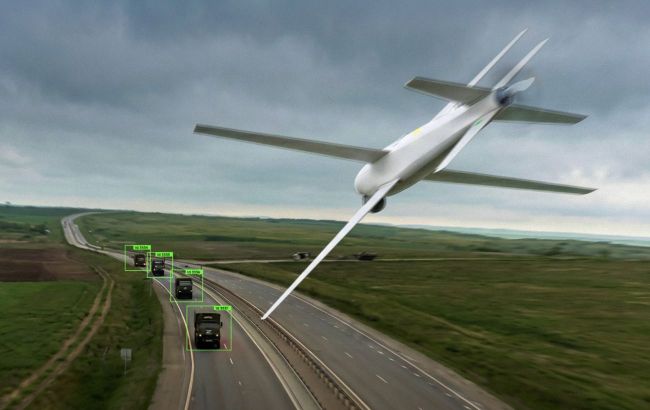 Photo: Ukrainian AI-powered drones severing routes to Crimea (mod.gov.ua / Ministry of Defense of Ukraine)
A drone may be equipped with a specialized onboard computer and optical cameras. The AI on such a UAV continuously scans the terrain, roads, rivers, and contours of objects beneath it.
The real-time image is compared by the algorithm with high-resolution satellite imagery stored in its memory. The drone "understands" where exactly it is by calculating its trajectory using visual reference points.
The most critical stage of a strike UAV mission is precise targeting. Near static targets, EW activity is often at its highest.
As it approaches the designated grid, the AI takes over control. The neural network begins analyzing the video stream. The algorithm is trained to distinguish the silhouettes of specific types of equipment. For example, if the target is an air defense position, the artificial intelligence identifies a launcher or radar, automatically places a "lock-on marker" on it, and adjusts the control surfaces to ensure precise dive targeting.
In addition, modern neural networks are trained to distinguish real combat equipment from decoys. For example, they do so based on geometry, texture, and the presence of heat signatures from engines. This significantly increases the effectiveness of middle strike systems.
The flight route of a UAV operating at an operational depth of up to 200 km is not a straight line. Therefore, artificial intelligence is also involved already at the mission planning stage. For example, it analyzes up-to-date reconnaissance data on the location of enemy air defense radar systems.
The software calculates the optimal flight path, taking into account terrain features, detected "blind spots" of radar systems, and the projected range of enemy air defense assets.
All of this together helps scale the effectiveness of middle strike operations, destroying enemy logistics, warehouses, equipment, and command posts.
The Chongar Bridge, which connected temporarily occupied Crimea with mainland Ukraine, was completely destroyed as a result of a series of Ukrainian drone strikes.
In addition, in the temporarily occupied territory of the Kherson region, the Russian army has blocked traffic on the bridge between Henichesk and the Arabat Spit. After the loss of the Chongar Bridge, this is already the second important crossing that the Russian forces have closed in recent days.